AI ER Diagnosis Breakthrough OpenAI o1 Beats Doctors in Early Cases
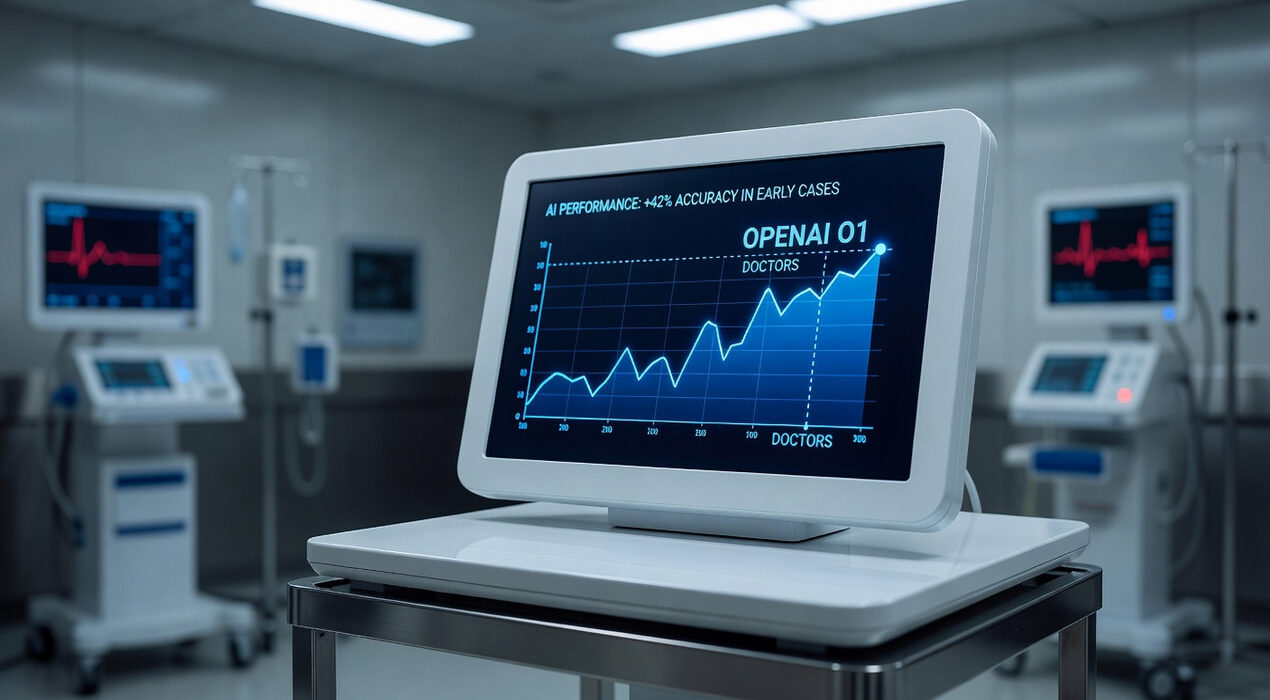
A new study highlights a major shift in healthcare. The AI ER diagnosis ability of OpenAI’s o1 model shows strong results. It even outperformed doctors in early emergency room cases. Researchers found the model achieved correct diagnoses in 67% of cases. In comparison, physicians scored around 50–55%. As a result, AI is gaining attention as a powerful medical tool.
How the Model Was Tested
The study used real patient cases for testing. Researchers presented data in stages, just like real ER visits. For example, the model first reviewed symptoms, then medical notes, and finally decisions. In addition, the system handled multiple tasks. It analyzed patient profiles, suggested diagnoses, and recommended next steps. It also estimated future health risks. Overall, the model performed at the same level or better than doctors. Therefore, it showed strong potential in fast paced environments.
Strong Clinical Reasoning Skills
One standout feature was its reasoning ability. The model achieved near-perfect scores in explaining diagnoses. It scored 98% in clinical reasoning tasks. However, doctors reached similar scores only 35% of the time. This gap shows how consistently AI explains medical decisions. Clear reasoning is important, especially in stressful ER situations.
Moreover, the model documented its logic in a structured way. This makes it easier for teams to review and act quickly.
Limits and Future Research
Despite strong results, the study has limits. It focused only on short ER visits. It did not include imaging data or long term cases.
Therefore, experts caution against broad conclusions. Real-world conditions are more complex. However, ongoing research aims to address these gaps. Researchers are now testing the model with wider datasets. These include longer patient histories and varied conditions. As a result, future findings may offer deeper insights.
What This Means for Healthcare
The rise of AI in medicine is clear. Tools like this can support doctors, not replace them. For example, they can speed up diagnosis and reduce errors. In addition, AI may help in busy emergency settings. Faster decisions can improve patient outcomes. However, human oversight will remain essential. As technology evolves, performance is expected to improve. Newer models may deliver even better results. Therefore, the future of AI-assisted healthcare looks promising.