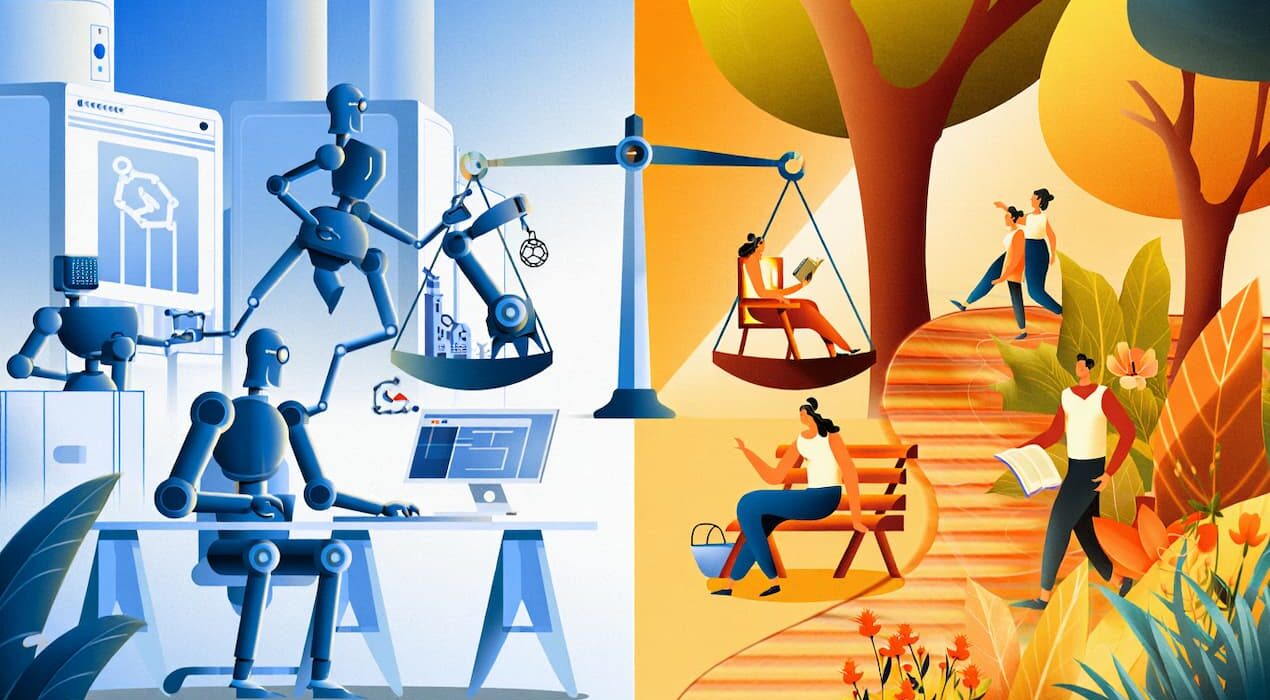
AI Jobless Future Could Redefine Work
The AI jobless future may arrive sooner than many expect. A Nobel Prize–winning physicist says automation will sharply reduce working hours. In fact, he believes future generations may work far less than we do today. Tech leaders share this view. Elon Musk has spoken about universal high income. Meanwhile, Bill Gates predicts far more free time thanks to AI assistants. In addition, Nobel laureate Giorgio Parisi warns that AI marks a structural shift. He compares it to the agricultural revolution, not just another tech upgrade.
Warehouses already run on robots. Call centers use AI to answer routine questions. Hospitals rely on algorithms to flag urgent scans. As a result, productivity keeps rising. However, traditional full-time roles may shrink. Experts argue that machines now handle both physical and mental tasks. Therefore, entire roles could disappear, not just single duties.
More Free Time, Fewer Traditional Roles
Supporters call this the “age of abundance.” Output grows, yet required labor drops.
Still, income today links closely to hours worked. That creates tension between wealth and employment. The physicist warns that free time alone is not freedom. Without structure, people may feel lost instead of liberated. Consequently, experts suggest preparing early. Build skills driven by curiosity, not only career growth. Develop savings instead of chasing titles.
Strengthen community ties for daily support.
Most importantly, experiment with meaningful routines now. Try one tech-free hour each week. Notice how unstructured time feels. The shift will not happen overnight. It will arrive quietly through software updates and automation tools. Ultimately, the real question is simple. How will we live when earning stops defining identity? The AI jobless future could bring opportunity. However, it also demands thoughtful planning from governments, businesses, and individuals alike.