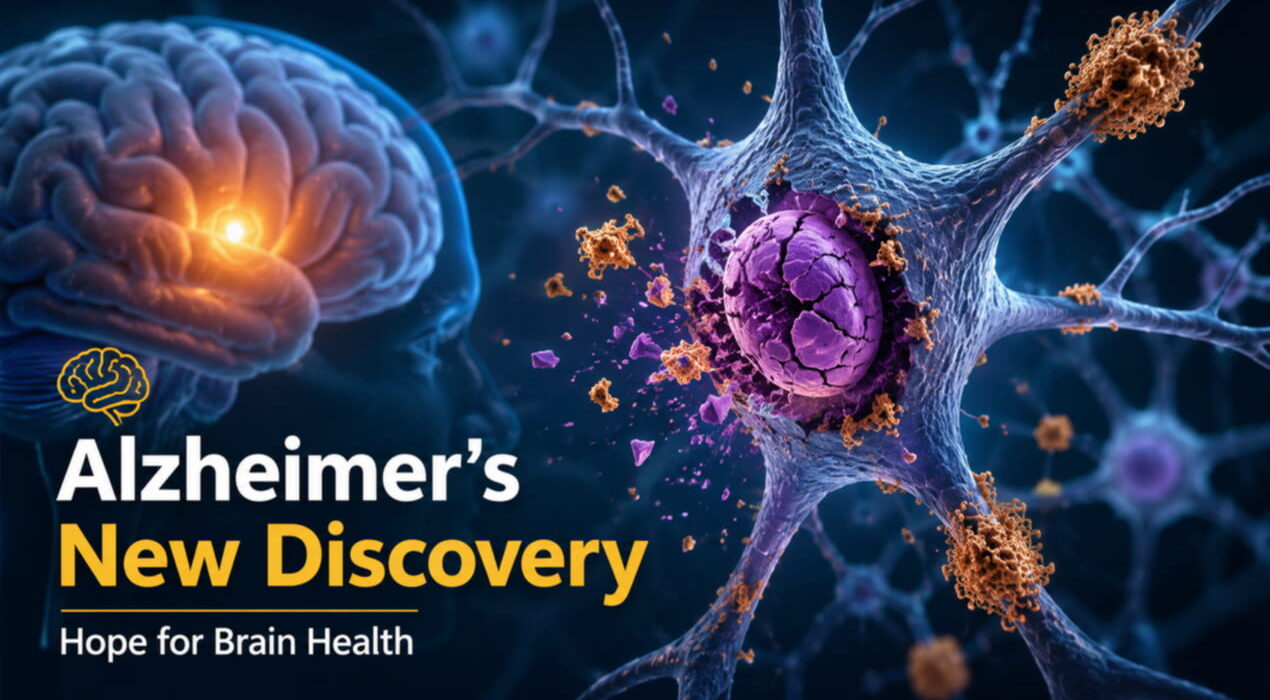
Alzheimer’s Brain Cell Death Discovery Offers New Hope
The discovery of Alzheimer’s brain cell death may help scientists better understand how brain cells disappear during Alzheimer’s disease and other neurodegenerative disorders. Researchers believe the findings could also support the development of future treatments. In addition, the study highlights a newly identified process called karyoptosis.
Scientists published the research in Nature Communications. They examined how neurons respond to proteotoxic stress, which occurs when abnormal or misfolded proteins build up inside cells. Such protein buildup is a key feature of Alzheimer’s disease and several forms of dementia.
How neurons begin to break down
Instead of following common forms of cell death, neurons showed a different pattern. Their nuclei gradually broke apart before the cells died. Researchers named this newly discovered process karyoptosis. Furthermore, they found it begins when the cell’s recycling system becomes overwhelmed.
Researchers identify the trigger
The overloaded recycling system weakens the nuclear envelope. As a result, DNA damage develops and nuclear material escapes from the cell. The team also identified Lamin B1 as an important protein controlled by the p38 MAP kinase signaling pathway. When scientists blocked this pathway in laboratory models, neuron survival improved and disease-related damage decreased.
Hope for future Alzheimer’s treatments
Researchers also studied brain tissue from people with Alzheimer’s disease and frontotemporal dementia. They found clear signs of karyoptosis in affected neurons, while healthy brains showed far fewer damaged cells. The team estimates this process may explain an additional 18% to 20% of neuron loss beyond normal aging. Although more research is necessary, the findings provide valuable insight into Alzheimer’s disease. Therefore, targeting karyoptosis may help protect brain cells and support future treatment development.