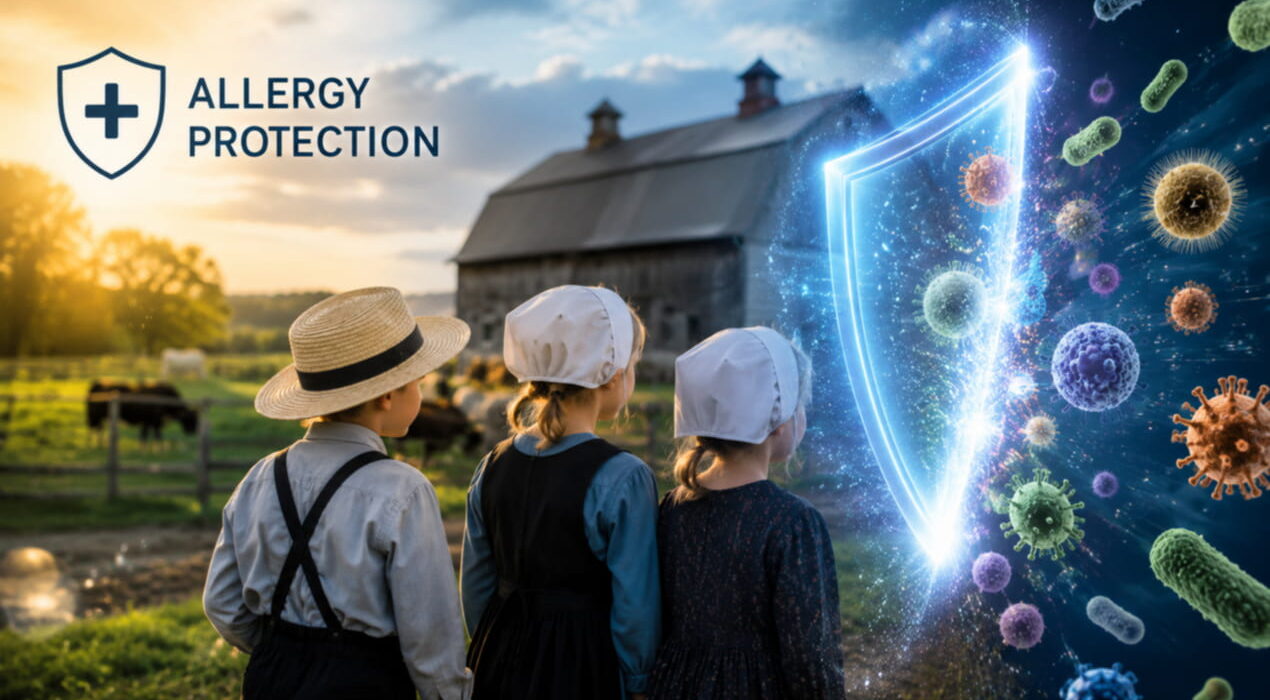
Amish Allergy Protection: Why Amish Children Have Lower Asthma and Allergy Rates
In parts of the United States, researchers have discovered a fascinating health trend. Studies show that only about seven percent of Amish children test positive for common allergies. This finding has attracted attention because allergy rates remain much higher among most other children. Experts believe Amish Allergy Protection may offer important clues about immune health.
A Unique Environment for Children
Scientists compared Amish communities with nearby farming populations. They found that genetics and diets were often very similar. However, daily living conditions were quite different. Amish children spend more time around animals, barns, soil, and natural outdoor spaces.
As a result, they encounter a wide range of microbes from birth. Their homes contain natural dust and beneficial bacteria. Researchers think this early exposure helps train the immune system. Therefore, the body becomes less likely to overreact to harmless substances such as pollen or food particles.
The Science Behind the Difference
This observation supports a scientific idea known as the hygiene hypothesis. According to this theory, regular exposure to diverse microbes helps the immune system develop balance. In contrast, overly clean environments may limit those important interactions.
For example, traditional farm settings expose children to many types of bacteria every day. These microbes appear to reduce allergic inflammation. Consequently, children may develop stronger immune tolerance over time.
What Research Reveals
Scientists have also tested dust collected from Amish homes. Laboratory studies produced remarkable results. The dust reduced allergic responses in animals exposed to common triggers.
In addition, researchers found signs of healthier immune activity linked to microbial exposure. While more studies are needed, the evidence remains promising. Amish Allergy Protection highlights how early environmental experiences may shape lifelong health. These findings could help scientists develop new ways to prevent allergies and asthma in future generations worldwide.