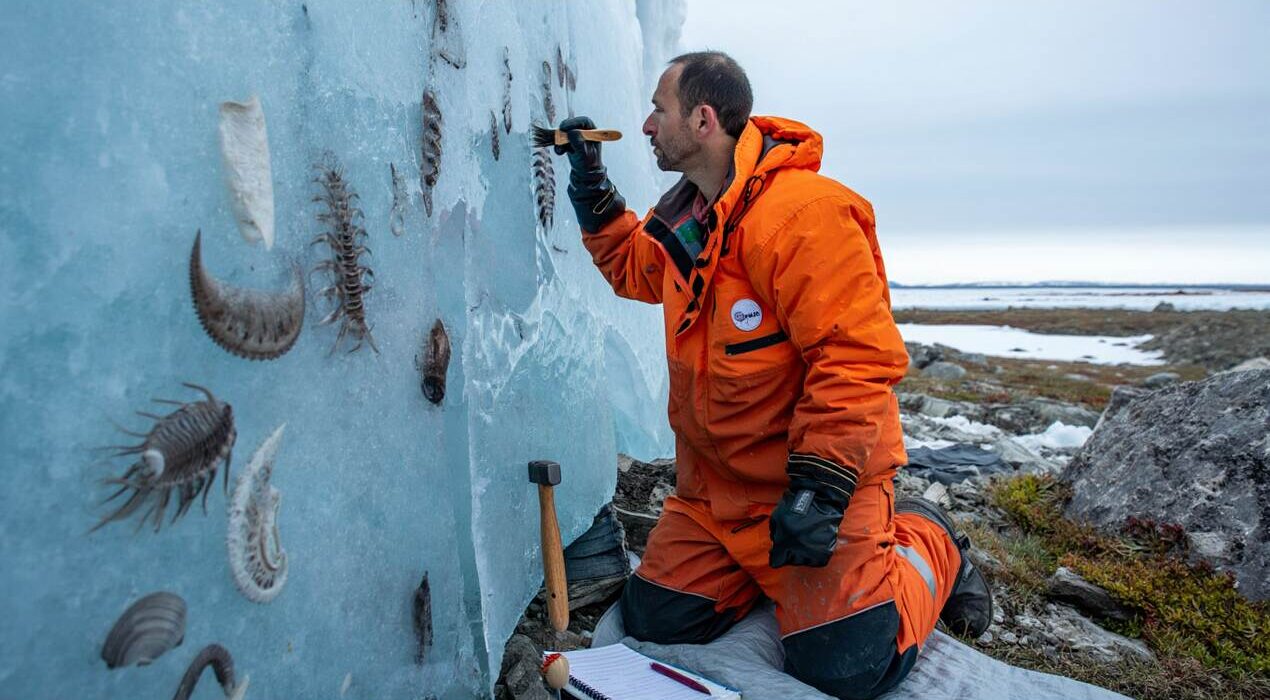
Ancient Arctic Fossils Rewrite Early Marine Evolution Timeline
A new fossil find from the Arctic is reshaping what we know about early marine life. Researchers uncovered more than 30,000 fossil pieces on the remote island of Spitsbergen. These remains offer a fresh look at how ocean ecosystems recovered after the “great dying.”The collection includes bones, teeth, and fragments from ancient reptiles, amphibians, sharks, and fish. As a result, scientists now believe marine life bounced back far faster than textbooks explain.
What the Fossils Reveal
A Scandinavian research team spent nearly ten years studying the material. Their work shows that land animals moved into open oceans earlier than expected. In addition, the fossils come from rock layers formed on the floor of a wide ancient sea.The site sits within the Svalbard archipelago. It is famous for preserving marine life from the dawn of the Age of Dinosaurs. However, this new bonebed is far richer than past discoveries.
Rethinking the “Great Dying”
The end-Permian mass extinction occurred 252 million years ago. It wiped out most marine species and reshaped global ecosystems. Scientists long believed the oceans recovered slowly over eight million years.The new Spitsbergen fossils challenge that idea. Stratigraphic dating places the ecosystem at 249 million years old. Therefore, marine life rebounded in only about three million years.
A Fast and Diverse Recovery
The bonebed is so dense that it forms a clear trail across the mountainside. Researchers collected over 800 kilograms of material from carefully mapped grids. They found everything from tiny scales to large reptile bones.Most surprising is the diversity of fully aquatic reptiles. Some were small hunters, while others grew longer than five meters. A global comparison shows the site is one of the most diverse marine vertebrate communities from that era.These findings suggest sea-going reptiles evolved earlier than scientists once thought. As a result, this ancient reset likely shaped the marine ecosystems we know today.