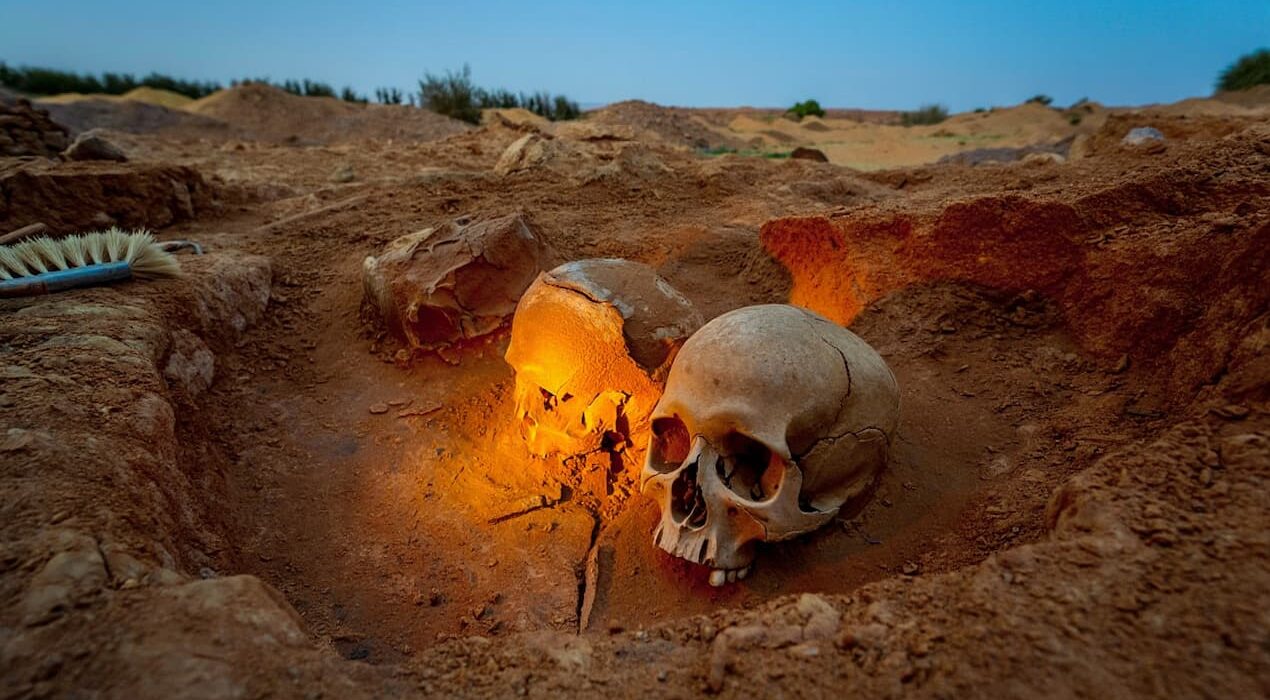
Ancient Moroccan Fossils Pinpoint Our Shared Human Ancestor
Scientists have precisely dated remarkable fossils from Morocco. These finds are about 773,000 years old. They capture a pivotal moment in human evolution. The dating is exceptionally accurate. Researchers used a flip in Earth’s magnetic field as a timestamp. This method pinned the age to within 4,000 years.
Fossils Near Our Family Tree’s Root
The fossils show a mix of ancient and modern features. This unique blend places them near a major evolutionary split. They likely represent a population close to our last shared ancestor. This ancestor is common to us, Neanderthals, and Denisovans. Therefore, these individuals offer a rare snapshot of that deep ancestral group.
Why This Site Is So Special
The discovery resulted from over 30 years of fieldwork. The cave, called “Grotte à Hominidés,” had perfect preservation conditions. Sediments recorded the magnetic reversal clearly. Consequently, the dating is remarkably secure. This is rare for fossils of this immense age.
What the Fossils Tell Us
The remains include jaws, teeth, and vertebrae. They were likely left in a carnivore den. For example, one femur bears gnaw marks. Analysis of internal tooth structures revealed critical clues. The teeth are distinct from other known species like Homo erectus. Instead, they show traits basal to later human lineages. This find highlights Northwest Africa’s key role in early human evolution. The Sahara was not always a barrier during wetter climates. Populations could connect across the continent. In summary, these fossils provide strong evidence for a deep African origin of our shared lineage. They are currently our best candidate for populations near the root of the human family tree.
________________