Astronomers Capture CHARA Nova Visuals Showing Real Stellar Explosions
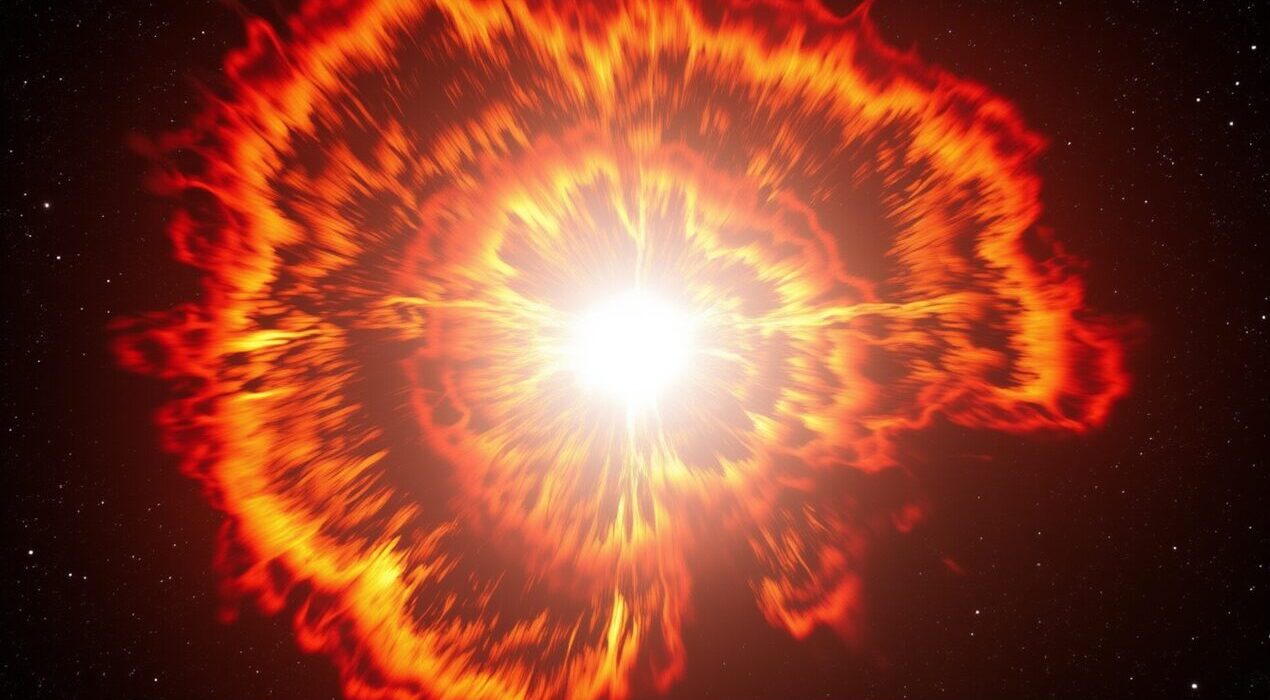
Astronomers have finally unlocked a long-standing cosmic mystery. Using CHARA nova visuals, scientists now see how stellar explosions truly unfold. As a result, space research has entered a new era of clarity. Researchers captured detailed images just days after two massive stellar outbursts. Until now, early stages appeared as single points of light. However, these new observations reveal layered and complex behavior.
Breakthrough Images Change Old Ideas
The team used the CHARA Array in California. This system combines light from several telescopes. Therefore, it delivers ultra-sharp detail during fast cosmic events. The images show gas launching in multiple directions. In addition, some material stayed trapped before releasing much later. This behavior surprised scientists worldwide. One fast event, V1674 Herculis, revealed crossing gas streams. These flows collided almost immediately. As a result, space-based detectors recorded powerful gamma rays. Another slow event, V1405 Cassiopeiae, behaved very differently. It held material for weeks. Eventually, delayed release caused fresh shock waves.
This Discovery Matters
These findings explain how high-energy radiation forms. For example, colliding gas streams generate extreme shocks. NASA instruments confirmed this connection. Experts say these visuals reshape stellar science. Instead of simple flashes, explosions involve stages and structure. Therefore, models of star behavior must evolve. Researchers also linked images with spectral data. This pairing confirmed how material moves and collides. As a result, scientists gained real-time insight. This work proves that stellar events are more dynamic than once believed. Most importantly, it opens new paths for studying cosmic physics. With improved imaging, astronomers can now watch stars change live. The universe, once distant, feels closer than ever.