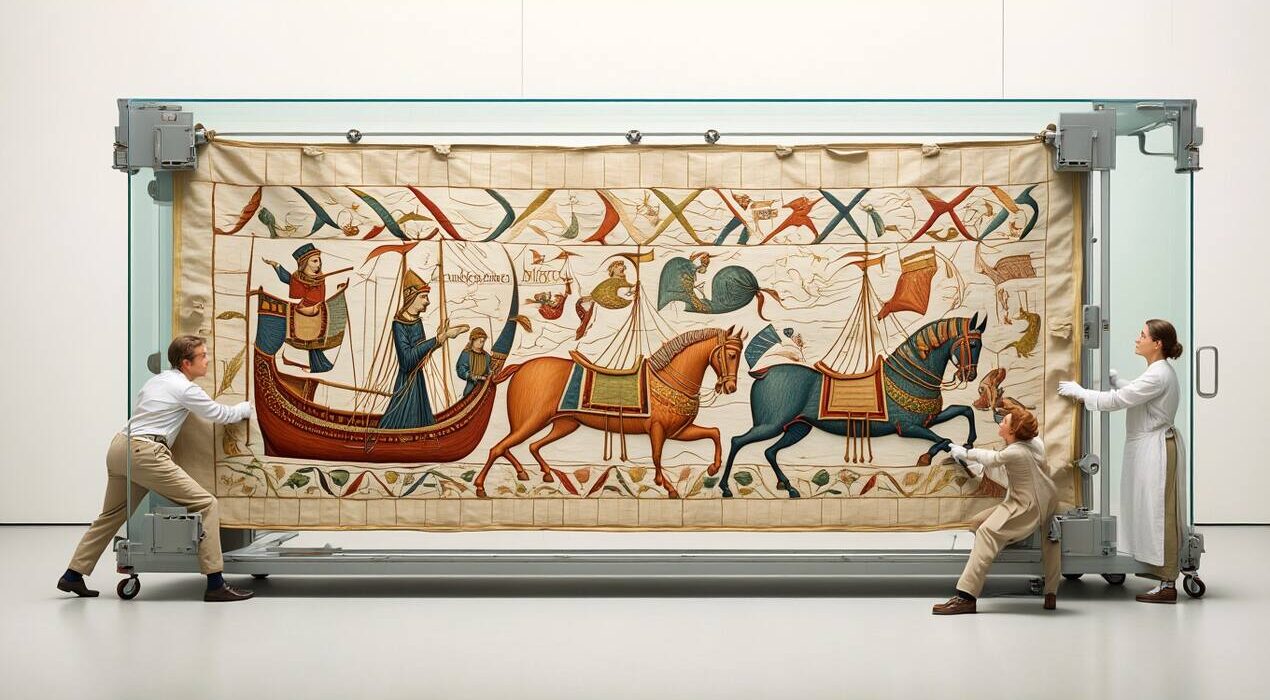
Bayeux Loan Cover: UK Insures Historic Tapestry for London
The UK government has approved Bayeux loan cover ahead of a rare museum exchange. The Treasury will insure the famous medieval embroidery for about £800m. Therefore, the artwork can travel safely to London next year.
The 70-metre embroidery illustrates the Battle of Hastings in 1066. It will move from France to the British Museum. This visit forms part of a cultural agreement between both governments.
Officials confirmed the Government Indemnity Scheme will provide the protection. This scheme supports public museums during major loans. As a result, institutions avoid costly private insurance.
The Insurance Matters
The cover applies during transport, storage, and public display. It protects against loss or accidental damage. However, it does not replace careful handling and security.
A Treasury spokesperson explained the value of the scheme. Without it, museums would face very high commercial premiums. In addition, those costs could block important exhibitions.
The indemnity system has supported major loans for decades. It allows the public to view rare objects. Therefore, it helps widen access to shared history.
The upcoming display will attract global attention. Visitors will see a detailed visual record of medieval events. Moreover, the exhibition strengthens cultural ties between nations.
Museum experts have prepared detailed transport plans. They will manage Museum experts and have prepared detailed transport plans. They will manage temperature, light, and movement carefully. As a result, risks remain tightly controlled.
The embroidery rarely leaves France. Its journey marks a historic moment. Many historians call the loan a once-in-a-generation event.
Public interest is already growing. Schools, families, and researchers plan visits. Ultimately, the project combines heritage, diplomacy, and public learning.
This insurance decision ensures safe access to a world treasure. It also shows how cooperation protects shared culture. In short, careful planning makes history accessible to all.