Bee Bacteria Fix Vitamin Gap in Plant Based Milk
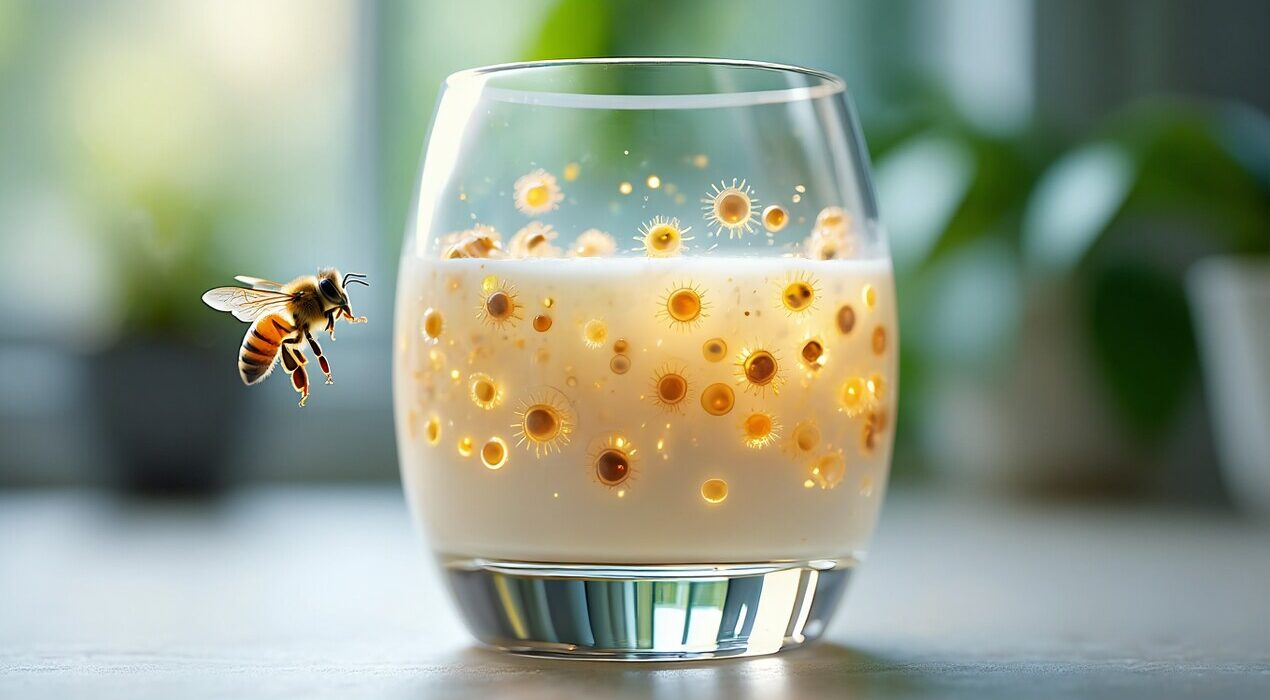
Plant-based milk often lacks key vitamins. For example, vitamin B2 is usually too low. Cow’s milk has it naturally. But soy, oat, and almond drinks do not. Therefore, researchers searched for a natural solution.
Bacteria from Bumblebees
Scientists at the DTU National Food Institute studied bumblebee guts. Why? Bees live close to plants. Their gut bacteria already adapt to plant environments. This makes them great candidates for soy fermentation. The team wanted bacteria that could grow in soy drinks and produce vitamin B2 at the same time.
A Clever Screening Method
They used a technique called droplet screening. Each bacterium gets its own tiny liquid chamber. A microfluidic system tests millions of cells in just hours. This saves months of work compared to old methods. However, soy milk is cloudy. So the researchers created a transparent soy medium. As a result, measurements became much more accurate.
A Winning Strain
One bacterium stood out: Lactococcus lactis. It produced high levels of vitamin B2 in soy drinks. It even worked when the drink already had extra vitamins. That shows stable performance. Nevertheless, the strain did not work well in rice or oat milk. Those drinks have less protein. “Fermentable protein is key for growth,” says Postdoc Hang Xiao.
This method is fast and targeted. It can also find bacteria that produce other useful substances. In the future, plant-based milk could become just as nutritious as cow’s milk. And the help comes from an unexpected place: bumblebees. 🐝