Brain Blood Pressure Link: New Study on Breathing Control
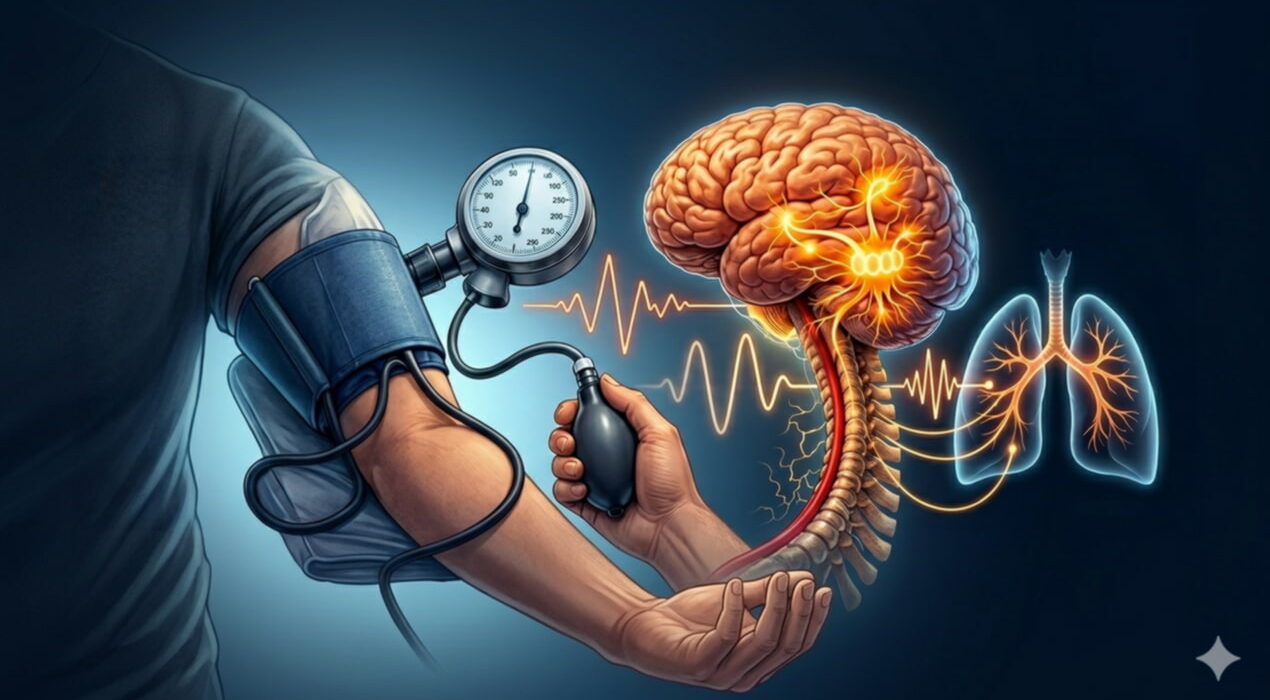
Experts say high blood pressure may link to a specific brain area called the lateral parafacial region. This region helps control breathing. The finding adds a new angle to how the body regulates blood pressure.
Researchers from the University of São Paulo and the University of Auckland shared these insights. They explain that this brain area becomes active during fast breathing. For example, it responds during coughing or physical exercise. When activated, it can cause blood vessels to tighten. As a result, blood pressure levels may rise.
How the Brain Influences Blood Pressure
The study shows a close link between breathing control and blood pressure regulation. When the lateral parafacial region activates, it sends signals that affect blood flow. These signals can narrow blood vessels and increase pressure. Therefore, the brain plays a stronger role than previously believed.
Scientists observed these effects during controlled experiments. In addition, they noted that changes in breathing patterns often triggered changes in blood pressure. This connection may help explain why stress or exertion impacts cardiovascular health.
Findings from Animal Research
Researchers tested their theory on mice to better understand this mechanism. They found that disabling this brain region helped normalize blood pressure levels. This result suggests a direct role of the area in controlling vascular responses.
However, experts caution that more research is needed. Studies on humans will help confirm these findings. In addition, scientists want to explore how this mechanism works in different conditions.
Overall, this research opens new paths for treatment. It suggests that targeting brain functions may help manage hypertension. As a result, future therapies could become more precise and effective for patients worldwide.