Brush Test Oral Cancer Detects Disease in One Hour
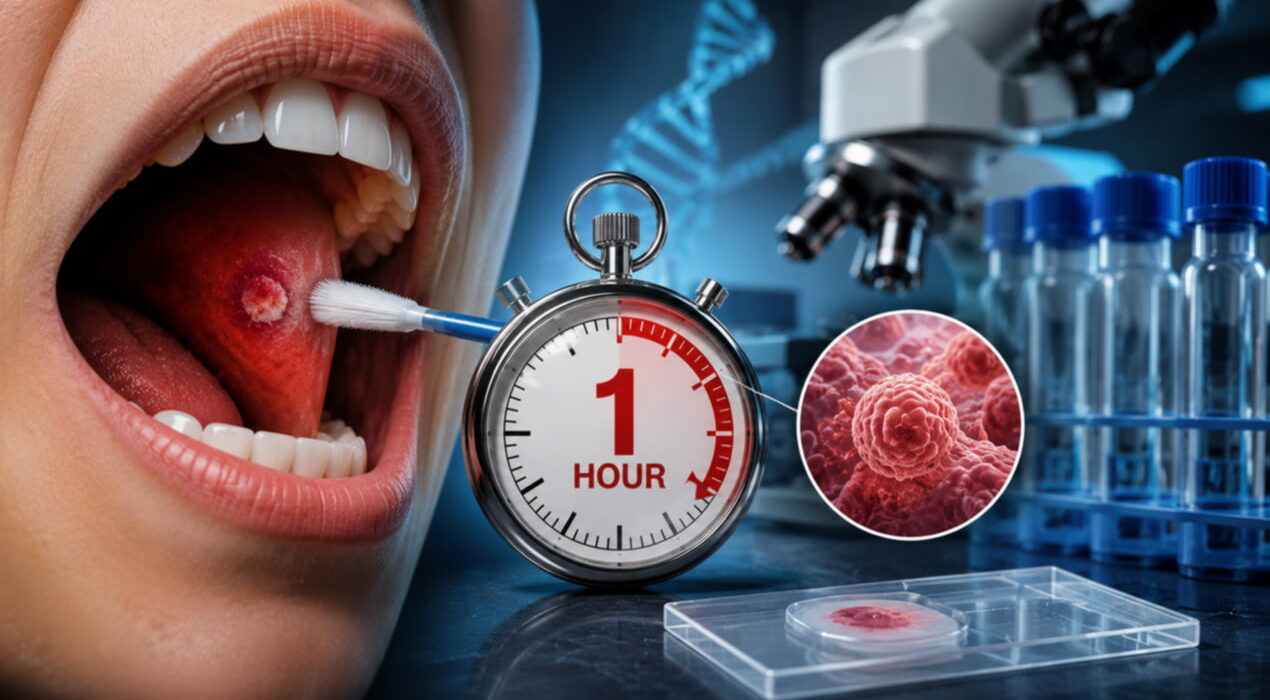
A new Brush Test Oral Cancer study offers hope for faster and easier diagnosis. Researchers at Queen Mary University of London developed a painless brush test that detects oral cancer within one hour. The findings appeared in Biomarker Research. The new approach may reduce the need for many painful tissue biopsies. As a result, doctors could identify suspicious cases sooner while improving patient comfort.
Faster diagnosis with less discomfort
The research included more than 1,000 samples from 545 patients, making it the largest study of its kind. Scientists tested a new brush biopsy called qMIDS-V3. Unlike a traditional biopsy, this method gently collects surface cells without removing tissue. Therefore, patients avoid pain, bleeding, and possible infection.
Researchers found the test accurately detected oral cancer while reducing unnecessary biopsies for over 90% of low-risk patients. In addition, the test delivers results within one hour. That speed may help doctors make quicker decisions and reduce waiting times. Early diagnosis remains vital because many oral cancer cases are still discovered at advanced stages, when treatment becomes more difficult.
Better care for high-risk patients
The new brush test also supports regular monitoring of people with potentially cancerous mouth conditions. Since the procedure is simple and repeatable, healthcare teams can check changes over time without repeated surgery. Consequently, they may detect cancer earlier and improve treatment outcomes.
Researchers also compared the new brush test with an earlier micro biopsy method. Surprisingly, both produced similar performance despite the brush test requiring no tissue removal. The team believes this strong genetic signal makes the technology highly reliable. However, further clinical use and wider adoption will determine its long-term impact. If introduced into routine care, this innovation could improve diagnosis, reduce healthcare costs, and spare thousands of patients from unnecessary invasive procedures while supporting earlier, more effective treatment for oral cancer worldwide in future.