Federal Health Employees Warn of OPD Boycott
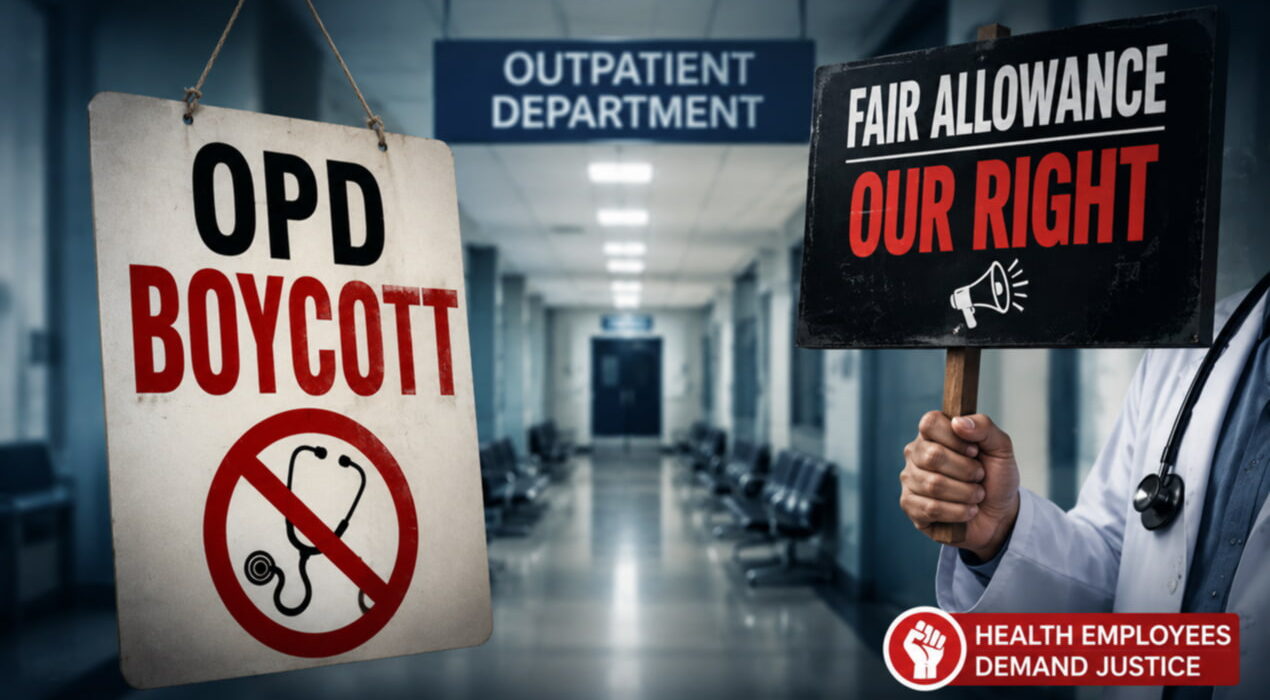
Federal health employees have warned of protests and an outpatient department (OPD) boycott. The Federal Grand Health Alliance issued the warning during a meeting in Islamabad.
Representatives from several federal hospitals attended the meeting at Pakistan Institute of Medical Sciences (Pims).
The alliance said the government must revise the health allowance within one week. Otherwise, employees will expand their protest and consider boycotting OPD services.
Employees demand revised allowance
Alliance representatives raised concerns about differences in salaries and allowances. They said federal health employees deserve a fair and updated health allowance.
Malik Zeeshan Awan, Haroon Peerzada, Kashif, Nasir Ahmed and Dr Yousuf Khan addressed the meeting.
The employees demanded an allowance linked with the 2022 running basic pay. They want the government to address the issue.
If officials do not accept their demand within a week, the alliance plans wider protests. It also warned of an OPD boycott across federal hospitals.
Paramedics complete leadership training
Meanwhile, more than 100 paramedical workers from Balochistan completed leadership training. The Health Services Academy (HSA) conducted the programme between June and August.
Participants received certificates during a farewell ceremony. MNA Jamal Raisani attended as chief guest, while Gilgit-Baltistan Health Minister Iqbal Hassan joined as guest of honour.
Focus on healthcare workforce
HSA Vice Chancellor Prof Dr Shahzad Ali Khan said the academy plans further programmes. These initiatives will support healthcare workers in Balochistan and Gilgit-Baltistan.
The academy will focus on underserved and hard-to-reach areas. Officials stressed professional development for frontline workers.
They said stronger leadership and management skills can improve public health services. Better training can also support efficient healthcare delivery.
Fair employment benefits can support staff morale, while training can strengthen service quality. Therefore, continued dialogue may help improve public healthcare systems.
The move highlights key concerns for healthcare workers.