Fuel Affordability Crisis: Pakistan Faces Region’s Toughest Burden
Pakistan is facing a growing fuel affordability crisis. Fuel prices across South Asia remain close in dollar terms. However, income gaps change how people experience these costs. As a result, Pakistani households feel far more financial pressure.
Pakistan Faces Higher Fuel Pressure
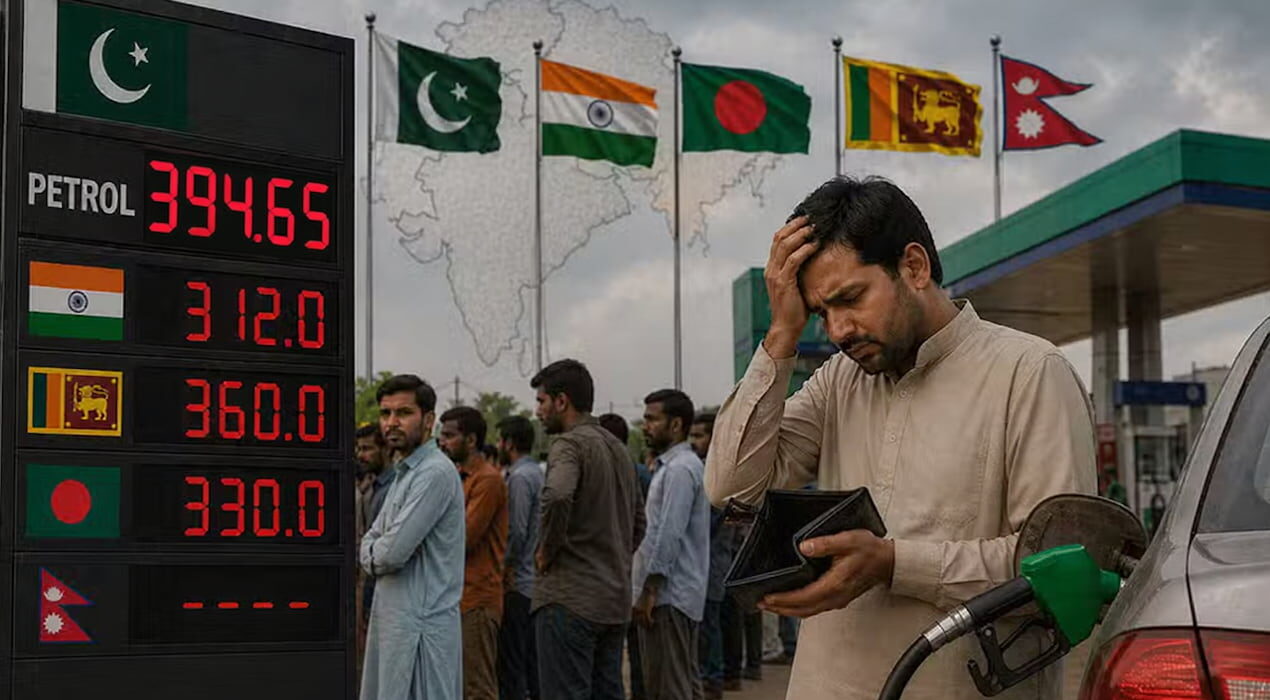
Petrol prices in Pakistan average around $1.41 per litre. Meanwhile, India, Bangladesh, and Sri Lanka show similar price levels. For example, India stands near $1.1, while Bangladesh is about $1.05. Sri Lanka also stays close to $1.4.
However, income levels tell a different story. Pakistan’s per capita income ranges between $1,400 and $1,600. In comparison, India and Bangladesh both exceed $2,500. Sri Lanka reports more than $4,500. Therefore, people in these countries manage fuel expenses more easily.
Lower earnings mean fuel takes a larger share of income. In addition, global oil price shifts quickly affect local markets. Consequently, Pakistani consumers face stronger financial stress.
Rising Prices and Growing Pressure
Recently, authorities increased petrol prices by Rs. 26.77 per litre. This pushed the rate to Rs. 393.35. Diesel prices also rose to Rs. 380.19. These increases add direct pressure on daily spending.
Although exchange rates influence fuel costs, income growth remains slow. As a result, the gap between wages and expenses keeps widening. Moreover, inflation reduces purchasing power further.
Sri Lanka presents a contrasting case. Despite its 2022 debt default, it now shows stronger income levels. This improvement supports better cost handling.
In conclusion, the issue goes beyond fuel prices. Instead, it reflects the balance between income and energy costs. Without income growth, Pakistan’s fuel affordability crisis will likely continue.