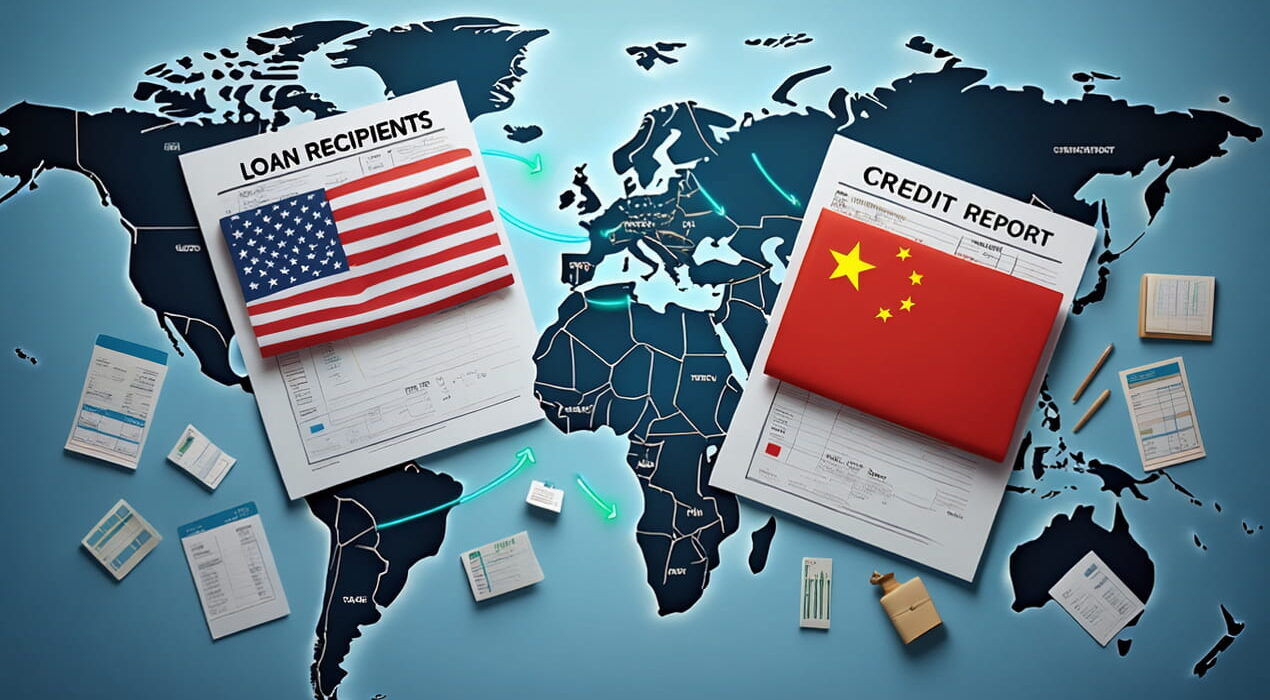
Global Credit Shift US Emerges as Top Recipient of Chinese Loans
A new study reveals a major global credit shift. It shows the United States now receives more Chinese loans than any other nation. This finding surprises many who believed China mainly supported developing economies.
Researchers tracked thousands of credit arrangements. They discovered a clear move toward lending to higher income countries. As a result, Beijing’s financial influence now stretches deeper into advanced markets.
China once focused on developing regions through large projects. However, recent trends show a stronger push into wealthier nations. This change signals a broader strategy aimed at long term global reach.
AidData, the group behind the report, said China’s portfolio is much larger than earlier estimates. Their study suggests it is two to four times bigger. Therefore, China remains the world’s largest official creditor.
Focus on High Tech Assets
More than three quarters of China’s current lending supports projects in upper middle income and high income countries. This includes investments in strategic infrastructure and modern industry. For example, new funding often targets clean energy, advanced manufacturing, and artificial intelligence.
Lead author Brad Parks said lending to wealthier countries centers on critical resources. This includes minerals, major transport systems, and high tech assets. Some projects even involve semiconductor companies.
This shift reflects China’s effort to secure supply chains. In addition, it supports industries linked to future technologies. These areas will shape global competition for decades.
Experts believe the evolution of China’s lending strategy is deliberate. It strengthens partnerships with countries that drive global innovation. It also positions Beijing in sectors essential for economic security.
The study suggests that lending to advanced economies also reduces financial risk. Developed nations often bring stable returns. Therefore, these partnerships may offer China more predictable outcomes.
Still, the move raises questions for many governments. Some worry that deeper financial ties may influence key decisions. Others argue that cooperation can support progress in clean energy and modern infrastructure.
What remains clear is that China’s lending strategy continues to evolve. This global credit shift marks a new phase in international finance. Countries will watch closely as these patterns shape future economic relations.