Health and Poverty: What Has Changed Since 2011? An Expert Reflects
Fifteen years ago, Dr. Gijs Walraven published Health and Poverty. His book won a British Medical Association award. It examined how poverty and ill health trap each other.
Now, he shares a deep, honest reflection. What has improved? What has worsened? Are innovations reaching the poorest?
His answers are both hopeful and sobering. Progress is real, but it is fragile and deeply uneven.
The Story of Aisha and Omar
Aisha lives in a remote Syrian village. Her son Omar woke at night gasping for air. She waited. She tried home remedies. She feared the cost of care more than the illness itself.
The bus fare would cost a week’s income. Medicines would not be free. Follow-ups would multiply expenses.
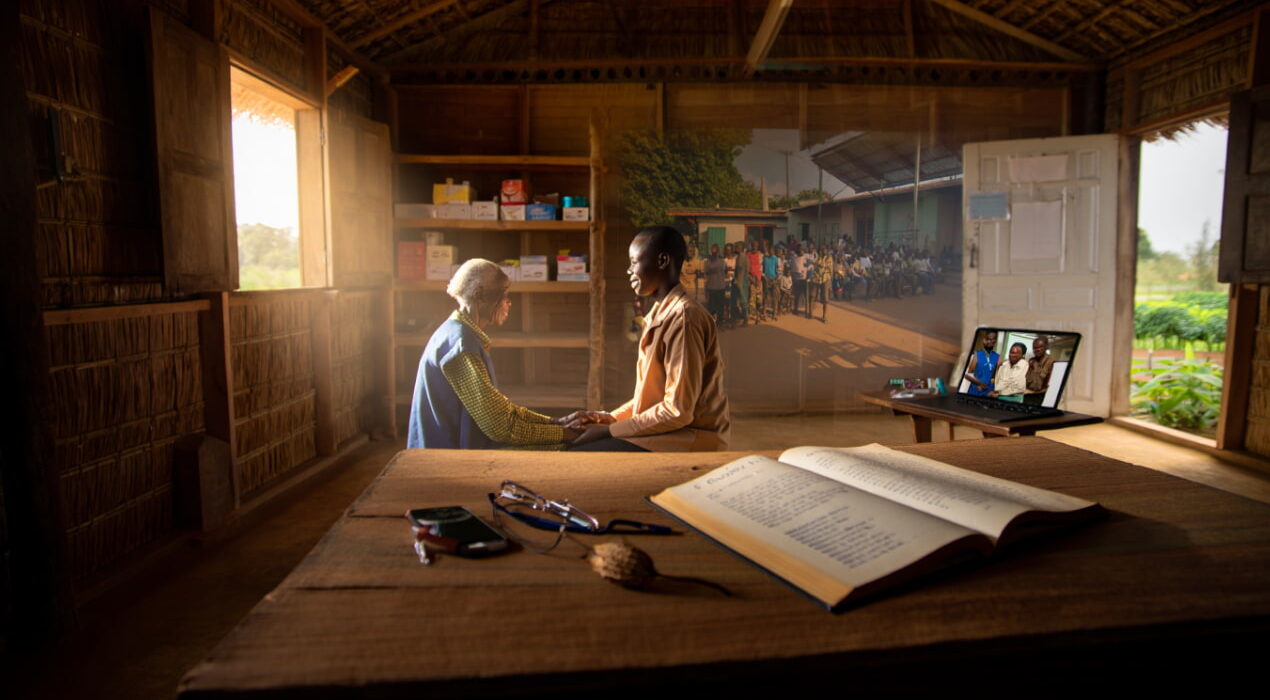
What Aisha did have was Layla. Layla is a volunteer community health worker trained by a local programme. She helped organize financial support. She encouraged Aisha to join a community health insurance scheme.
The scheme is simple. Families contribute modestly to share risk. It prevents catastrophic health expenditure. This is universal health coverage in practice.
Old Threats Persist, New Ones Emerge
Malaria, unsafe motherhood, and HIV remain critical. Undernutrition and unsafe water still kill. However, the global health landscape now includes powerful new forces.
Climate change amplifies nearly every health risk. It expands malaria zones. It causes crop failure and hunger. Heat is now a leading climate-related killer. Floods and storms overwhelm fragile health systems.
COVID-19 exposed deep structural vulnerabilities. Countries with weak primary healthcare suffered most. Poverty remains the dominant risk factor for ill health. This truth applies to both old and new threats.
Conflict has also risen sharply since 2011. In some regions, war now outweighs disease biology as the main health determinant. Displaced populations face long-term trauma and broken systems.
The Nature of Disparities Has Shifted
In 2011, the main problem was physical inaccessibility. People simply could not reach care. Now, nominal coverage has expanded. However, quality and continuity differ sharply.
Poor populations now receive lower-quality care. They experience diagnostic delays. Preventable mortality increasingly reflects poor care, not no care.
Patients today are more informed but poorly protected. Awareness of rights has increased. Yet unmet expectations deepen distrust. Out-of-pocket costs for transport and medicines remain catastrophic.
Chronic diseases impose long-term economic strain. Patients now often live with multiple conditions. Yet health systems rarely manage these combinations well.
Are Innovations Reaching Those in Need?
The short answer is partially, unevenly, and too slowly. Biomedical advances like vaccines and rapid diagnostics have accelerated. Digital health and new financing models hold promise.
However, the critical question is different. Innovation exists, but where and for whom does it actually deliver?
Those most in need benefit when innovations are simple. They must be publicly financed and embedded in primary care. They must be designed for low-capacity environments from the start.
Digital tools often exclude rural, older, or low-literacy groups. Fragile settings are deemed “too risky” for scaling up. Ironically, these are precisely where poor populations are most exposed to unsafe care.
Was the Optimism of 2011 Justified?
Dr. Walraven admits his optimism was not naïve, but conditional. Progress has been possible. HIV is now a manageable chronic condition. Malaria deaths have fallen. Maternal mortality can decline rapidly.
However, he underestimated several obstacles. Political commitment proved less durable than technical success. Evidence alone does not drive policy. Funding plateaued once crises faded.
Most strikingly, inequality has adapted faster than health systems. As systems expanded, better-off groups captured quality. Private-for-profit provision siphoned away political support. Poor populations gained access but not power.
External shocks were also underestimated. A global pandemic. Rapidly accelerating climate change. Prolonged, multi-region conflicts. Progress, it turns out, is reversible, not cumulative.
What Has AKDN Learned?
Success is not primarily technological breakthroughs. It is institutional and service-delivery achievements sustained over decades. This is rare in global health.
AKDN’s “hub and spokes” model connects hospitals, primary care centers, and outreach services. It invests simultaneously in community care and secondary hospitals. Patients experience a system, not a patchwork of services.
High-quality care is possible in low-income settings. Clinical standards and accreditation matter. Continuous training and patient safety are non-negotiable. The poor should never accept “good enough.”
Equity is not a programme feature you simply add. Equity is a property a system either produces or it does not. This remains the central challenge for health and poverty in 2026.