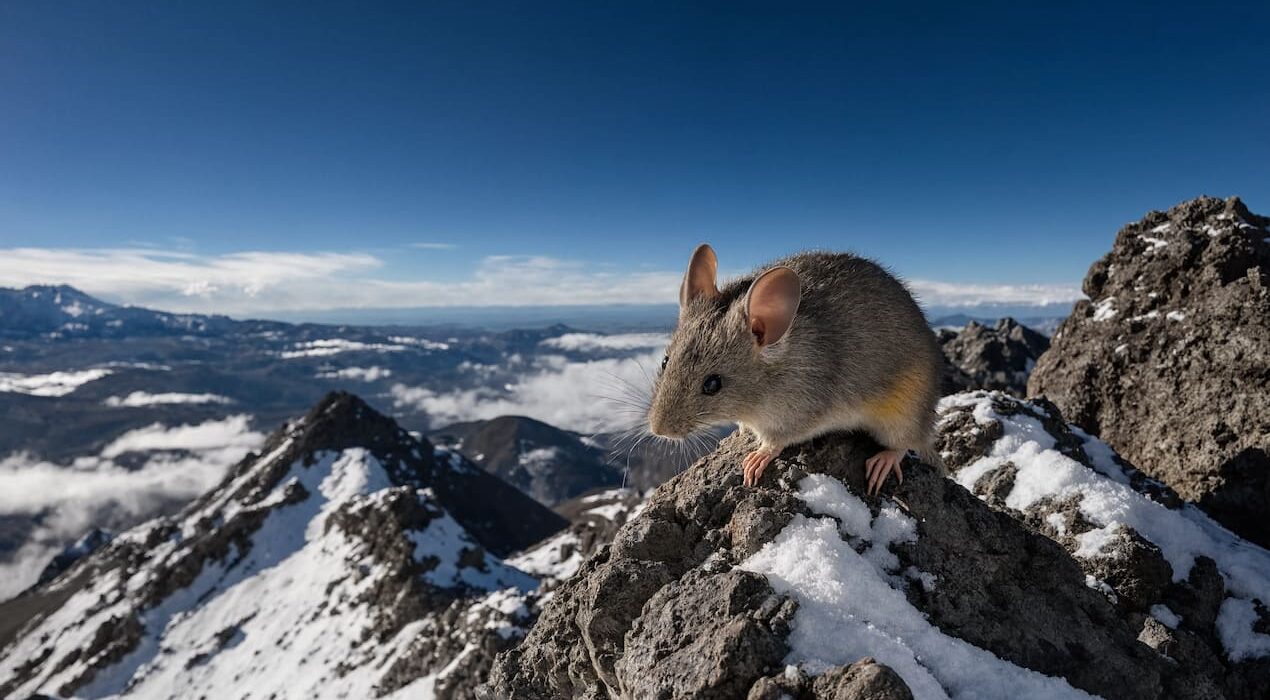
Highest-Living Mammal Redefines Survival Limits
The highest-living mammal has changed what scientists believed about life at extreme altitudes. Researchers found the Andean leaf-eared mouse living above 6,700 meters in the Andes. This harsh environment has freezing temperatures, thin air, and very little food.For many years, scientists thought mammals could survive only up to about 5,500 meters. However, this remarkable mouse lives much higher. Its discovery challenges long-held ideas about the limits of animal survival.
Remarkable Adaptations Help It Survive
Researchers compared mice from sea level with mice living on mountain summits. They recreated high-altitude conditions inside a laboratory. The highland mice produced heat Their muscles contain many more mitochondria, which generate energy for the body. As a result, the mice keep warm for longer periods. Their muscles work more like those of marathon runners than sprinters.The animals also burn fat efficiently to maintain body heat. This energy source supports long-lasting heat production in freezing conditions. Consequently, the mice survive where most mammals could not.Scientists also discovered important genetic adaptations. These changes improve metabolism and help the animals process unusual foods. Their diet includes lichens, seeds, and insects carried by strong mountain winds.
A New Understanding of Extreme Life
The findings show that survival depends on several adaptations working together. Evolution improved the mice’s muscles, metabolism, digestion, and heat production. Therefore, no single trait explains their success.Researchers believe this discovery offers valuable lessons about adaptation in changing environments. Animals often face multiple challenges at the same time, not just extreme temperatures.The study highlights nature’s remarkable ability to overcome harsh conditions. As scientists continue exploring remote habitats, they may discover even more surprising examples of life thriving in extreme places.