How Mobocracy Influenced the Education Sector During Yunus’ Government
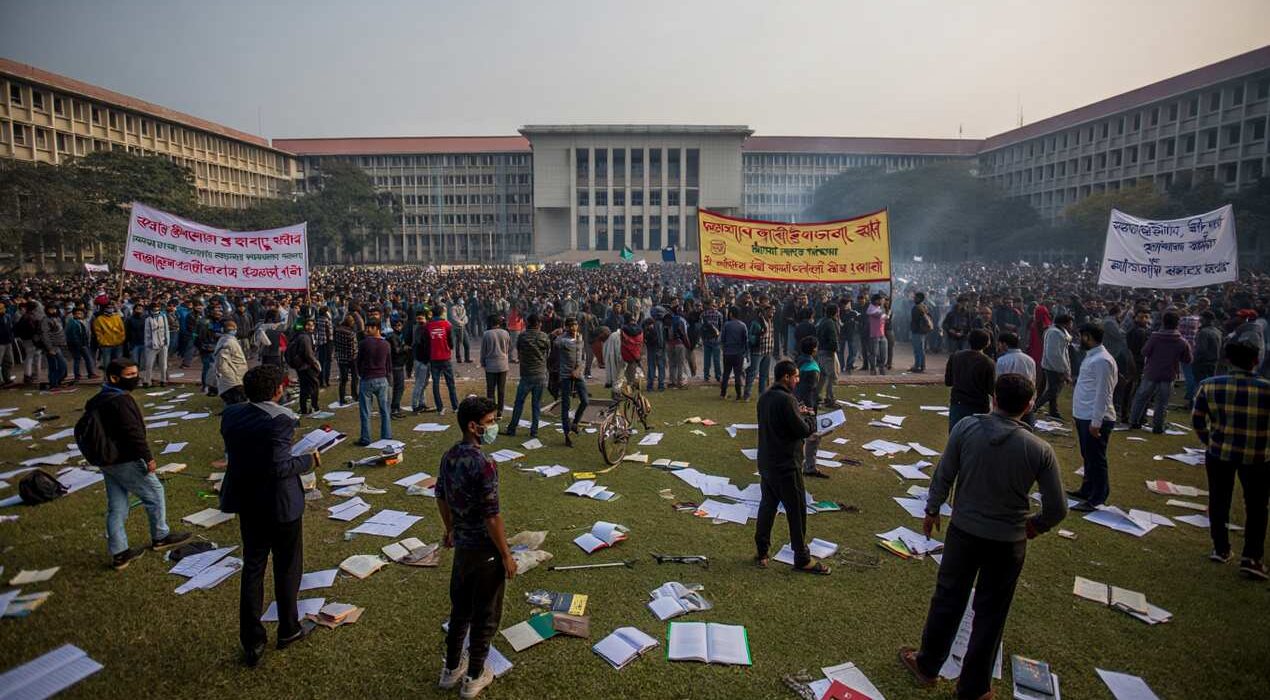
How Mobocracy Shaped the Education Sector During Muhammad Yunus’ Government Public pressure played a powerful role during Yunus’ government. Critics claim that mob influence shaped several education decisions. As a result, policy stability faced repeated challenges.Observers describe moments when protests affected administrative actions. Demonstrations often demanded immediate changes in leadership or policy. Therefore, officials sometimes responded quickly to calm tensions. Quick responses, however, raised concerns about due process.
Policy Decisions Under Pressure
Education authorities reportedly altered decisions after public backlash. For example, some administrative transfers faced strong resistance. Vocal groups organized rallies and social media campaigns. Consequently, policymakers had to reconsider certain moves.Supporters argue that public engagement reflects democracy in action. However, critics say mob-driven demands weaken institutional authority. Balanced governance requires structured dialogue. Emotional reactions can disrupt long-term planning.
Impact on Schools and Universities
Frequent disruptions affected academic environments. Teachers and students experienced uncertainty during tense periods. In addition, administrative delays slowed routine operations. These conditions made consistent reform difficult.
Education experts stress the need for transparent consultation. Structured forums allow stakeholders to share concerns respectfully. As a result, policies can evolve without instability. Inclusive communication reduces conflict.
Lessons for Future Governance
Strong institutions rely on clear procedures. Leaders must protect academic spaces from political turbulence. At the same time, governments should listen to legitimate concerns. Therefore, balanced leadership remains essential.Public participation strengthens democracy when managed responsibly. Peaceful dialogue often leads to sustainable solutions. In contrast, mob pressure may create short-term fixes. Long-term progress requires stability and trust. Overall, the debate highlights tensions between activism and governance. The education sector thrives on predictability and fairness. With careful planning and open communication, policymakers can safeguard learning environments while respecting public voices.