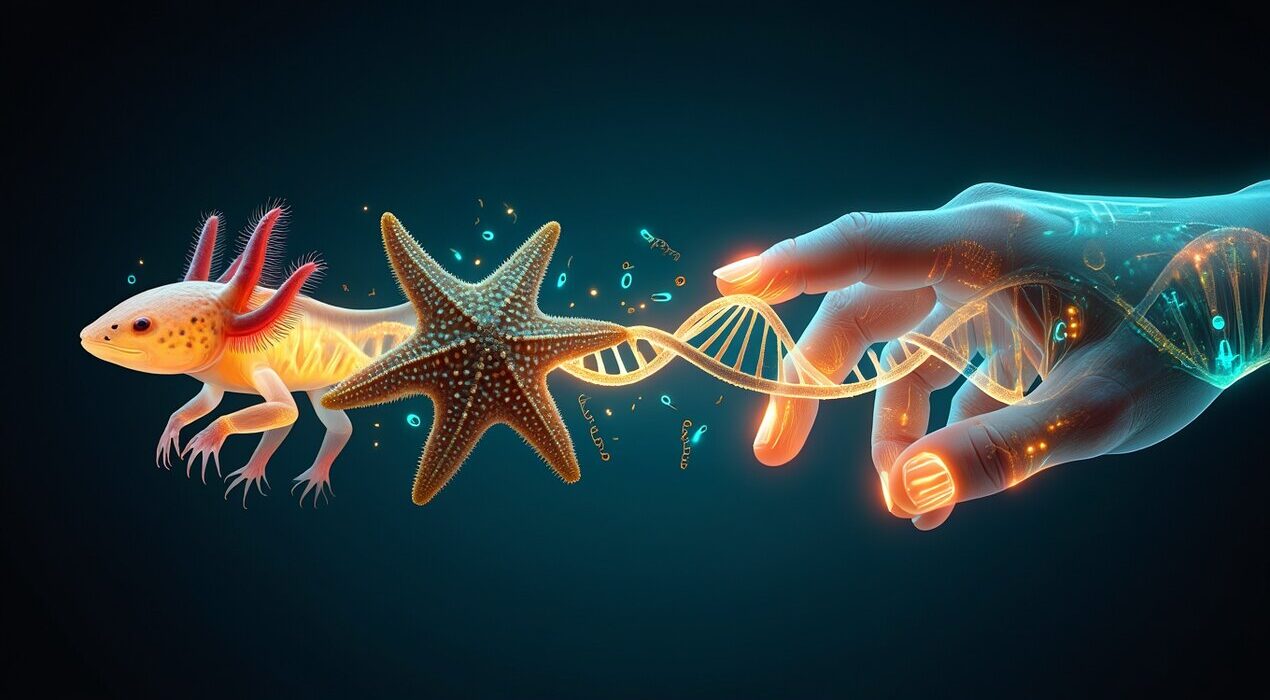
Human Limb Regrowth Gets a Genetic Clue from Animals
Axolotls regrow entire limbs. Zebrafish regrow their tails. Mice regrow digit tips. Scientists discovered that all three use the same genes. These are called SP6 and SP8.Therefore, a universal genetic program may control regeneration across species.
The Three Organism Comparison
Researchers from three universities collaborated. They studied axolotls, zebrafish, and mice separately. Then they compared the results. The regenerating skin in each animal produced SP6 and SP8.Using CRISPR, the team removed SP8 from axolotls. Without it, the animals could not regrow limb bones.
A Successful Gene Therapy
Mice missing both SP6 and SP8 also failed to regrow digits. However, the researchers designed a viral therapy. It delivered a molecule called FGF8. This molecule normally gets activated by SP8.As a result, the therapy partially restored digit regrowth. Even without the original genes, the mice improved.
Human Relevance of the Findings
Humans cannot regrow limbs naturally. But we share a similar ability for fingertip regrowth. More than one million amputations happen each year worldwide. Prosthetics help, but natural limbs are better. “This is a proof of principle,” says Professor Josh Currie. Gene therapy might one day substitute for regenerative skin.
A Collaborative Future
The team hopes to combine this approach with bioengineered scaffolds and stem cells. “Working across organisms is powerful,” Currie adds. Much more research is needed. Nevertheless, this study opens a promising new path toward human limb regrowth.