Hyundai Union Warns Against Humanoid Robots Over Job Loss Fears
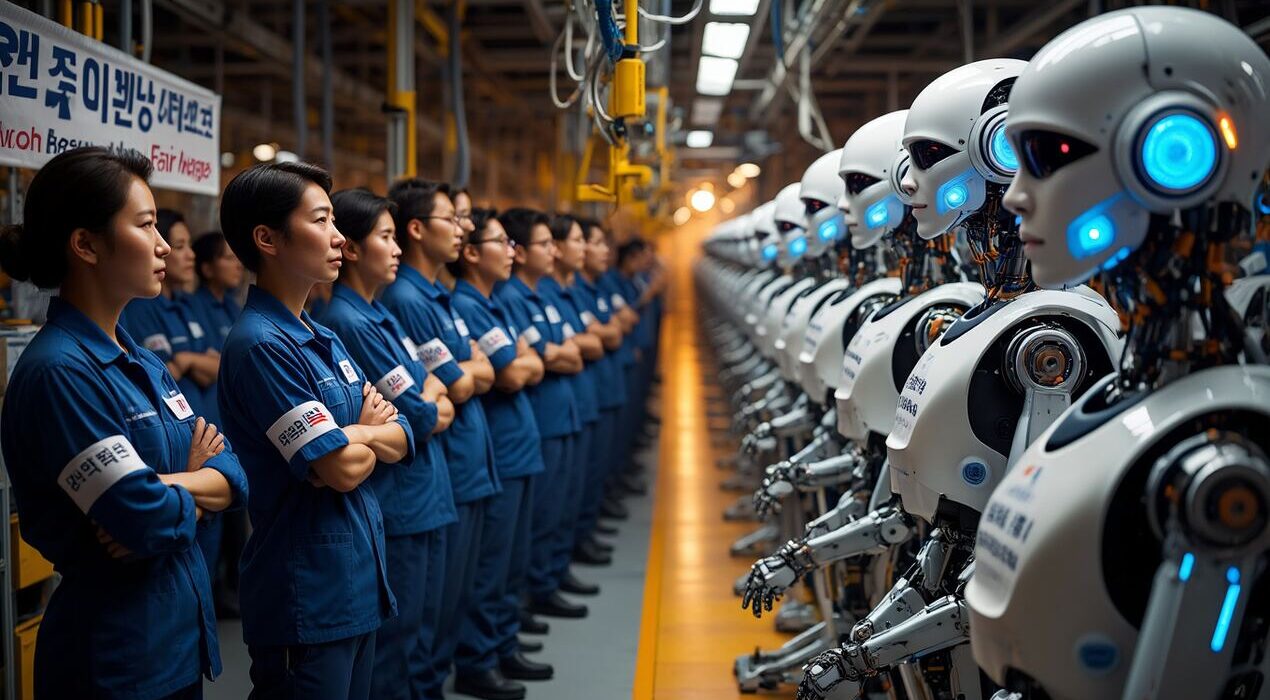
Hyundai Motor’s labor union in South Korea has issued a strong warning against the use of humanoid robots in company factories. The union says robots could trigger serious employment shocks and lead to job losses. As a result, it insists no humanoid robot should enter workplaces without a formal labor-management agreement. The warning follows Hyundai’s announcement at CES 2026. The company revealed plans to deploy Boston Dynamics’ Atlas humanoid robot in manufacturing. Hyundai also shared its ambition to build a facility capable of producing up to 30,000 humanoid robots per year by 2028. This announcement has raised concerns among workers about automation replacing human labor.
Union leaders argue that introducing robots without safeguards could shrink the workforce. They stress that technological progress must not come at the cost of employee security. Therefore, the union says any deployment must receive prior union approval.
Robot Rollout Plans and Growing Tensions
According to reports, Hyundai plans to deploy its first humanoid robots at a new U.S. plant in Georgia in 2028. Expansion to other global factories may follow later. Initially, the robots will handle simple tasks such as parts sequencing. However, by 2030, they could move on to more complex and physically demanding work.
The union has also criticized Hyundai’s growing investment in the United States. It claims the Georgia factory could threaten jobs at two existing plants in South Korea. As a result, workers fear production may shift overseas while automation reduces local employment further.
Experts say this dispute reflects a wider global debate. Many industries are struggling to balance automation with workforce protection. Humanoid robots promise efficiency and safety improvements. However, they also raise difficult questions about long-term job security.
So far, Hyundai Motor has not issued an official response to the union’s warning. Still, the standoff highlights the importance of dialogue. Without clear agreements, tensions between innovation and labor rights may continue to grow as humanoid robots move closer to factory floors.