Japan Chores Double Standard Sparks Global Social Media Debate
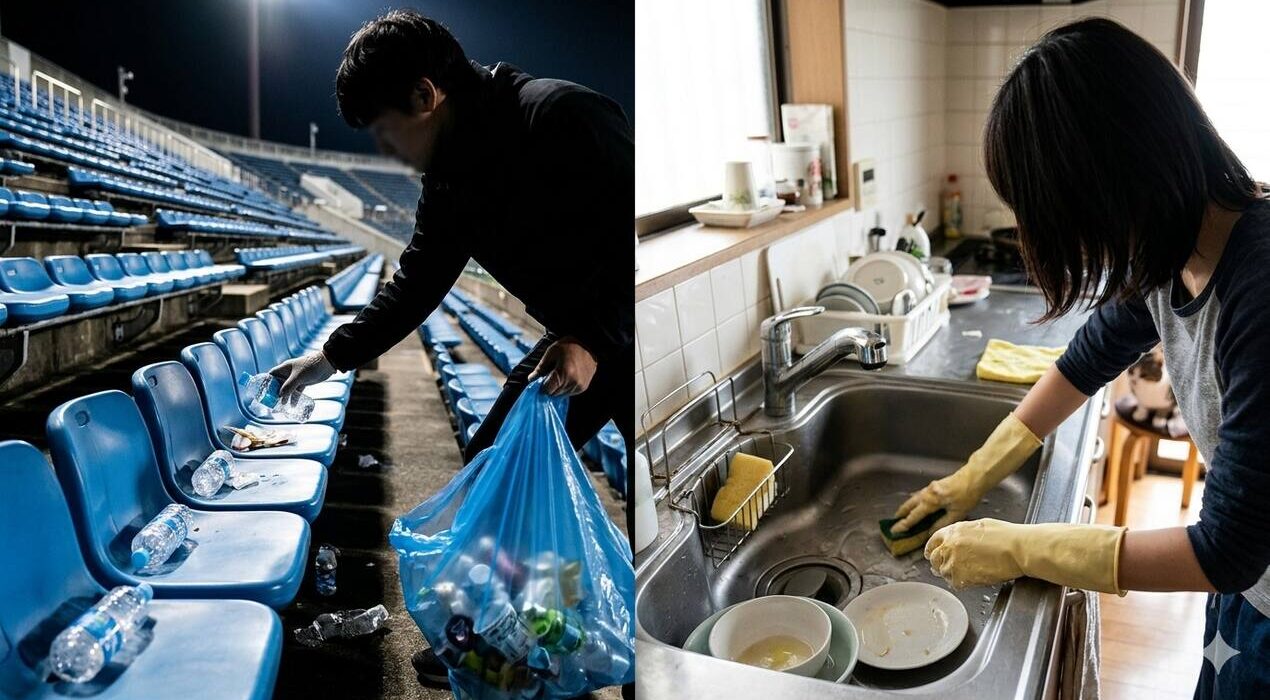
The Japan chores double standard has become the focus of a heated online discussion after a viral social media post highlighted differences between public and private responsibilities. The debate began when photographs showed Japanese sports fans cleaning stadiums after a match, a practice widely praised around the world.
However, a viral image presented a contrasting perspective. It placed a photo of a man collecting litter in a stadium beside another image showing him relaxing at home while his wife completed household chores. The comparison sparked widespread discussion about gender roles and domestic responsibilities.
Social Media Response
The post quickly gained attention online, receiving tens of thousands of interactions. Many users argued that public acts of civic responsibility should be matched by equal participation in household tasks. Critics pointed out that women in many societies continue to carry a larger share of unpaid domestic work.
Several commenters referenced the importance of contributing at home rather than focusing solely on visible community activities. Others questioned whether public praise sometimes overlooks everyday responsibilities that receive far less recognition.
A Broader Discussion
Although the debate began in Japan, it resonated with audiences worldwide. Similar conversations about work-life balance, childcare, and household responsibilities have emerged in many countries. Traditional expectations often place greater domestic burdens on women, leading to calls for a more equal distribution of responsibilities.
Supporters of stadium-cleaning traditions argued that such actions promote community spirit, respect, and social responsibility. Nevertheless, critics maintained that genuine equality requires commitment both in public spaces and within the home.
The discussion has encouraged renewed attention to policies supporting family life, including flexible working arrangements and parental leave. While progress has been made in some areas, many believe further changes are necessary.
Ultimately, the viral debate highlights an important question: should society celebrate public contributions while overlooking unpaid work at home? For many observers, meaningful equality depends on valuing both.