JI Pushes Rs225 Fuel Demand Amid Nationwide Protests
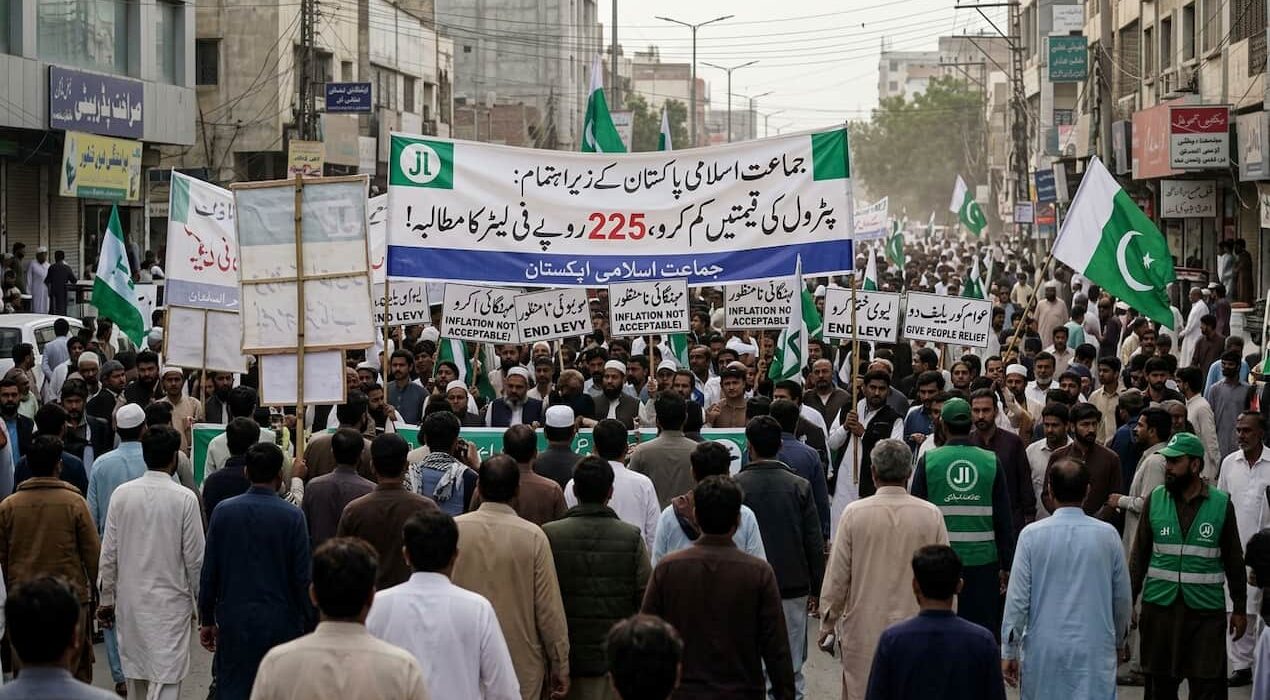
Jamaat-e-Islami (JI) has renewed its protest campaign with an Rs225 petrol price demand. The party staged sit-ins in Lahore, Karachi, Peshawar and Quetta. It wants the government to withdraw the petroleum levy and provide relief from rising prices.
JI steps up pressure
In Lahore, JI workers marched from Masjid-i-Shuhada along The Mall. They later held a sit-in at Faisal Chowk near the Chief Minister’s House. The protest affected traffic between Regal Chowk and Faisal Chowk.JI Emir Hafiz Naeemur Rehman addressed the protesters. He called the petroleum levy an “extortion tax” and criticised the government’s taxation policy. He also questioned the tax contribution of landlords and feudal groups.
Hafiz Naeem said salaried workers carry a heavy tax burden. At the same time, families continue to face high food and fuel costs. Therefore, he urged the government to provide immediate economic relief.He said the campaign does not target any political party. Instead, JI seeks action against policies that hurt ordinary citizens. However, the party rejected the government committee formed for talks.
Protests spread across cities
In Peshawar, JI workers staged a sit-in outside the Governor House. Liaquat Baloch criticised fuel taxes, electricity prices and prolonged load-shedding. He also raised concerns about insecurity, border closures and economic problems.In Karachi, workers marched towards the Governor House under Munim Zafar. Police placed containers along the route, while heavy security surrounded the area. After talks failed, protesters staged a sit-in on the road.
Zafar also highlighted Karachi’s water, education, healthcare and security concerns. He demanded action over the killing of Mir Raza and better civic services.JI has announced a 15-day protest schedule. It includes separate programmes for women, lawyers, farmers and traders. The party says it will expand the campaign if its demands remain unmet.JI wants lower petrol prices, withdrawal of the petroleum levy and fewer privileges for the ruling elite. It also seeks stronger public services and relief from inflation.