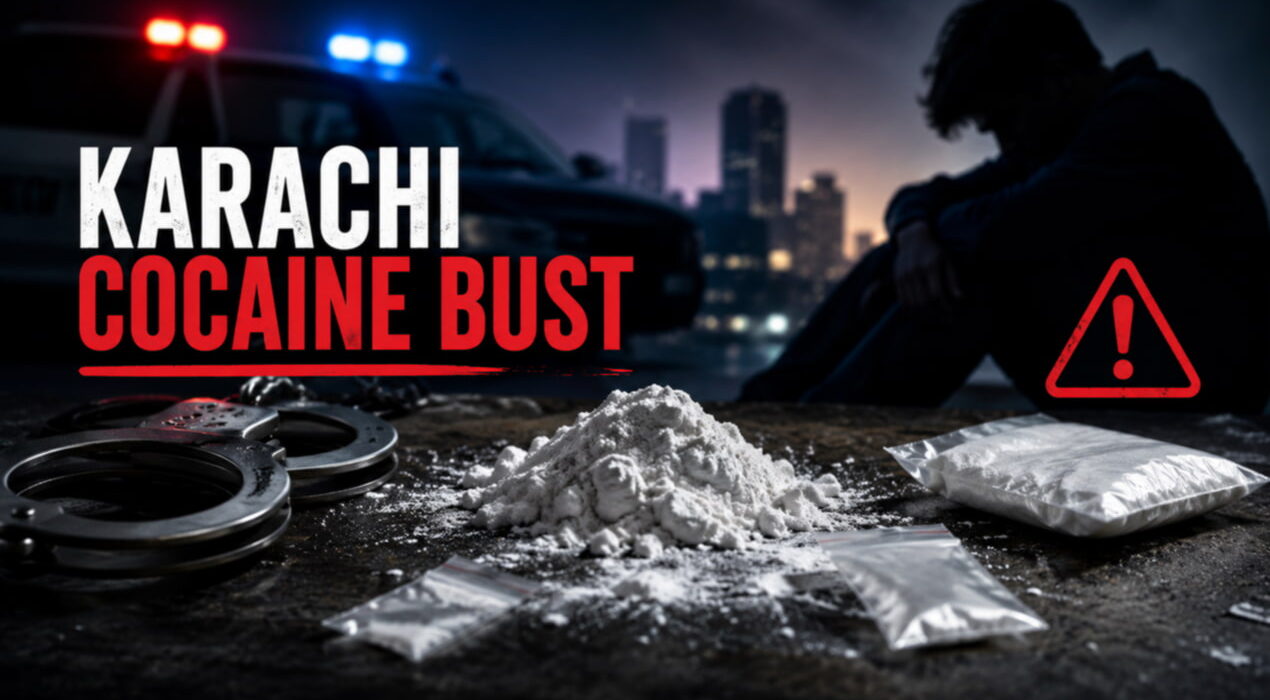
Karachi Cocaine Bust Sparks Fears Over Rising Youth Drug Abuse
The recent Karachi cocaine bust has raised fresh concerns about rising drug abuse among young people in Pakistan. Health experts believe the case reflects a much larger problem involving synthetic drugs, addiction, and mental health risks in urban areas.
Police continue investigating the alleged narcotics network linked to suspect Anmol alias Pinky. However, doctors and addiction specialists say the growing availability of cocaine and synthetic stimulants now threatens students and young adults across Karachi and other major cities.
The Pakistan Medical Association (PMA) has also warned that narcotics are spreading rapidly through covert online systems and delivery networks. According to medical experts, easy access to drugs is placing teenagers at greater risk of addiction and long-term neurological damage.
PMA Warns About Rising Youth Addiction
Dr. Muhammad Ismail Memon, Honorary President of PMA Karachi, described the situation as extremely alarming. He urged authorities to introduce stricter enforcement measures and stronger prevention strategies.
He warned that drugs are increasingly reaching areas near schools, colleges, and universities. As a result, many students now face exposure to dangerous substances at an early age.
Experts say cocaine and synthetic stimulants can trigger anxiety, panic attacks, depression, hallucinations, and violent behavior. In addition, repeated drug use may damage brain development and emotional stability among teenagers.
Digital Networks Expanding Drug Access
Healthcare specialists believe social media platforms and encrypted messaging apps are helping drug suppliers avoid detection. Furthermore, rider-based delivery systems have made narcotics easier to access in urban neighborhoods.
Public health analysts say this trend creates serious challenges for families, schools, healthcare providers, and law enforcement agencies. Many experts now view drug abuse as both a public health and youth protection emergency.
Calls for Awareness and Rehabilitation
The PMA has demanded stronger legislation, improved rehabilitation services, and nationwide awareness campaigns. Experts believe education and early intervention can help protect young people from addiction and lasting psychological harm.