Karachi Districts Report Fresh Polio Virus Traces
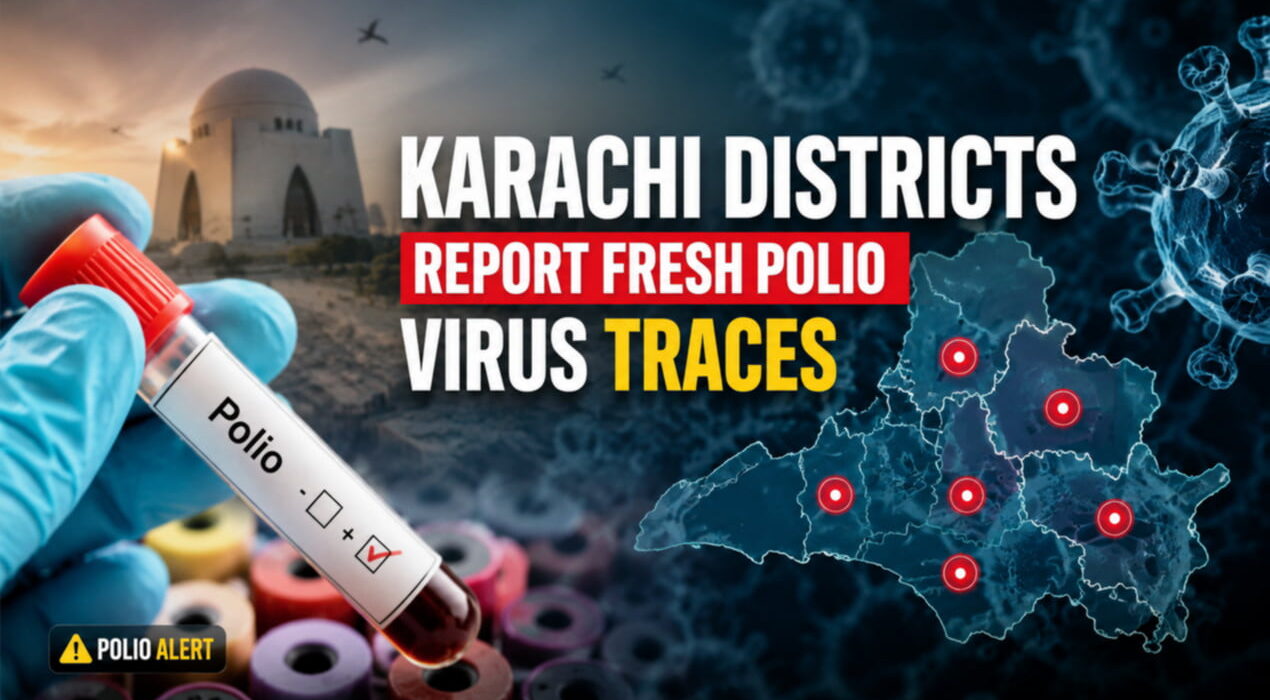
Karachi districts have recorded fresh polio virus traces in environmental samples, raising concerns about continued virus circulation. The findings cover six districts across Karachi.
According to the National Emergency Operations Centre, officials detected the virus in Karachi samples. The samples came from Central, East, Keamari, Malir, South, and West. Therefore, health teams focus on areas where the virus may circulate.
The findings come from environmental surveillance. This method helps authorities detect virus activity without waiting for paralysis cases. In addition, samples can guide vaccination teams toward communities that need protection.
Karachi has reported similar environmental findings several times recently. However, the latest results show that the virus continues to appear in several parts of the city.
Virus detected in other areas
Sindh reported a positive environmental sample from Kashmore in July. Meanwhile, samples from Chaman, Dera Bugti, and Quetta in Balochistan showed traces of the virus.
Khyber Pakhtunkhwa recorded positive samples in Bannu and Peshawar. Punjab reported a positive environmental sample from Rawalpindi during July.
These findings highlight the need for continued surveillance and vaccination. Health authorities can use laboratory results to identify areas needing additional action.
Parents and caregivers can support prevention by ensuring children receive all recommended polio vaccine doses. Vaccination remains a useful way to protect children from this serious disease.
Why surveillance matters
Environmental testing gives health officials an early warning about virus circulation. As a result, teams can strengthen vaccination activities before infections spread.
Health officials will continue monitoring wastewater samples in affected areas. Regular testing can help measure whether vaccination efforts are reducing virus circulation over time.
The latest Karachi districts findings underline the need for community cooperation. Families, health workers, and local authorities all help protect children.
Continued vaccination, careful monitoring, and quick public health action can help stop polio transmission. Communities can help create a safer future for all children.