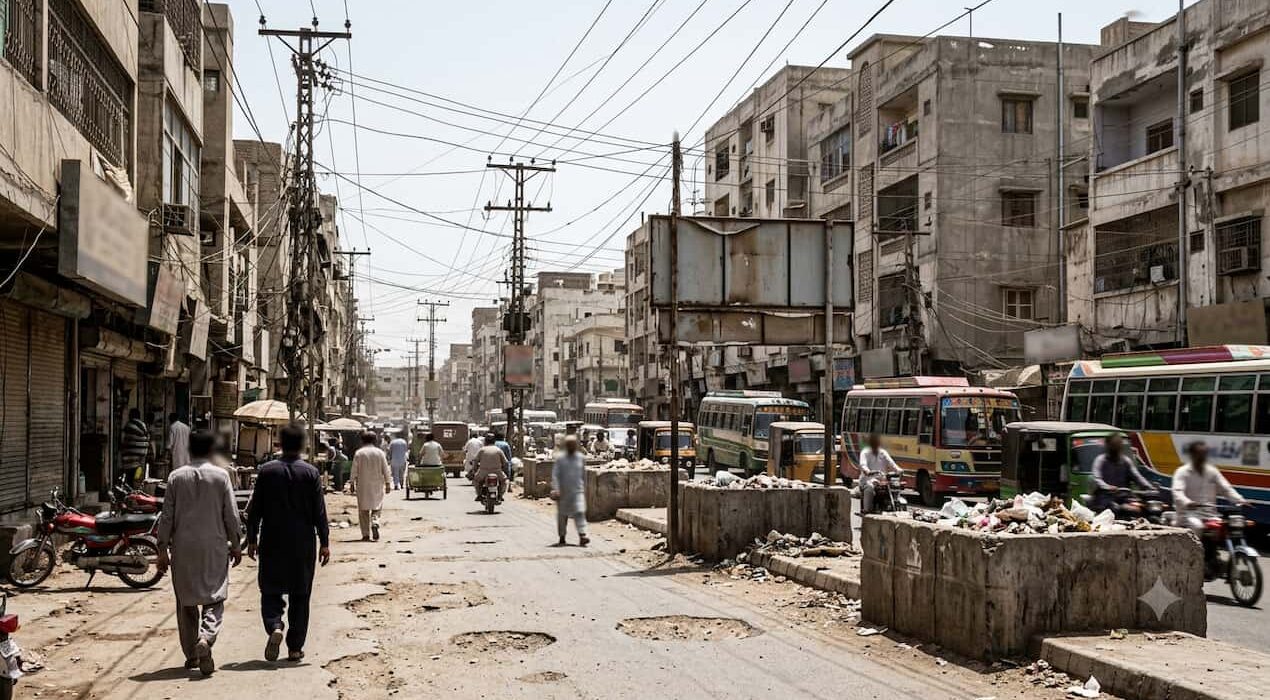
Karachi Liveability Ranking Highlights Urgent Need for Urban Reforms
The Karachi Liveability Ranking has once again highlighted the serious challenges facing Pakistan’s largest city. The latest global assessment placed Karachi among the world’s least liveable cities. As a result, the ranking has sparked fresh debate about governance, infrastructure, and public services. Many residents believe daily life has become more difficult because of traffic congestion, water shortages, unreliable electricity, and poor civic management. They say these issues continue to affect both their quality of life and economic opportunities.
Residents Face Growing Urban Challenges
Karachi remains Pakistan’s financial hub and home to millions of people. However, the city continues to struggle with aging infrastructure and limited public services. Roads often remain under construction for long periods, while damaged pipelines and overflowing drains disrupt daily routines. In addition, power outages and water shortages create further hardship for families and businesses.
Recent incidents, including flooded roads caused by pipeline leaks, have increased public frustration. Consequently, commuters spend hours in traffic, and businesses suffer financial losses. Many citizens believe temporary repairs no longer solve the city’s long-term problems. Instead, they want authorities to introduce sustainable solutions that improve infrastructure and public services. Urban planners also stress that better coordination among government agencies can reduce delays and improve project delivery.
Experts Urge Long-Term Planning
Experts say Karachi deserves greater investment because of its economic importance. The city contributes significantly to Pakistan’s national economy and supports millions of livelihoods. Therefore, many believe development funds should match its growing population and expanding infrastructure needs.
Analysts also argue that effective governance, transparency, and accountability are essential for lasting progress. Furthermore, better planning can improve transport networks, water supply, sanitation, and public safety. Stronger coordination between institutions can also speed up development projects and reduce service disruptions.
The Karachi Liveability Ranking should serve as an opportunity for policymakers to address long-standing urban challenges. With sustained investment, efficient governance, and modern infrastructure, Karachi can improve living conditions and strengthen its position as Pakistan’s leading commercial and economic center while offering a better future for all residents.