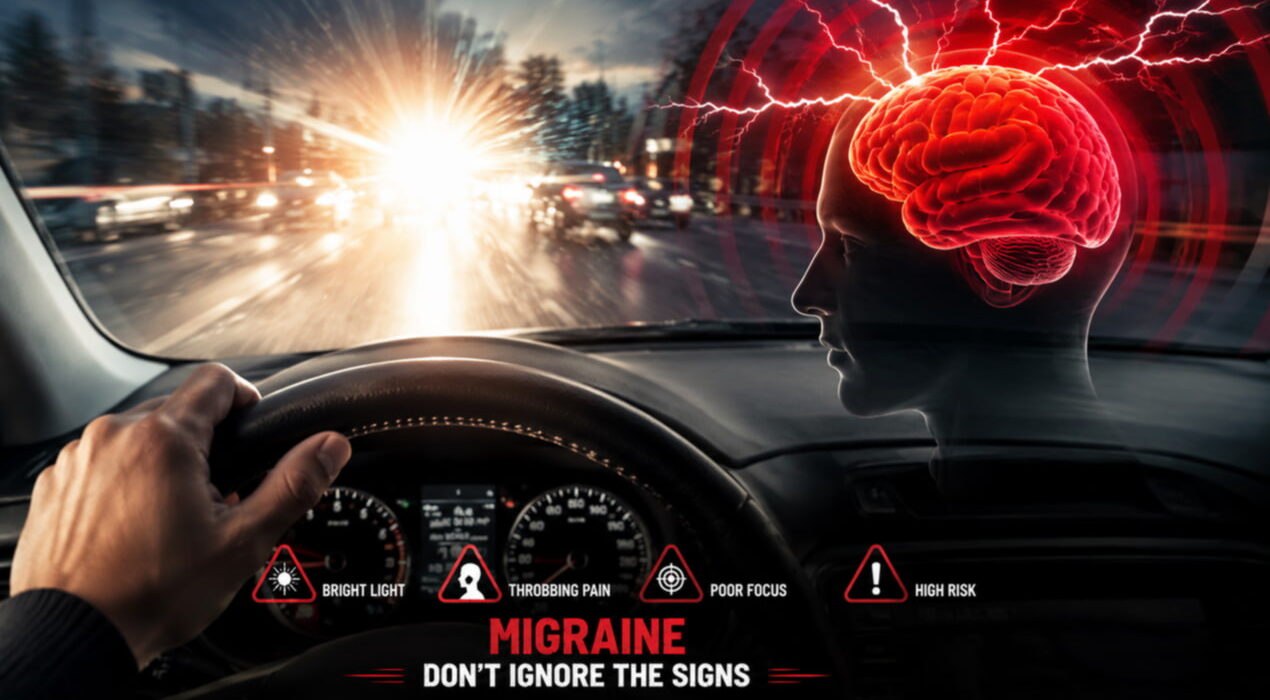
Migraine Driving Risks: Study Links Headaches to Higher Accident Rates
Migraine driving risks may affect road safety more often than many experts realize. A new study found that headaches during driving can reduce attention and increase irritability. Researchers used a Structural Equation Model to explore links between migraine features, environmental sensitivity, accident risk, and decisions to stop driving.
Migraines Affect Focus Behind the Wheel
Participants reported headaches during 13.02% of their drives. On average, attacks lasted 3.36 hours. During active headaches, 69% noticed reduced attention. In addition, 66% experienced greater restlessness, while 56% reported irritability.
The findings also raised concerns about accident rates. Around 18% of participants had experienced at least one traffic accident during the previous year. Drivers involved in accidents were generally younger, with an average age of 35.31 years.
Accident Risk Varies by Migraine Type
Researchers found notable differences between chronic and episodic migraine cases. Among chronic migraine patients, 96.9% of accidents happened during an active headache. By comparison, 77.2% of episodic migraine patients reported accidents during attacks.
Visual aura also appeared important. Episodic migraine patients with aura faced higher accident rates than those without aura. Therefore, specific migraine characteristics may influence driving safety and decision-making.
Need for Better Support and Awareness
The study linked headaches while driving to increased sensitivity to bright sunlight and high-beam LED headlights. As a result, environmental triggers could indirectly raise accident risk.
Many participants adopted coping strategies. About 58.8% used medication, 51.9% turned off music, and 47.7% wore sunglasses. However, 17.7% continued driving without precautions.
Although the study relied on self-reported data, its findings offer valuable insights. Migraine driving risks deserve greater clinical attention and road-safety support. Better counseling and future research may help protect both independence and public safety.