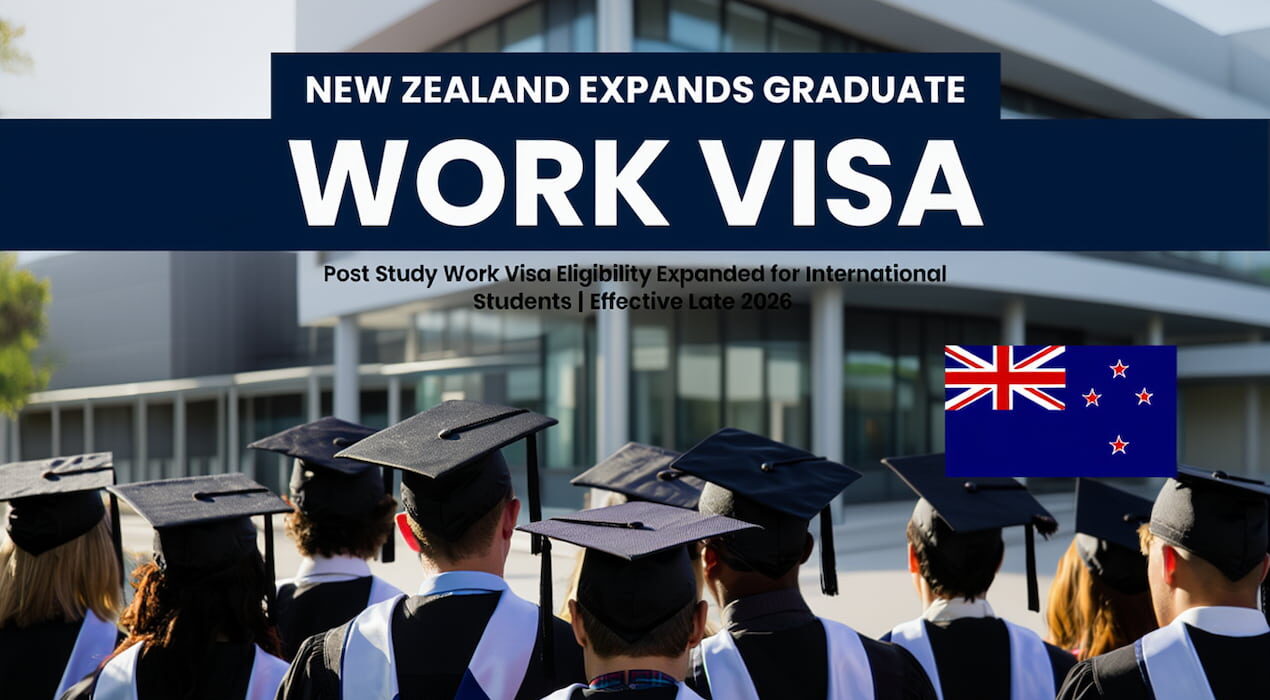
New Zealand Short-Term Work Visa for Graduates
Starting in late 2026, New Zealand will make two major changes for international students. The government will introduce a graduate work visa and expand Post Study Work Visa (PSWV) eligibility. These updates affect how long graduates can stay and work in the country.
Short-Term Graduate Work Visa
The new Short-Term Graduate Work Visa helps students who don’t qualify for a longer PSWV. Graduates can stay up to six months after finishing their studies. During this period, they can look for work and gain experience.
To apply, students must hold a Level 5 to 7 qualification, study full-time for at least 24 weeks, and be enrolled in a course that does not already qualify for PSWV. They must also show at least NZD 5,000 in funds and meet health checks if required.
This visa allows graduates to work for any employer under a formal contract. However, holders cannot run a business, be self-employed, or sponsor family members. The visa is granted only once and cannot be extended. Applicants must apply within three months of their student visa expiring.
Expanded Post Study Work Visa Eligibility
From late 2026, Graduate Diploma (Level 7) students can qualify for PSWV. The visa duration will match the length of study, up to one year. PSWV holders can support a partner and children under standard immigration rules.
This expansion gives graduates a clearer pathway to stay longer and gain work experience. It complements the short-term visa, which serves as a transition to longer-term options, like the Accredited Employer Work Visa.
New Zealand aims to provide more opportunities for international students while maintaining structured pathways. These changes offer both flexibility and guidance for graduates planning their future in the country.