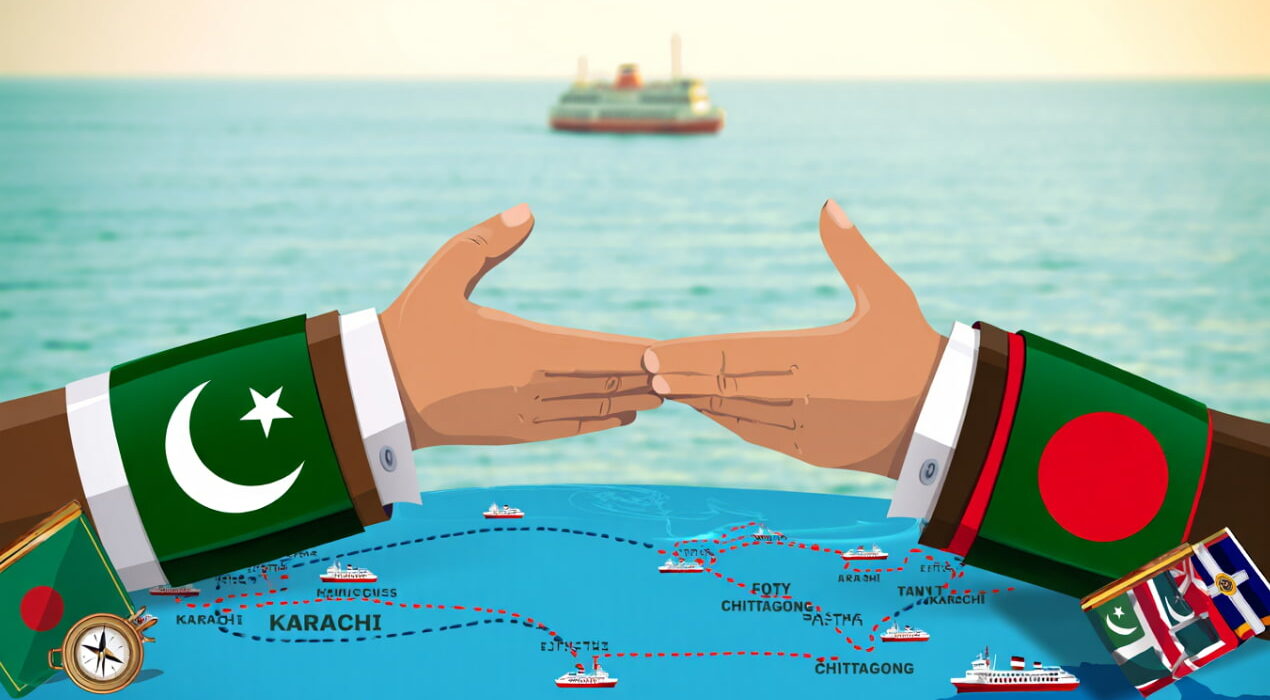
Pakistan and Bangladesh Plan Ferry Service to Boost Trade and Tourism
Pakistan and Bangladesh are moving to strengthen their maritime ties. The two countries are considering launching a ferry service and direct shipping line. This initiative aims to expand trade and tourism between both nations.
Federal Minister for Maritime Affairs Junaid Anwar Chaudhry met Bangladesh’s High Commissioner Iqbal Hussain Khan in Islamabad. They discussed enhancing maritime cooperation and strengthening economic ties. Both sides expressed strong commitment to elevating their bilateral partnership.
“A ferry service will significantly increase tourism and trade activities,” Chaudhry stated. He emphasized that promoting maritime connectivity in the region would help strengthen economic stability for both countries.
A New Chapter in Bilateral Relations
A direct shipping line would give fresh momentum to bilateral trade. Pakistan wants to transform its historical ties into a strong economic partnership. This vision now guides current policy discussions.
The two nations share a complex history. They were part of the same country until Bangladesh’s secession in 1971. This event has long cast a shadow over bilateral relations.
However, ties have improved significantly since August 2024. The political shift followed the ouster of former Prime Minister Sheikh Hasina. Dhaka has since deepened engagement with Islamabad on multiple fronts.
Direct flights between the countries resumed in January 2026. This ended a suspension that had lasted more than a decade. The proposed ferry and shipping services represent the next logical step.
Economic and Tourism Potential
Improved connectivity promises substantial benefits for both sides. Increased maritime links will facilitate smoother cargo movement. This directly supports growing bilateral trade volumes.
Tourism is another key beneficiary of better connections. A regular ferry service would make travel more accessible and affordable. It would encourage people-to-people contact and cultural exchange.
Both governments now view economic cooperation as a priority. The meeting signals a shared desire to move beyond historical grievances. By focusing on practical collaboration, they aim to build a prosperous and interconnected future.