Pakistan Reaffirms Middle East Peace Efforts Amid Renewed Iran-US Tensions
Middle East Peace remains a key priority for Pakistan as fresh military exchanges between Iran and the United States threaten a fragile ceasefire. Pakistan on Sunday reaffirmed its commitment to promoting regional stability through diplomacy. The renewed violence has raised fears that the Pakistan-backed Islamabad Memorandum of Understanding (MoU) could come under increasing pressure.
Pakistan Calls for Dialogue as Tensions Rise
The latest escalation began after Iran launched missiles and drones at US military installations in Kuwait and Bahrain. In response, the United States announced fresh strikes on military targets inside Iran. Meanwhile, Israel said it had targeted Hezbollah positions in southern Lebanon, adding to regional tensions.
Against this backdrop, Deputy Prime Minister and Foreign Minister Senator Mohammad Ishaq Dar held a telephone conversation with Saudi Foreign Minister Prince Faisal bin Farhan. During the call, both leaders reviewed the latest developments and expressed concern over the worsening security situation.
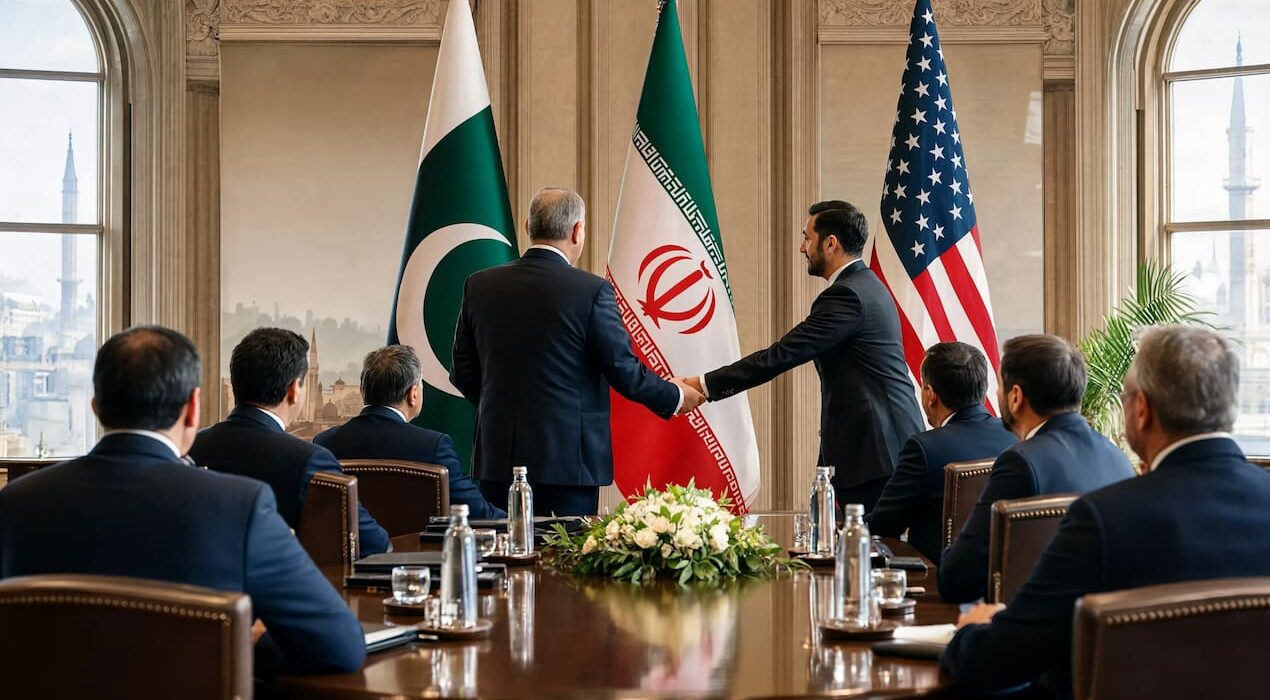
According to the Foreign Office, Dar reaffirmed Pakistan’s commitment to promoting Middle East Peace through the Islamabad MoU. He stressed that Pakistan would continue working with regional partners to encourage dialogue and reduce tensions.
Pakistan, alongside Saudi Arabia, Qatar, and other regional countries, helped broker the 14-point Islamabad Memorandum of Understanding on June 18. The agreement ended four months of conflict between Iran and the United States and launched a 60-day negotiation process on Iran’s nuclear programme.
Strait of Hormuz Dispute Fuels New Crisis
Despite the agreement, tensions have continued to rise over the Strait of Hormuz. Iran insisted that commercial vessels follow its navigation rules and warned that it could impose transit fees on ships using the strategic waterway.
However, the United States and Gulf countries rejected Iran’s position. They argued that the Strait of Hormuz remains an international waterway despite lying within the territorial waters of Iran and Oman.
Saudi Arabia and several Gulf states also condemned Iran’s missile and drone attacks on Kuwait and Bahrain. They said such actions threatened regional security and freedom of navigation. Earlier, Prime Minister Shehbaz Sharif also stressed that free maritime passage remains essential for global trade and stability.
The renewed hostilities have increased uncertainty across the region. Nevertheless, Pakistan continues to support diplomatic engagement and peaceful negotiations as the only sustainable path toward lasting Middle East Peace.