Possible “Superkilonova” Discovery Could Rewrite Stellar Explosion Science
Astronomers may have spotted a never-before-seen cosmic explosion. The event appears hidden inside a supernova. As a result, scientists are rethinking how neutron stars form and collide.The mystery began with a faint signal in space-time. LIGO and Virgo detected gravitational waves in August 2025. Soon after, telescopes spotted a fading red glow from the same region.Most supernovae do not produce detectable gravitational waves. However, kilonovae often do. Kilonovae form when two neutron stars crash together.So far, astronomers have confirmed only one kilonova. That famous event appeared in 2017. This new candidate, called AT2025ulz, looks different.
A Kilonova That Changed Its Behavior
At first, AT2025ulz resembled a classic kilonova. It faded quickly and glowed red. For example, heavy elements like gold can cause this red color.Days later, the object changed. It brightened again and turned blue. In addition, its light showed hydrogen, which signals a supernova.Because of this shift, many scientists felt unsure. Some thought the event was only a normal supernova. However, others saw clues pointing to something new.
The Superkilonova Idea
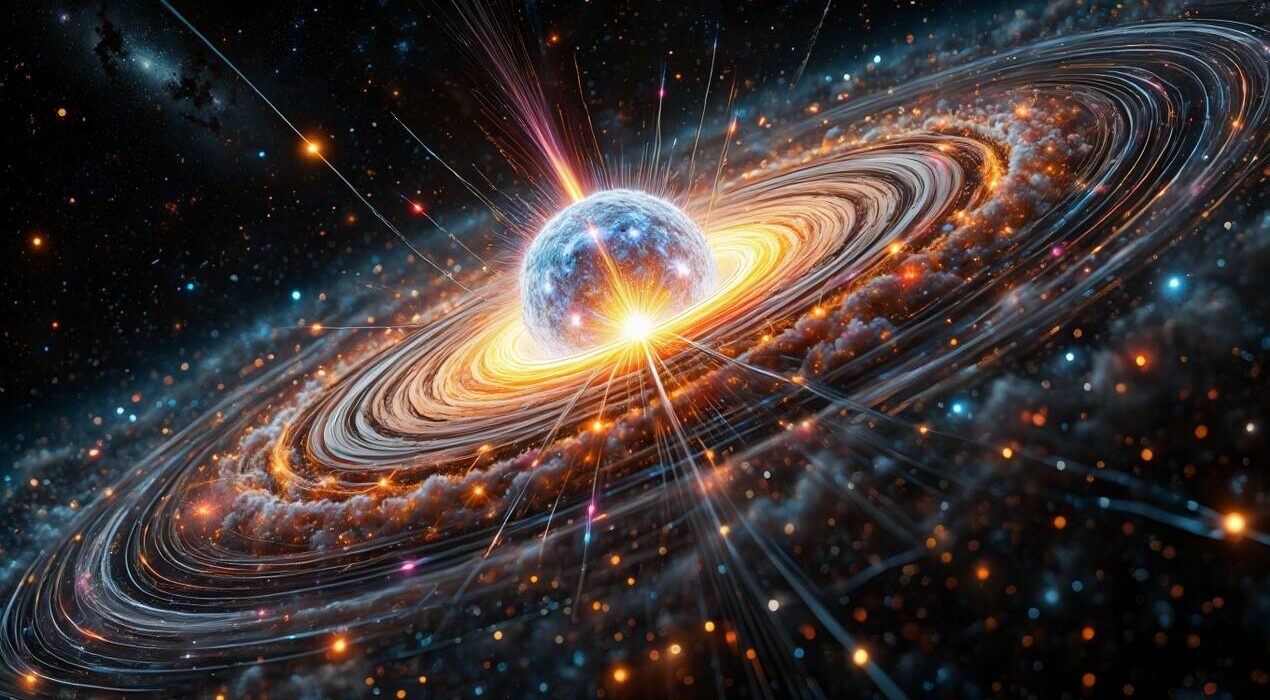
Researchers now suggest a bold explanation. A supernova may have created two tiny neutron stars. Those newborn stars could have merged almost immediately.This chain reaction could cause a “superkilonova.” Therefore, one blast would hide another. The supernova debris may have masked the kilonova light.
Why this Matters
If confirmed, this discovery could reshape astronomy. It may reveal new paths for creating heavy elements. It could also explain how rare neutron stars form.Scientists stress caution for now. Still, future telescopes may uncover more hidden events. As a result, the universe may prove even more surprising than expected.