Puffy Baby Planets Show Key Step in Planet Formation, Astronomers Reveal
Scientists have found four young planets. They orbit a star called V1298 Tau. These worlds are incredibly large yet very lightweight. Therefore, they are called “puffy” planets. This discovery shows a missing stage of planet formation.
The Most Common Planets in the Galaxy
Many sun-like stars have super-Earths and sub-Neptunes. These planets are very common. However, our own solar system does not have any. For a long time, their formation process was unclear. Now, the V1298 Tau system provides a clue. It acts like a cosmic baby picture.The star system is only 20 million years old. In addition, the four planets are changing rapidly. “We are seeing a preview of a normal planetary system,” says lead author John Livingston. Consequently, this gives astronomers a front-row seat to planet birth.
Measuring the Unmeasurable
Young stars are too active for traditional measurement methods. So, the team used a clever trick instead. They tracked tiny changes in the planets’ orbits. This method is called Transit-Timing Variations (TTV). As a result, they calculated the planets’ masses for the first time.The results were surprising. The planets are five to ten times larger than Earth. However, they are only five to fifteen times more massive. This makes them very low-density. They are as light as cosmic cotton candy.
Shrinking Into Common Worlds
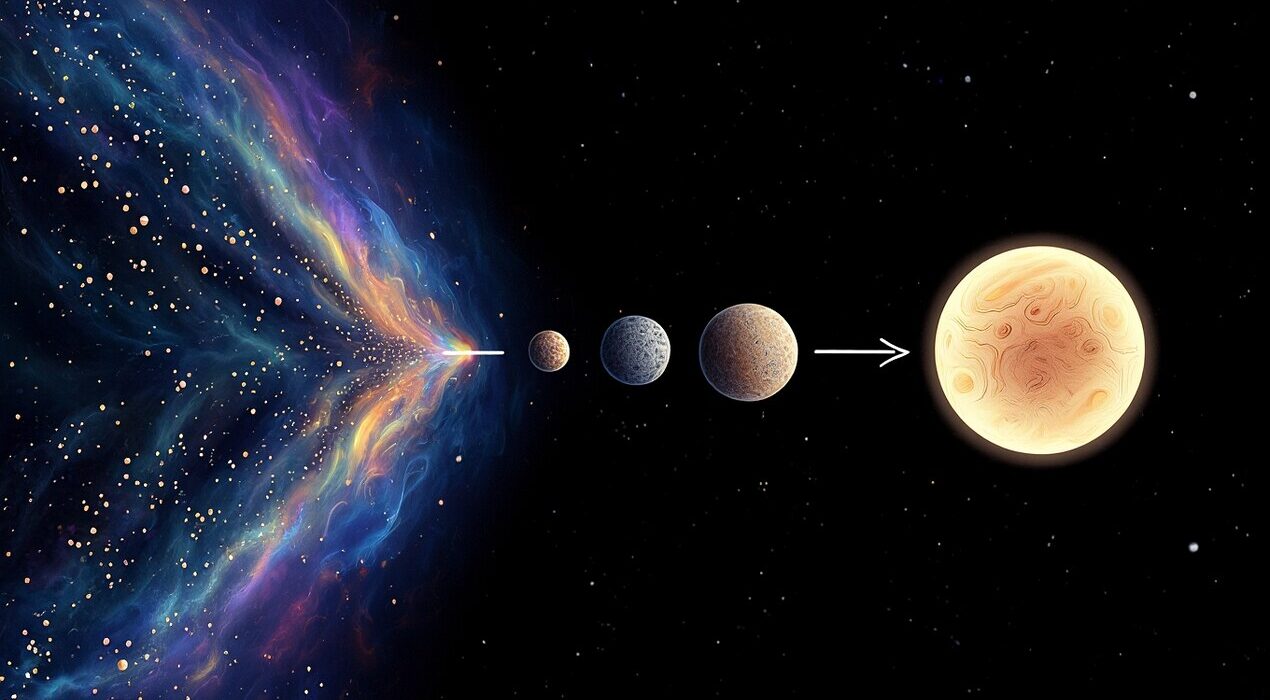
These planets are losing their thick atmospheres. In other words, they are shrinking. Over billions of years, they will become compact super-Earths and sub-Neptunes. This transformation solves a big puzzle in astronomy.
Why Our Solar System is Unique
This discovery helps explain why our solar system is different. We lack these common planet types. V1298 Tau shows that other systems start with giant, puffy worlds. They then shrink dramatically. Ultimately, we are watching the galaxy’s most successful planets being made