Quantum Material Defies Physics Rules, Reveals New Topological State
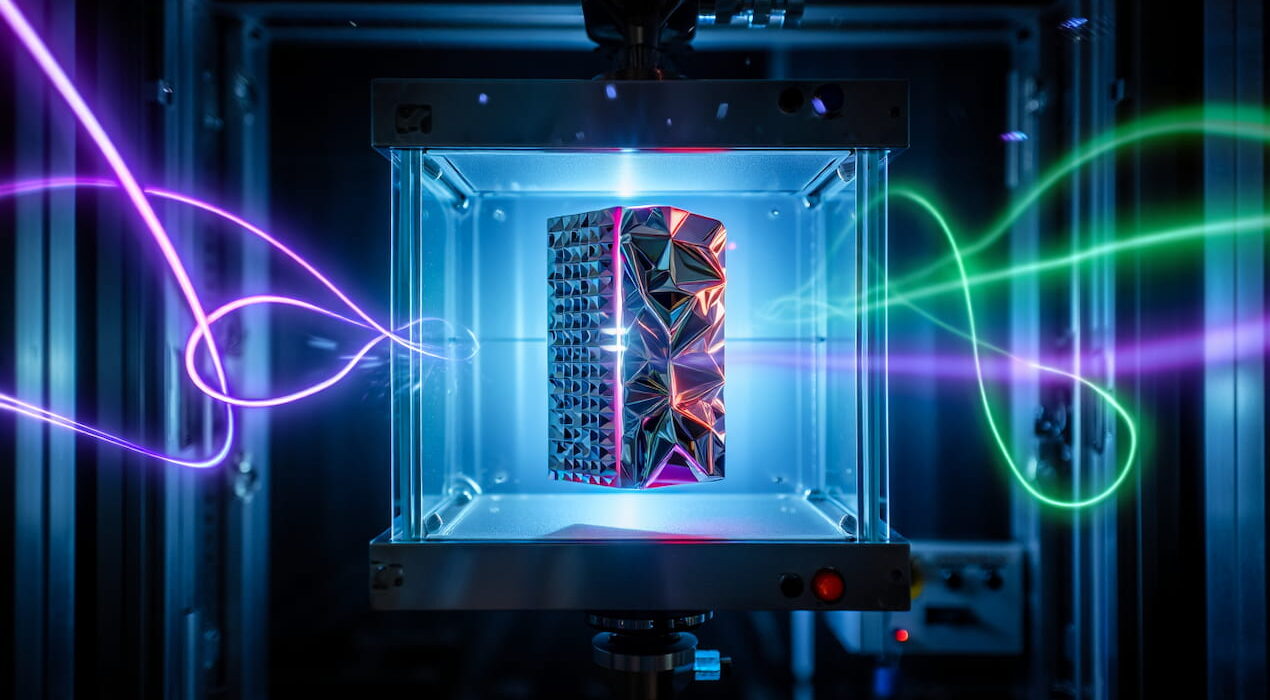
Scientists found a quantum material that breaks fundamental rules. It shows electrons can lose their particle-like nature completely. Yet, a surprising new order emerges.We often picture electrons as tiny particles. This view helps explain how electricity flows. However, this picture can completely break down.A team from TU Wien studied an exotic material. It is made of cerium, ruthenium, and tin. At near-absolute-zero temperatures, it enters a “quantum-critical” state. Here, electrons fluctuate wildly. They cannot be described as individual particles.
The Donut Principle in Quantum Physics
This connects to “topology,” a math concept. Think of a donut and an apple. You cannot morph a donut into an apple without making a hole. The hole is a topological property.Similarly, some quantum states have topological features. These features are incredibly stable. They resist disturbances like defects. Scientists thought topology required well-defined particles. This material proves that idea wrong.
A Surprising Experimental Discovery
Researchers were curious. Theory predicted topology, but the particle picture was gone. They decided to test it experimentally.They cooled the material and made a key measurement. They observed a “spontaneous Hall effect.” Charges deflected without any external magnetic field. This is a classic sign of topology.The result was clear. Topological states appeared strongest precisely where fluctuations were largest. “This was a huge surprise,” said Professor Silke Bühler-Paschen.
This Discovery Rewrites the Rules
This finding forces a rethink. Topology does not require particles. It can emerge from a sea of quantum fluctuations. The team calls this new phase an “emergent topological semimetal.”Therefore, a core assumption in physics is now revised. Quantum criticality and topology can work together. In fact, one might even cause the other.This insight is also a practical guide. Scientists can now search for topology in new places. They should look at materials with quantum-critical behavior.This approach could reveal many new quantum materials. These materials may be key for future technology. Potential uses include robust quantum computing and advanced sensors.In conclusion, this rule-breaking material opened a new chapter. It shows that when old pictures fade, new and exciting physics can appear.