Scientists Grow Mini Human Brains for Future Computers
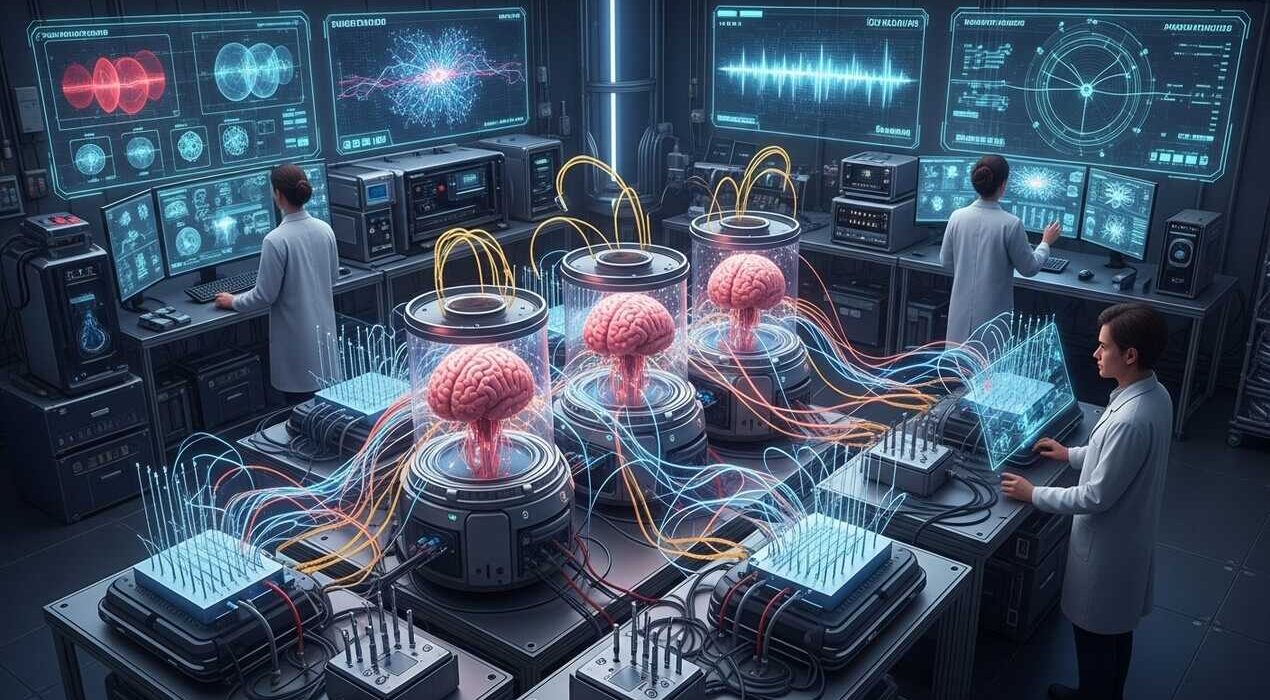
In a groundbreaking experiment, scientists have grown mini human brains that could one day power next-generation computers. These lab-grown brain cells, known as organoids, can think, learn, and process information in ways machines never could before.
Blending Biology with Technology
Researchers believe that combining biological neurons with digital systems could create powerful bio-computers. Unlike traditional processors, these living networks can adapt, make decisions, and learn from experience.
As a result, this technology could transform fields like artificial intelligence, robotics, and neuroscience. It could also lead to computers that use far less energy than today’s power-hungry chips.
However, experts are urging caution. Growing and using living brain cells raises ethical and safety questions. For example, scientists must ensure these organoids cannot develop consciousness or feel pain.
The Future of Bio-Computing
This research marks an exciting step toward more human-like intelligence in machines. In addition, it challenges the limits of what technology can achieve when merged with biology.
While still in early stages, bio-computing could redefine how we design and interact with computers. Therefore, scientists continue to explore how far this brain-inspired technology can go—safely and responsibly.
The idea of a computer that “thinks” like a human is no longer science fiction—it’s slowly becoming science fact.