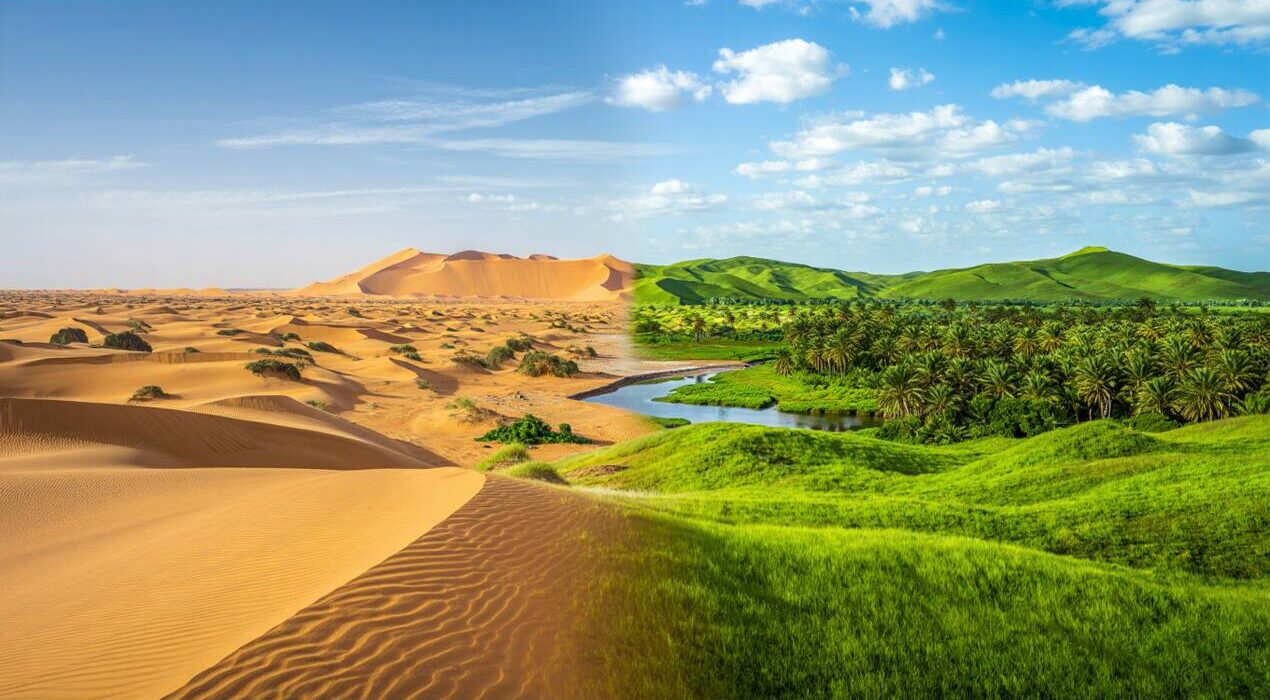
Scientists Predict a Wetter, Greener Future for the Sahara Desert
The Sahara Desert, known for its vast sand dunes and scorching heat, might soon look very different. Scientists believe that changing climate patterns could make the region wetter and greener.
A Sahara Greener Future Ahead
Recent studies show signs of increased rainfall across parts of the Sahara. As a result, plants and grasses could start covering areas once thought permanently dry. This change could transform the desert’s harsh landscape into something more hospitable.
Why the Desert May Bloom Again
Researchers say natural climate cycles have influenced the Sahara for thousands of years. For example, shifts in Earth’s tilt and ocean temperatures once turned this arid region into fertile grassland. Therefore, similar patterns could return in the coming decades.
In addition, modern climate change is altering wind and rainfall systems. These shifts may encourage vegetation growth and improve soil moisture. However, the process could take centuries before the desert fully transforms.
A wetter Sahara could also impact nearby regions. It might boost farming potential and bring more stable weather to North Africa. On the other hand, sudden changes in rainfall could challenge current ecosystems and human settlements.
Scientists remain hopeful. They believe understanding these shifts will help prepare for future environmental changes. Small signs of greenery already hint that nature is adapting once again.
The idea of a greener Sahara reminds us of Earth’s constant evolution. As our planet warms, even the driest places may find new life.