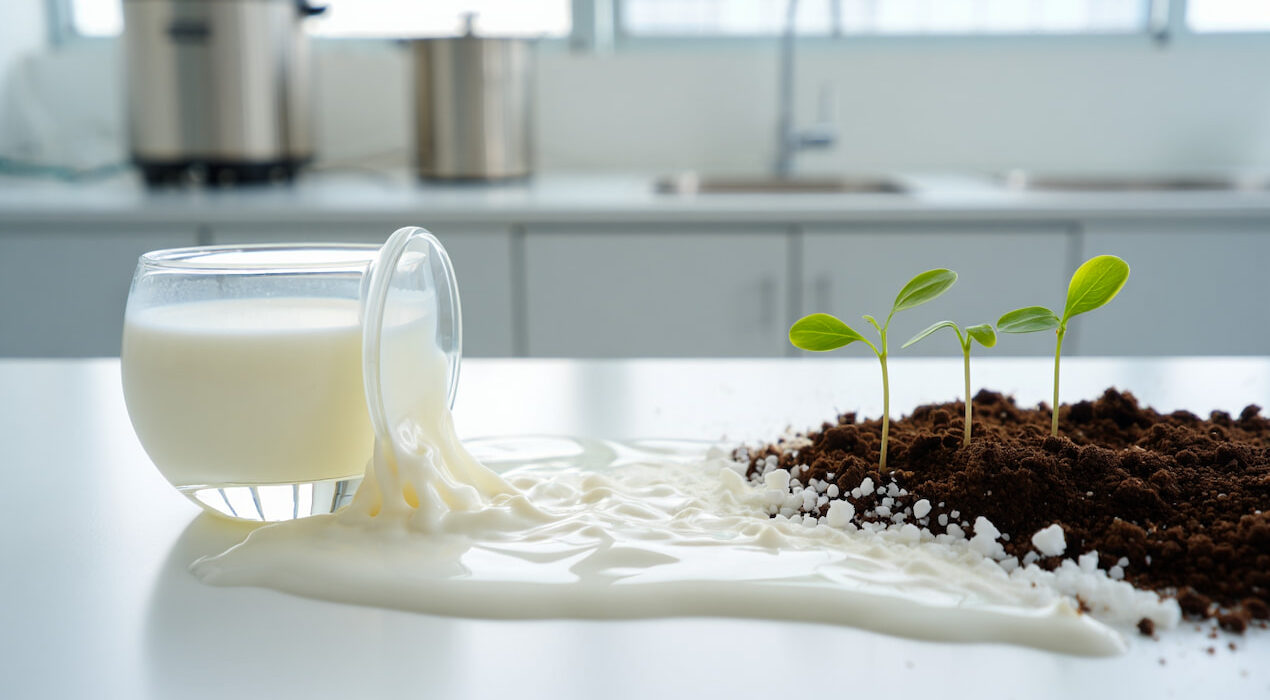
Scientists Turn Milk Into Biodegradable Plastic That Breaks Down in Soil
Scientists are finding new ways to replace traditional plastic. This time, they turned to milk proteins and natural materials. As a result, a new biodegradable plastic has emerged. Researchers at Flinders University led the work. They focused on reducing pollution and health risks. Their goal was simple and practical. The team used calcium caseinate from milk protein. They blended it with starch and bentonite nanoclay. In addition, they added glycerol for flexibility. Polyvinyl alcohol helped improve strength and durability. Together, these ingredients formed a thin plastic film. It behaves like common packaging materials.
Breaks Down Quickly in Soil
Tests showed steady breakdown in normal soil. The plastic fully decomposed in about 13 weeks. Therefore, it leaves no long-term waste behind. This rapid breakdown supports environmental safety. It also reduces harm to soil organisms. As a result, the material suits everyday use. Microbial tests showed low toxicity levels. Bacterial growth stayed within safe limits. However, the plastic does not aim to kill microbes. Researchers recommend further safety testing. This step will support future food packaging uses. In addition, it builds consumer confidence.
This Research Matters
Most single-use plastic comes from food packaging. Yet recycling rates remain very low worldwide. Therefore, alternatives like this are essential. Traditional plastics contain harmful chemicals. Production continues to rise each year. As a result, pollution keeps increasing.
Global Collaboration and Next Steps
The project included researchers from Colombia. They explored affordable and biodegradable materials. Their focus stayed on real-world applications. Scientists now plan further improvements. They aim to boost performance and scalability. Ultimately, this innovation supports a circular economy.