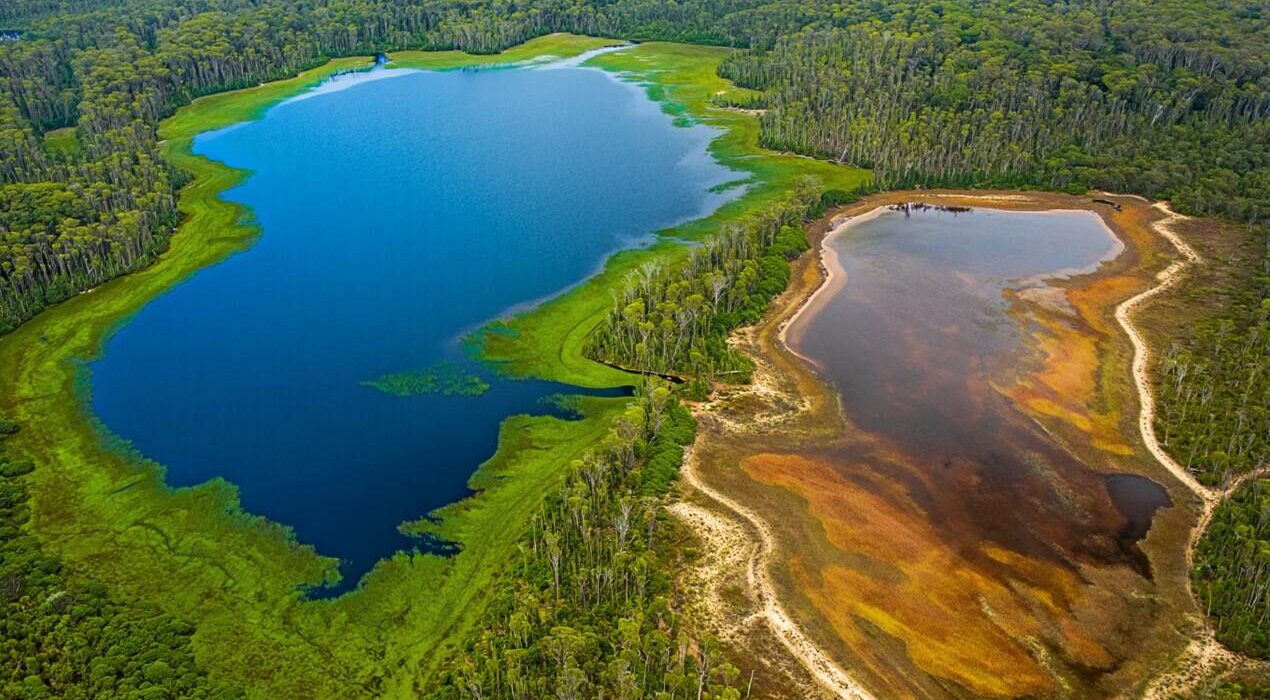
Scientists Warn K’gari’s Ancient Freshwater Lakes Face Drying Risk
K’gari, formerly known as Fraser Island, holds globally unique freshwater lakes. These lakes sit on sand dunes and attract visitors from around the world. However, new research suggests these systems may face greater drying risks than once believed.Scientists from the University of Adelaide studied ancient lake sediments on K’gari. As a result, they discovered signs of a major drying event around 7,500 years ago. This finding surprised researchers because rainfall was high during that period.
Unexpected Drying During Wet Times
Associate Professor John Tibby led the research effort. He explained that the lakes dried even after the last Ice Age ended. Therefore, climate conditions alone may not protect these water bodies.Many Australian lakes dried during known droughts. However, the K’gari lakes dried during a wetter climate phase. In addition, some of these lakes have existed for over 50,000 years.
Winds and Rainfall Patterns Matter
Dr Harald Hofmann from CSIRO helped analyze past wind patterns. He noted uneven rainfall distribution between K’gari and nearby Minjerribah. South-east trade winds pushed rain away from K’gari’s lakes.As a result, some lakes did not receive enough recharge. This imbalance may explain the ancient drying periods. Scientists believe similar risks could return as climate patterns shift.
Climate Change Raises New Concerns
Today, K’gari’s Deepwater Lake shows visible water loss. It has dropped from seven meters deep to about two meters. Therefore, experts worry about future water security.Sediment records revealed missing layers from 7,500 to 5,500 years ago. This gap shows the lakes briefly disappeared. With drier climates ahead, similar events may happen again.
The Butchulla people call these lakes The Eyes of K’gari. Community leader Conway Burns stresses their deep spiritual value. He explains that the lakes represent memory, ceremony, and ancestral voices.Protecting these waters matters for future generations. As a result, researchers urge careful monitoring and respect for both science and culture.