Smart Diabetes Treatment: Scientists Develop Oral Living Drug
Chinese scientists have developed a smart diabetes treatment that could change blood glucose management. Researchers at East China Normal University created an engineered probiotic called GIFT. The findings appeared in Nature on Aug. 12.
How the living drug works
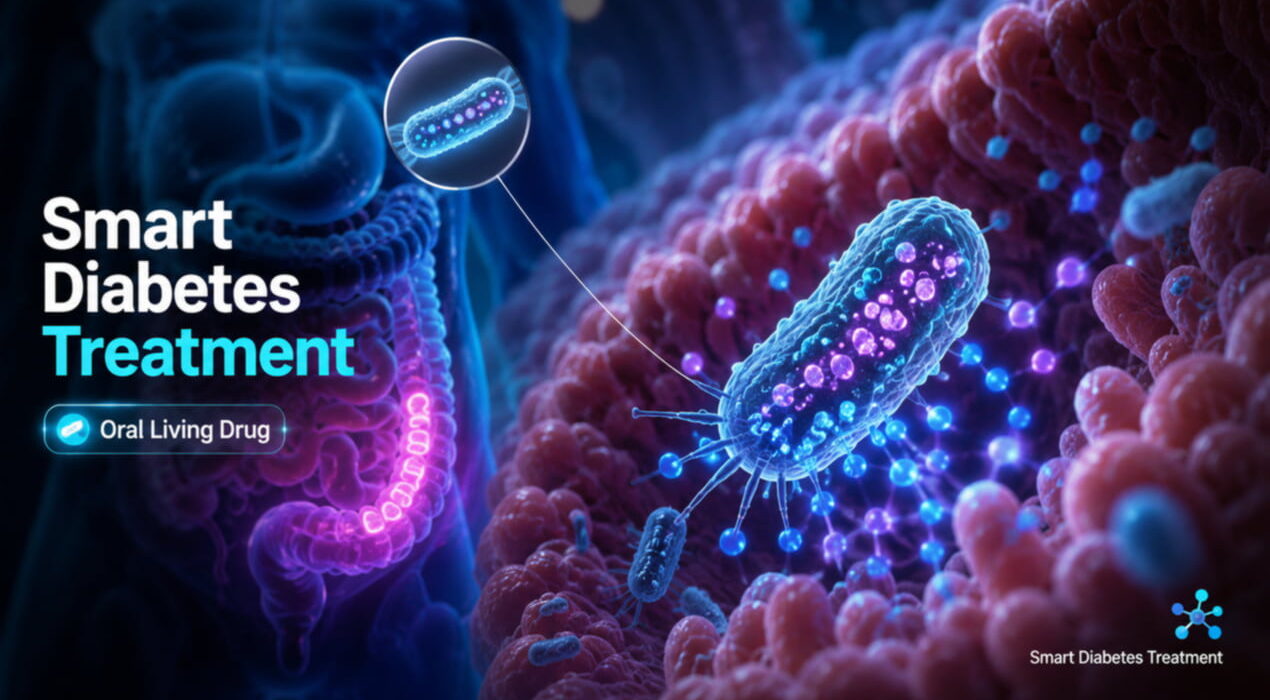
Scientists used synthetic biology to modify a probiotic with a long safety record. The engineered organism can enter the intestine after swallowing. It stays there temporarily and acts like an “intelligent virtual organ.”
GIFT can detect changes in blood glucose in real time. It then responds by releasing glucose-lowering hormones when needed. This creates a closed-loop system that links glucose sensing with drug delivery.
The approach could reduce reliance on fixed doses of medicines or repeated injections. Instead, the living drug aims to provide therapy based on changing glucose levels.
A new direction for diabetes care
The research team says this method could offer a programmable option for metabolic treatment. It does not require surgical transplantation, which may simplify delivery.
Corresponding author Ye Haifeng said GIFT connects glucose sensing with on-demand GLP-1 release. He described the system as an important step for engineered probiotic living drugs.
Researchers also highlighted possible safety advantages. Oral probiotics may avoid immune risks linked with transplanted mammalian cells. In addition, GIFT may offer better control than bacteria that constantly release GLP-1.
Global diabetes burden
Diabetes affects hundreds of millions of adults worldwide. International Diabetes Federation estimates show that more than 530 million adults currently live with the condition. The number could exceed 850 million by 2050.
China has about 120 million adults with diabetes. Therefore, new approaches could have public health value.
However, GIFT remains a research-stage technology. More studies are needed to assess its effectiveness, safety, durability, and use in people. If future trials succeed, this oral platform could support more responsive blood glucose management.