Spring Break Fuels Labor Day Golden Week Travel Surge
Spring break is fueling China’s Labor Day travel. The holiday runs from May 1 to 5. Therefore, a 17-day travel peak is expected.
Many regions piloted spring breaks this year. Primary and secondary students get two to three days off. Some cities combine this with the Labor Day holiday.
By taking extra days off, students can get over 10 days of vacation. Consequently, travel bookings have surged. Air travel ahead of the holiday has grown significantly.
A 17-Day Travel Peak
The travel peak lasts from April 24 to May 10. Demand slows during the Golden Week itself. However, it rises during the weekends before and after.
Guan Jian is director of communications at GZL International Travel Service. He says the Greater Bay Area is a significant tourism market. The longer travel period creates staggered mini peaks.
Among GZL’s clients, more guests are taking eight- to ten-day itineraries. Those who departed before May 1 enjoyed lighter crowds and lower prices. Therefore, they had better travel experiences.
Family Trips and Educational Tours
The combined vacation fuels family trips and educational tours. Cross-regional travel in the Greater Bay Area is also rising. The region has many science and culture museums.
Theme parks, seaside resorts, and scenic outdoor attractions also draw crowds. Therefore, diverse family needs are met. A typical itinerary covers Hong Kong, Macao, Guangzhou, Shenzhen, Zhuhai, and Foshan.
With the Guangzhou-Zhanjiang high-speed rail line now open, travelers can explore western Guangdong. Different scenery and cuisine await them.
Sports Tourism and Tech Experiences
The Guangdong City Football Super League is currently underway. The Guangdong City Basketball League is also active. Consequently, sports events plus tourism are creating a new market.
Zhao Shenghui is director of the Enterprise and Market Research Center. She says the region needs more in-depth and distinctive experiences. Technological elements could serve as a key draw.
She suggests drawing on Singapore’s experience. Immersive travel integrates educational visits with exhibitions and cultural activities. A weeklong itinerary works well for a small region.
A “Greater Bay Area Passport” Proposal
The Greater Bay Area focuses on urban sightseeing. It lacks a rich historical heritage. Therefore, many treat it as a transit point.
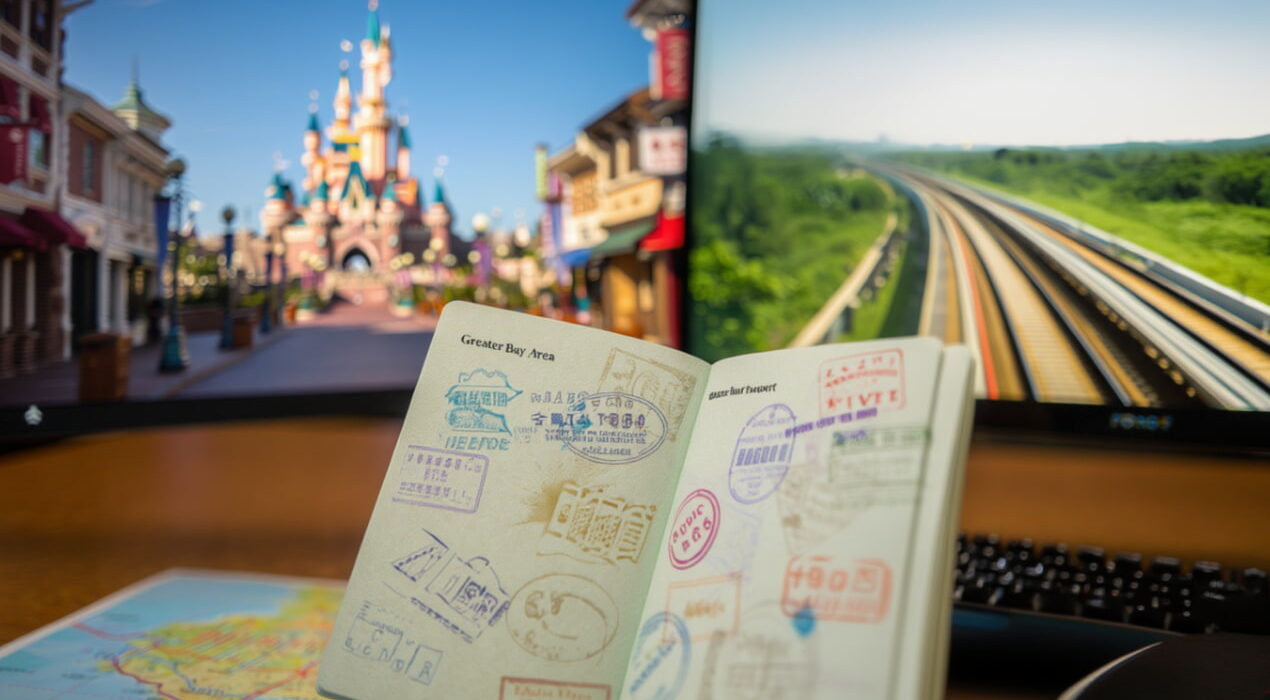
Zhao hopes cities will collaborate on an iconic tourism brand. She proposes a “Greater Bay Area Passport”. It could be a convenient payment option with collectible value.
Visitors could exchange it for small gifts after checking in at multiple locations.
A Visitor’s Perspective
Wang Fuyao is a tourist from Shandong province. He arrived in Shenzhen with his daughter, who has a three-day spring break. They made a quick trip to Macao on the spot.
At Hong Kong Disneyland, they waited only half an hour for popular rides. Normally, waits last several hours. Therefore, they enjoyed the ride three times.
Wang says the rest of the trip is not fully set. They may explore traditional Guangdong culture or try local food. Travel across the Greater Bay Area is very convenient.
He brought his daughter to Hong Kong because she saw many foreigners in a video. They want to experience local culture and way of life. During school breaks, children are happy just to spend time with family.
In conclusion, the spring break policy is new. Everyone should show patience and understanding. Relevant arrangements will continue to improve over time.