Synthetic Media Backlash Grows as Fake Art Content Floods Social Platforms
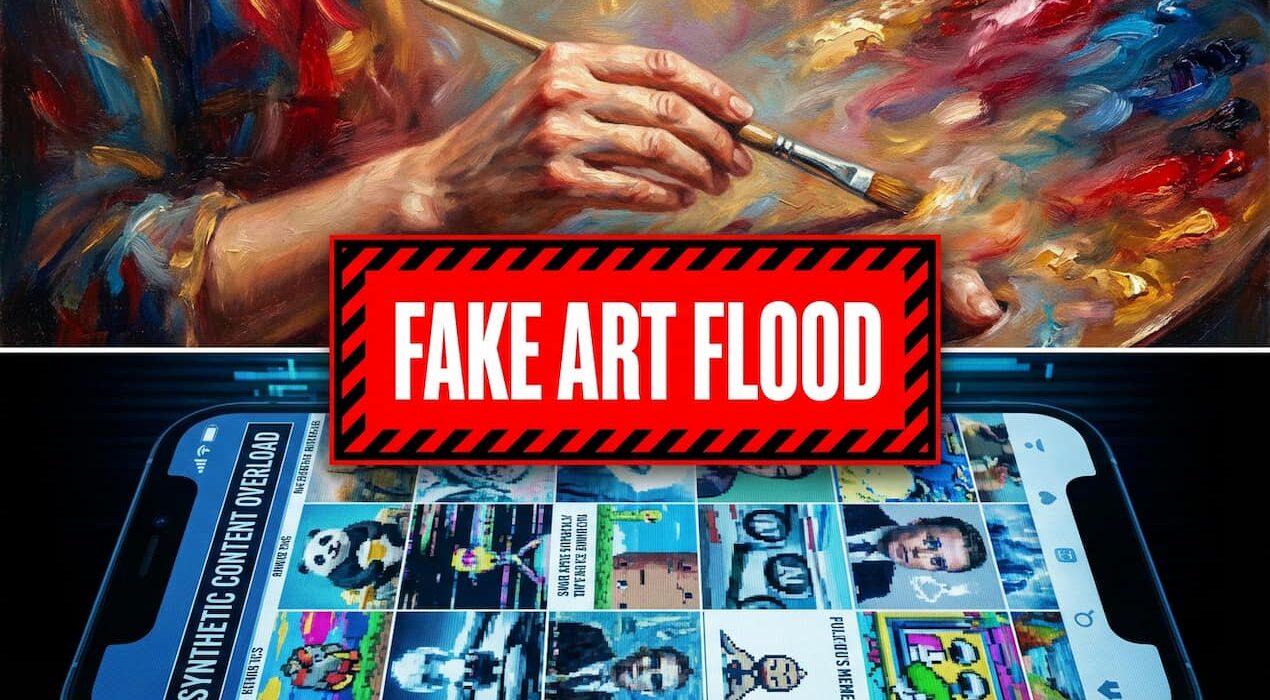
Social platforms look very different today. Fake images and videos now appear everywhere. This trend has triggered a growing synthetic media backlash. A student in Paris recently reached a breaking point. He kept seeing unrealistic images go viral. Many showed emotional scenes that were clearly fabricated. Despite obvious flaws, users shared them widely. Likes and heart emojis poured in. As a result, trust in online content began to erode. Frustrated, the student launched an account to highlight the problem. He mocked misleading posts and exposed how easily people were fooled. Soon, thousands joined the conversation. Common themes appeared again and again. These included fake charity stories and exaggerated hero moments. Therefore, critics say creators chase engagement, not truth.
Platforms Fuel Growth and Pushback
Tech companies now encourage fast content creation. They provide tools that make fake visuals easy to produce. However, moderation has not kept pace. Executives openly praise this new phase of online media. They argue it boosts creativity and output. In addition, algorithms reward whatever keeps users scrolling. Research suggests low-quality visuals now dominate short-form feeds. Many users still watch and react. As a result, creators earn real money from questionable material. Still, resistance is growing. Comment sections now call out fake posts aggressively. Often, critical replies gain more likes than the original content.
Experts Warn About Long-Term Effects.
Constant exposure may reduce attention spans. It may also weaken people’s ability to judge what feels real. Security and misinformation risks add more concern. Fake clips have already shaped public opinion during global events. Therefore, analysts urge better verification systems. Some believe a cleaner platform could emerge. It might reward authenticity over volume. However, detecting synthetic media remains difficult.
For now, the synthetic media backlash continues. People feel tired, skeptical, and overwhelmed. Yet the content keeps coming.