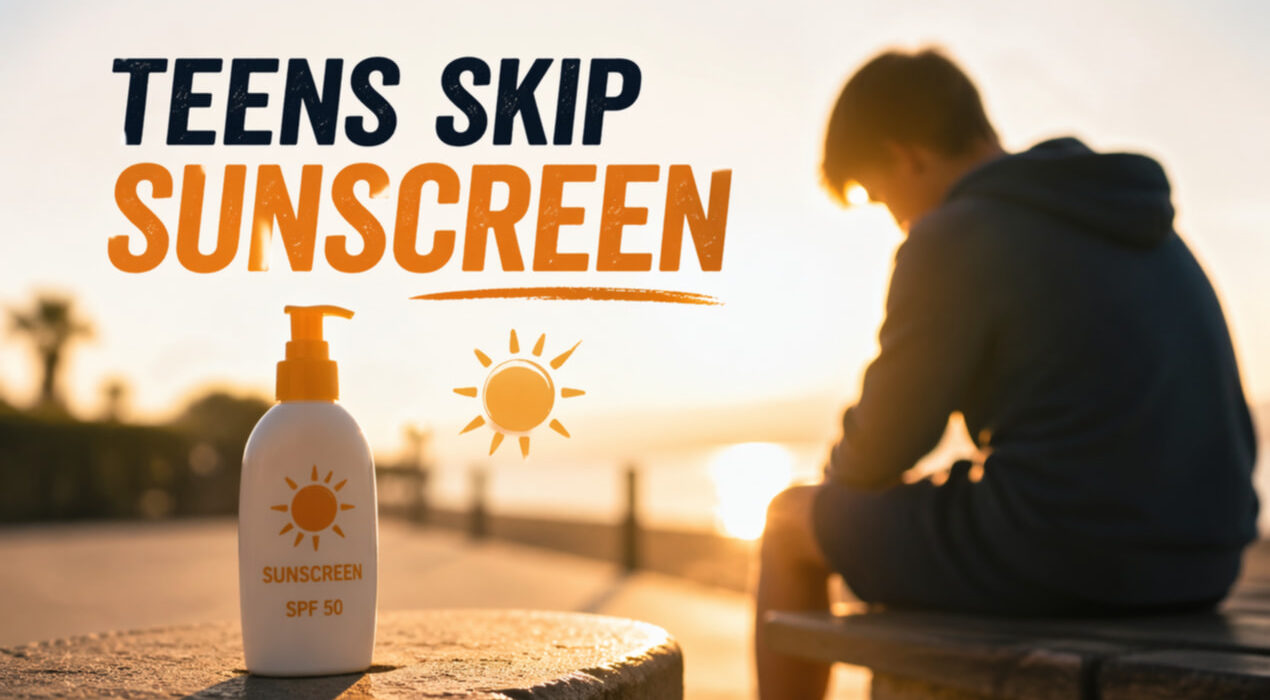
Teens Skip Sunscreen: Study Reveals Behavior Drivers
Teens skip sunscreen because they see it as inconvenient. A recent study used the Sun-safe Habits Intervention and Education (SHINE) protocol. Researchers analyzed data from Utah high schools between 2021 and 2023.
The SHINE model builds on the Extended Parallel Process Model. This framework explains behavior using perceived risk and confidence. Therefore, it helps explain why teens ignore sun protection despite awareness.
Costs and Rewards Shape Behavior
Most students spent over one hour outdoors daily. However, only about half followed sun safety practices. For example, fewer students stayed in shade or used sunscreen regularly.
Younger students showed better habits than older ones. In addition, Hispanic or Latine students reported higher protection use. These differences highlight how behavior varies across groups.
Perceived cost had the strongest effect on behavior. Teens avoided sunscreen if it felt sticky or time-consuming. Meanwhile, tanning appeared attractive and rewarding.
Knowledge about skin cancer risk had a weaker impact. Although awareness existed, it did not strongly change actions. As a result, behavior depended more on convenience and appearance.
Implications for Public Health
Experts suggest focusing on appearance-based messaging. For instance, showing skin damage through imaging can influence teens. This approach connects directly with their motivations.
Schools can integrate such strategies into programs like SHINE. Moreover, simple and relatable guidance works better than long warnings. Therefore, practical steps may improve daily habits.
Study Limits and Future Research
The study used self-reported data, which may include bias. In addition, its cross-sectional design limits cause-and-effect conclusions. Utah’s high UV exposure also affects wider application.
Future studies should track behavior changes over time. Researchers should also explore digital tools and cultural differences. As a result, better strategies can support long-term sun safety.