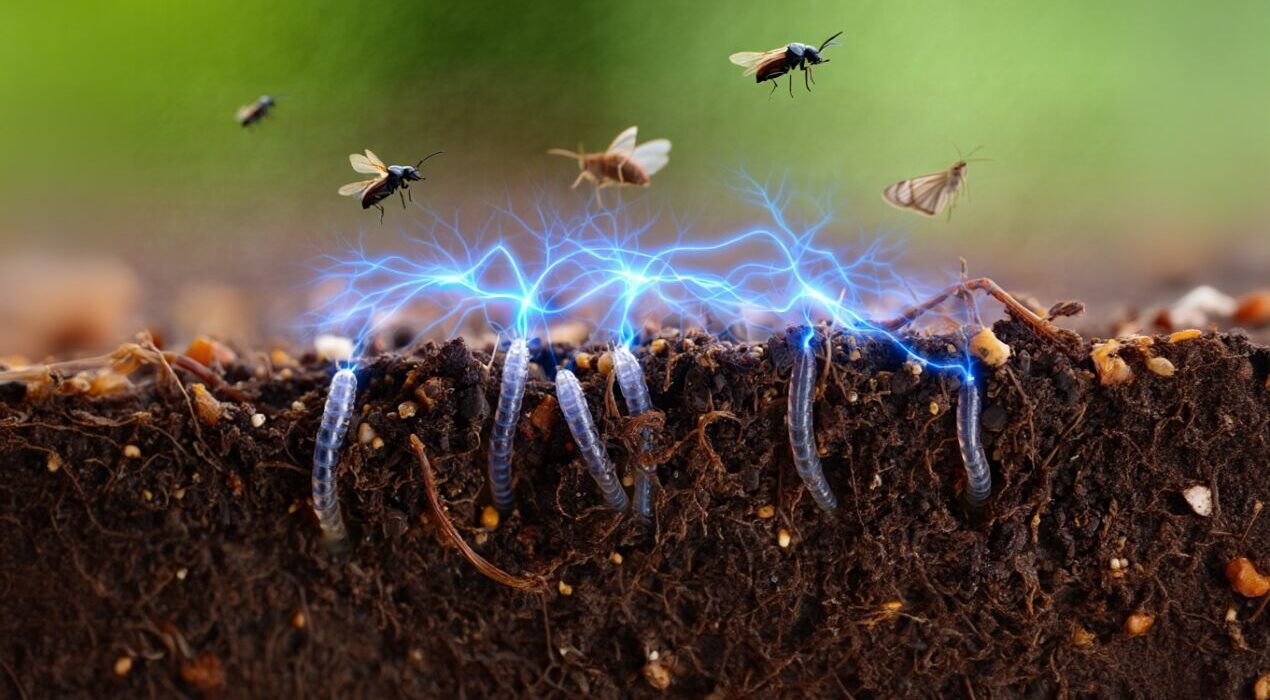
Tiny Worm Uses Static Electricity to Catch Flying Insects
Shocking Power of a Small Predator
Nature never runs out of surprises. Scientists recently discovered that a microscopic worm uses static electricity to catch its prey. This tiny predator, found in damp soil, can snatch flying insects right out of the air.
Researchers observed that when insects buzz nearby, they generate small electric charges. The worm senses these charges and responds instantly. As a result, it launches sticky filaments that cling to the insects, pulling them down like an invisible trap.
For example, fruit flies hovering close to the worm often end up caught within seconds. This discovery shows how even simple creatures use complex physics to survive.
Nature’s Hidden Electric Trap
The worm’s hunting method relies on the same principle that makes hair stand up after rubbing a balloon. However, in this case, static electricity turns into a deadly weapon. Scientists call it an “electrostatic ambush.”
In addition, the team found that humidity and soil composition affect how well the worm hunts. Higher moisture improves static buildup, making its traps more effective. Therefore, these worms thrive in damp, organic-rich environments.
Experts believe this finding could inspire new ways to design robotic sensors and pest control systems. By studying how these worms detect electric signals, engineers could develop smarter, nature-inspired technology.
This tiny worm may be small, but its electric skills show how powerful evolution can be. Nature, once again, proves that innovation isn’t limited to size.