UAE Hajj Health Measures: 15 Safety Guidelines Issued for Pilgrim
The UAE Ministry of Health and Prevention has issued 15 health measures for pilgrims travelling for Hajj this year. Officials urged travelers to complete vaccinations, improve fitness, and prepare for possible medical emergencies before departure. The ministry also advised people with chronic illnesses to consult doctors early and review their treatment plans carefully.
Mandatory Vaccinations
Health authorities stressed the importance of receiving mandatory vaccines before travelling to Saudi Arabia. Pilgrims must take the meningococcal vaccine at least 10 days before departure. Officials also recommended the updated seasonal influenza vaccine for the 2025–2026 season.
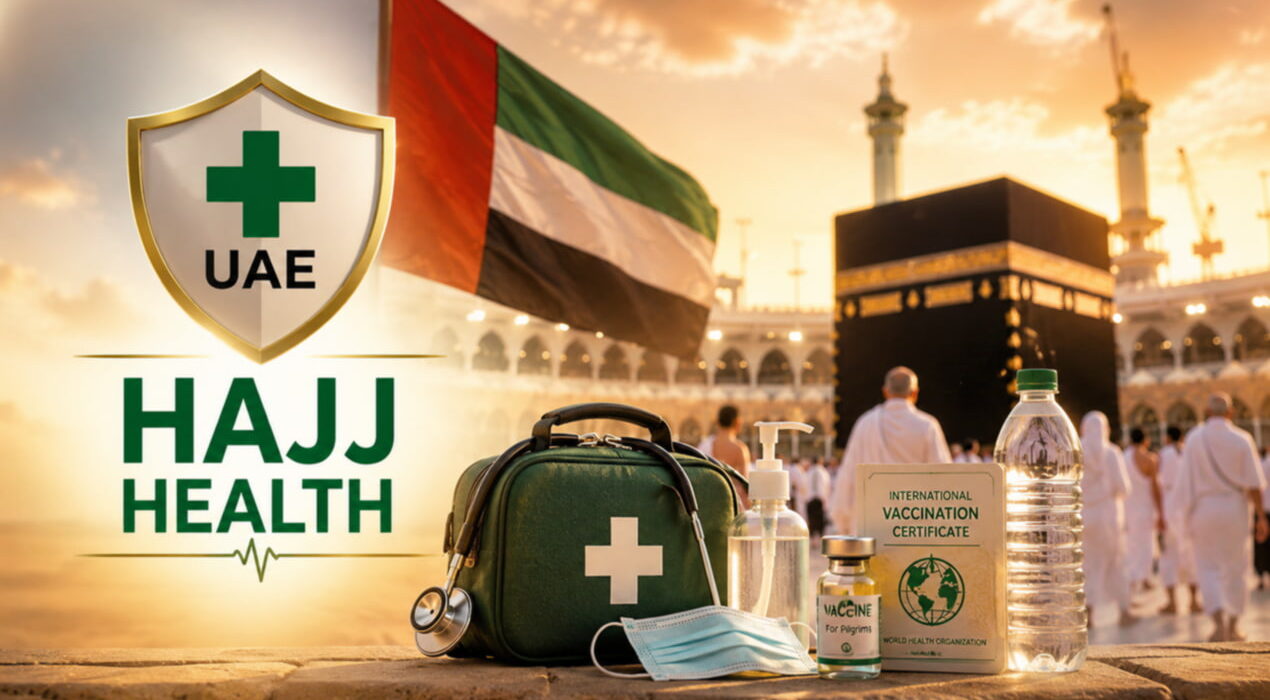
In addition, travellers should register all vaccinations on the International Vaccination Card before leaving the UAE. Authorities confirmed that vaccines remain available at government and private health centers across the country.
Medical Preparation
The ministry encouraged pilgrims to carry detailed medical reports and enough medication for the journey. Medicines should stay in original packaging to avoid confusion during travel. Experts also advised people to maintain healthy diets and begin light fitness programmes before Hajj.
Officials recommended preparing a first aid kit with sanitiser, fever medicine, masks, tissues, and allergy creams. Pilgrims should also carry personal care items, including umbrellas, towels, water bottles, toothbrushes, and handheld fans.
Staying Safe During Hajj
Authorities advised pilgrims to stay hydrated and avoid direct sunlight for long periods. Wearing light clothing and taking regular breaks can also reduce heat exhaustion risks. Furthermore, officials encouraged travellers to wash their hands regularly and avoid sharing personal items.
The ministry said these preventive measures can protect both individuals and the wider community. Officials added that awareness and personal responsibility remain essential for a safe and healthy Hajj experience.
Health teams also urged pilgrims to seek immediate medical help if they experience dehydration, fatigue, dizziness, food poisoning, or other serious symptoms during Hajj.