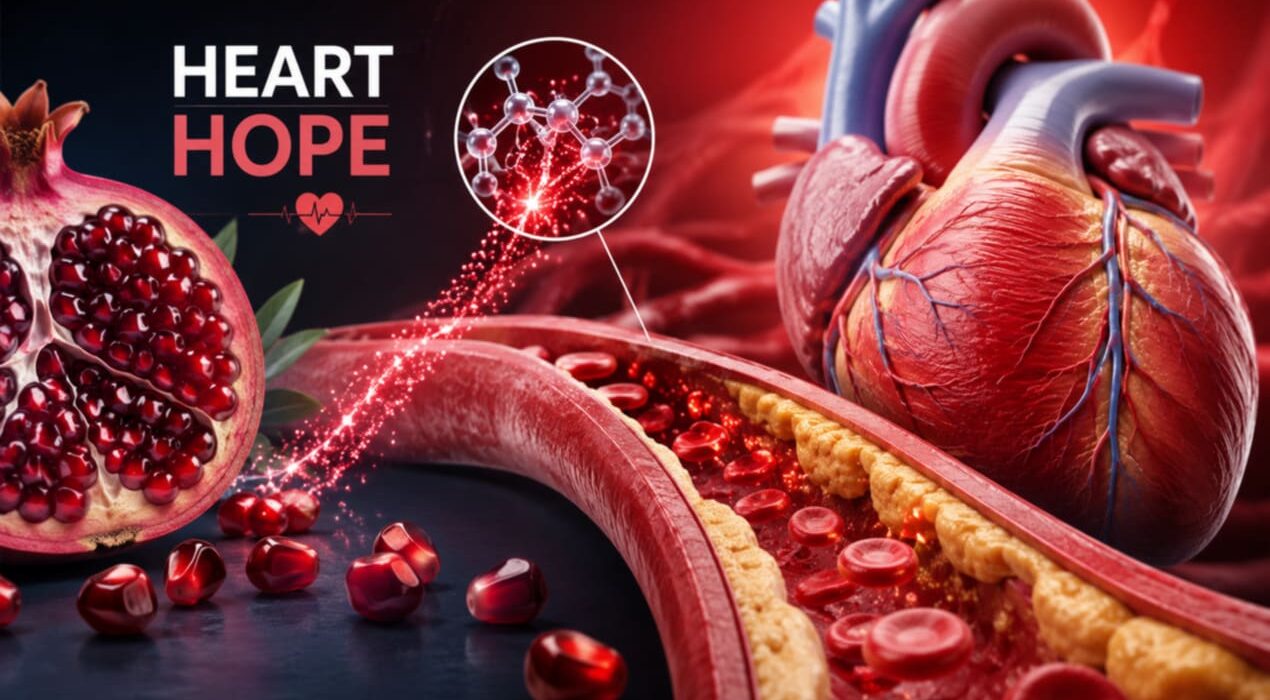
Urolithin A Heart Health Discovery Offers New Hope Against Heart Disease
Researchers at Cardiff University have identified a promising compound that could support future heart disease treatments. The compound, called urolithin A, forms when gut bacteria break down substances found in pomegranates. Scientists believe this Urolithin A Heart Health discovery may help reduce inflammation and improve artery health.
Cardiovascular disease remains a leading cause of death worldwide. Although cholesterol-lowering medicines help many people, heart attacks and strokes still occur. Therefore, researchers continue searching for new ways to protect the heart.
How Urolithin A Supports Artery Health
The Cardiff team studied how food-derived compounds affect atherosclerosis. This condition develops when fatty plaques build up inside artery walls. As a result, blood flow becomes restricted and cardiovascular risks increase.
Researchers found that urolithin A reduced oxidative stress and inflammation. In addition, it limited immune cell activity inside blood vessels. The compound also lowered cholesterol buildup in cells involved in plaque formation.
Animal studies produced encouraging results. Mice receiving urolithin A developed smaller and more stable plaques. Furthermore, these plaques showed less inflammation and a lower risk of rupture.
Why Gut Bacteria Play a Key Role
Scientists discovered that gut microbes convert pomegranate compounds into urolithin A. However, not everyone produces the same amount. The effectiveness depends largely on an individual’s gut microbiome.
This finding highlights the growing importance of precision nutrition. Researchers now understand that health benefits depend not only on food choices but also on how gut bacteria process nutrients. Moreover, the team observed positive changes in gut-related compounds linked to metabolic health.
Future Potential for Heart Disease Treatment
Unlike many therapies, urolithin A worked without significantly changing cholesterol levels. Instead, it targeted inflammation and plaque stability. Consequently, it may complement existing cholesterol-lowering treatments.
The compound also shows good absorption in the body. Early human studies reported favorable safety results and improvements in physical function. While cardiovascular trials have not started yet, researchers plan further studies soon. If future trials succeed, urolithin A could become a valuable tool in reducing heart disease risk