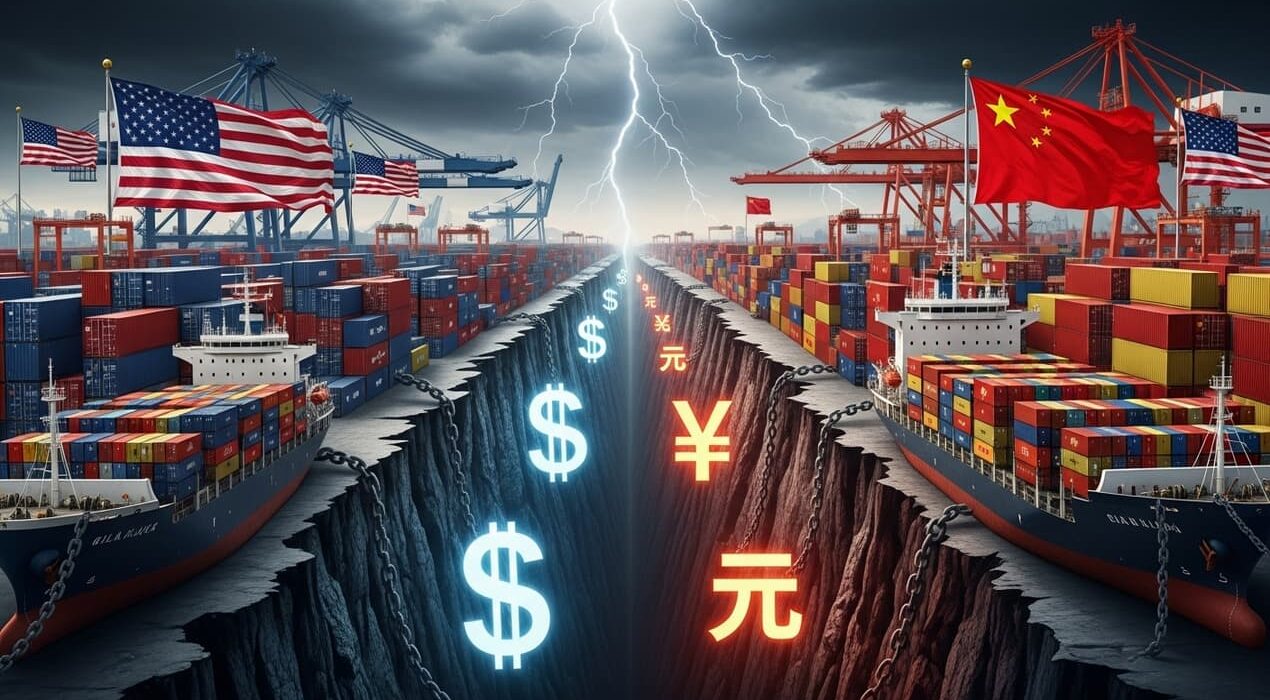
US-China Trade Clash Deepens with 100% Tariffs and New Port Fees
The US-China trade conflict intensified this week. China announced new port fees on all US-owned, operated, or flagged vessels starting Tuesday. The decision directly mirrors Washington’s move to impose similar charges on China-linked ships.
President Donald Trump raised tariffs on Chinese exports to 100%. He also introduced export restrictions on key US software. These steps respond to China’s limits on rare earth mineral exports.
Experts said China’s decision could hit several global shipping firms. The policy applies to companies with 25% or more US-held shares or board seats. Therefore, many international lines may now fall under China’s new rules.
Shipping Industry Feels the Impact
Shipping companies face rising costs on both sides. Matson, a US-based firm, confirmed it will continue operations despite higher Chinese fees. Other carriers, including APL, Zim, and Seaspan, also expect to pay more.
Oil tanker operators may face additional costs due to US listings. Scorpio Tankers, one of the world’s biggest fleets, could see significant fee increases. Analysts expect COSCO, China’s largest carrier, to pay nearly $2 billion in 2026 under US tariffs.
China called the US tariffs “discriminatory” and harmful to global trade. The Ministry of Transport warned the measures threaten supply chain stability.
Experts say these new port fees and tariffs will raise global shipping costs. They may also delay deliveries and increase prices for producers and consumers. Inflation and slower demand could worsen the situation.
As both nations harden their trade positions, global markets face growing uncertainty. Analysts fear the deepening tariff war could slow recovery and shake investor confidence worldwide.