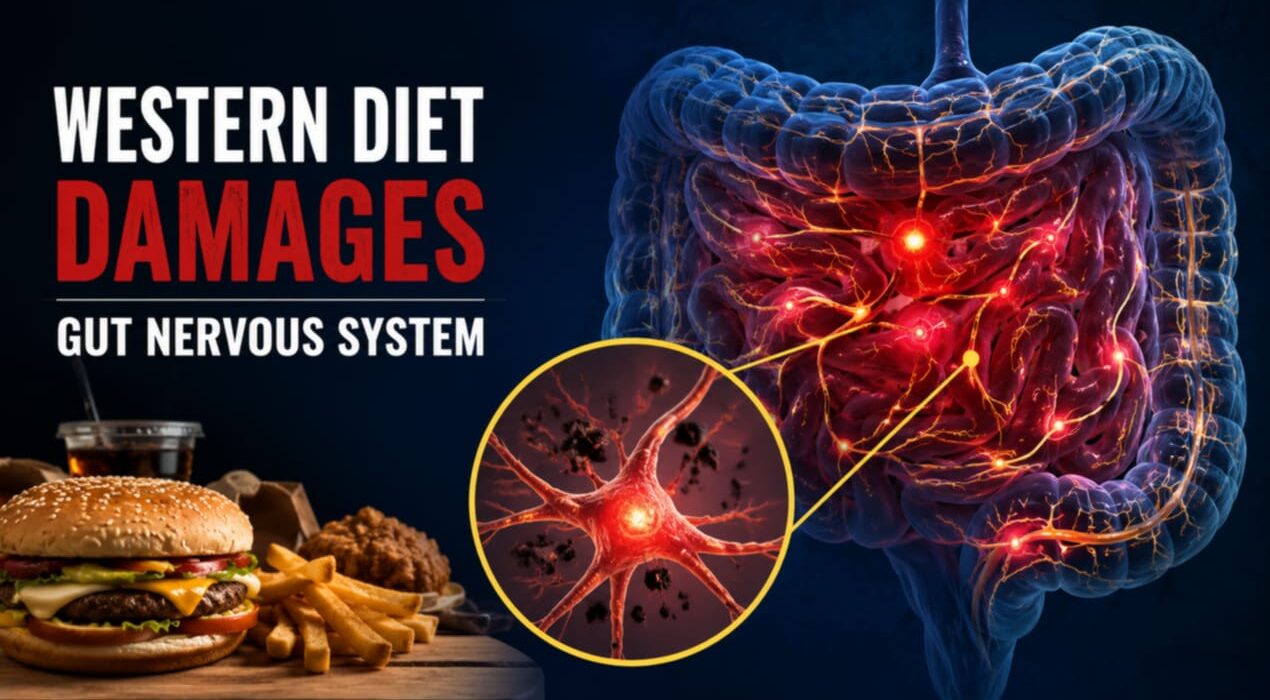
Western Diet and Gut Nervous System Damage Study
The gut nervous system controls digestion and movement. A recent study in the Journal of Clinical Investigation explored how a Western diet and palmitic acid may damage it. Researchers studied mice, cultured neurons, and human gut tissue.
They focused on ferroptosis, a form of iron-driven cell death. In addition, they tested whether antioxidant pathways could reduce damage. The goal was to understand how diet affects nerve health in the gut.
Western Diet and Gut Nerves
Researchers fed mice a Western diet high in saturated fats. As a result, the mice showed slower colonic transit and weak gut movement. This suggests impaired gut function linked to nerve stress. Moreover, nerve cells in the gut showed iron buildup and damage markers. The gut nervous system also showed reduced signaling ability. Therefore, digestion became less efficient over time.
Ferroptosis and Cellular Damage
Scientists found strong signs of ferroptosis in gut neurons. For example, palmitic acid triggered iron imbalance and oxidative stress. In addition, key protective proteins changed in the affected tissues.
However, a protective drug called ferrostatin-1 reduced long-term damage. It did not block short-term calcium signals, which suggests different biological pathways. As a result, acute and chronic effects may differ.
In human tissue samples, similar neuronal damage appeared. Some samples showed structural injury in gut nerve clusters. Therefore, the findings may be relevant beyond animal models.
Protective Mechanisms and Outlook
Researchers also tested Nrf2 activation, a natural antioxidant pathway. It improved nerve protection and restored gut function in mice. In addition, it reduced iron stress and inflammation markers. However, the study mainly used animal and lab models. Therefore, it does not fully prove the same effect in humans. Still, it highlights a possible mechanism behind diet-related gut issues.
In conclusion, the study suggests a strong link between diet, iron stress, and gut nerve health. The gut nervous system may be vulnerable to Western dietary patterns. Therefore, future research could help develop targeted therapies.