Interstellar Comet 3I/ATLAS Reveals Secrets of Alien Planetary Systems
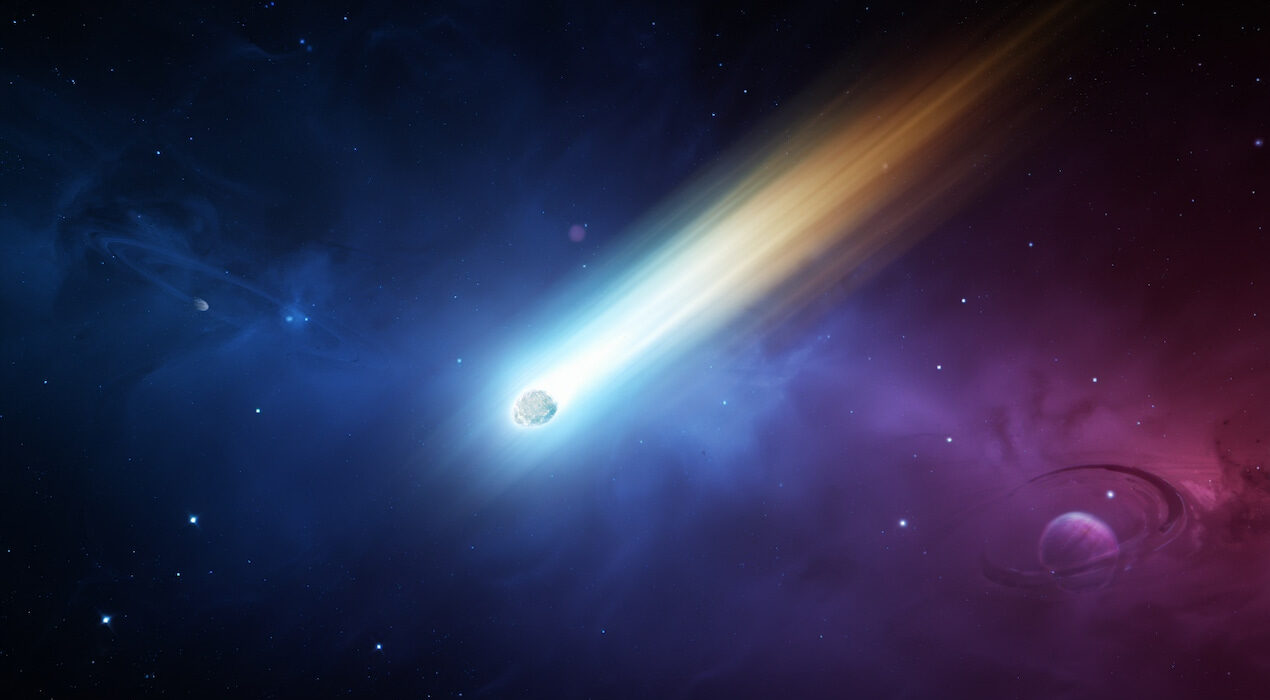
An interstellar comet traveling through our solar system is helping scientists study alien worlds. Researchers say interstellar comet 3I/ATLAS formed in conditions very different from our cosmic neighborhood. The discovery could change how experts understand planetary formation across the galaxy. Scientists discovered the comet less than a year ago as it passed through space. Soon after, researchers found unusually high levels of heavy water inside the object. Therefore, astronomers believe the comet formed in an extremely cold and low-radiation environment.The new study came from researchers at the University of Michigan. In addition, NASA and other scientific agencies supported the project. Scientists published the findings in the journal Nature Astronomy.
Heavy Water Gives Scientists New Clues
Water normally contains hydrogen and oxygen atoms. However, heavy water includes deuterium, a heavier form of hydrogen with an extra neutron. Researchers found that 3I/ATLAS contains far more deuterium than any known comet in our solar system.Scientists say the comet’s deuterium levels are about 30 times higher than local comets. The ratio also exceeds the amount found in Earth’s oceans. As a result, researchers believe the object formed in a distant and extremely cold region of space.Experts use chemical ratios like these to study how planets and comets develop. By comparing the comet with local space objects, scientists uncovered major differences between planetary systems. Therefore, the findings suggest our solar system may not represent typical conditions across the galaxy.
How Researchers Studied the Comet
After the discovery, scientists quickly observed the comet using the MDM Observatory in Arizona. Researchers detected gases escaping from the object during its journey. Later, astronomers used the powerful ALMA telescope in Chile to study the comet in greater detail.
ALMA helped scientists separate normal water from deuterium-rich water. This marked the first successful chemical study of an interstellar object. Researchers say future discoveries may reveal even more about distant planetary systems.
So far, astronomers have identified only three interstellar objects entering our solar system. However, new observatories could detect many more in the future.