Habib University Students Showcase Research on AI, Climate and Karachi Issues
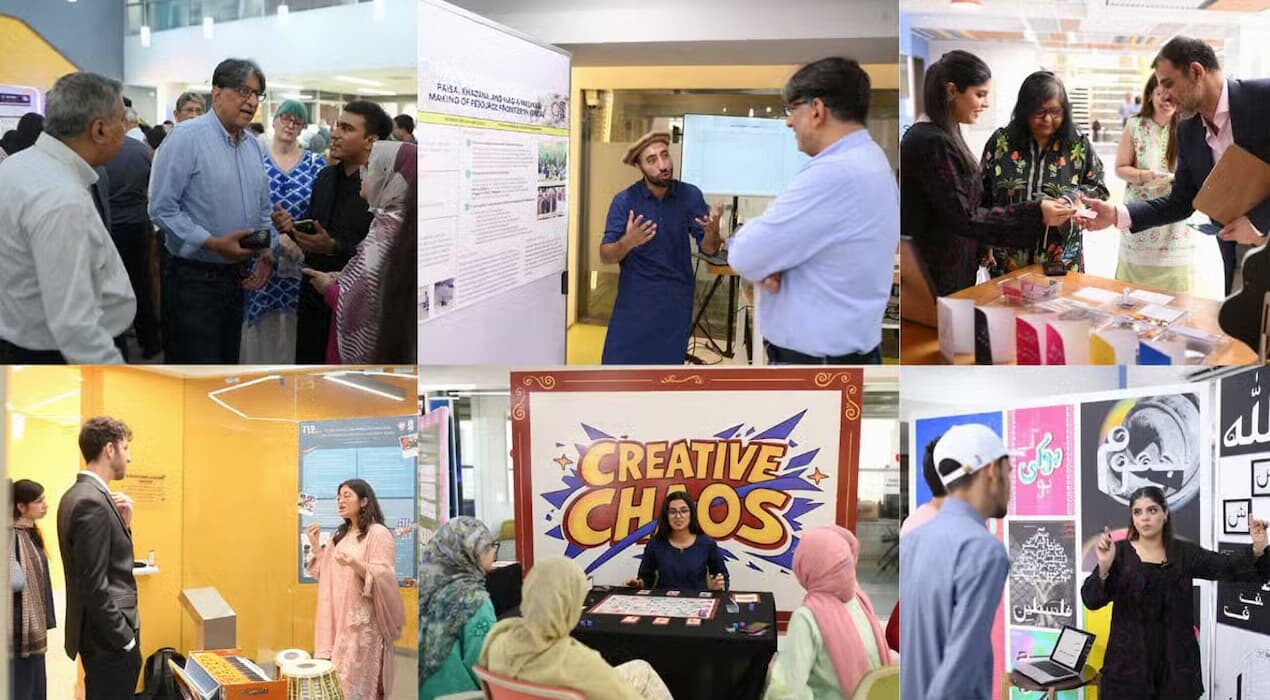
Habib University hosted its annual Habib University showcase on May 16, presenting more than 100 final year research projects by undergraduate students. The event brought together students, academics, industry leaders, writers, donors, and members of the public. Visitors explored projects covering artificial intelligence, climate change, gender issues, urban security, and cultural preservation. Students from the School of Arts, Humanities and Social Sciences and the Dhanani School of Science and Engineering displayed research, films, technology tools, and art installations. Many projects focused on real-life challenges in Karachi while connecting them to broader global concerns.
Several students explored how technology affects daily human experiences and social systems. One featured project, NeuroZawiya, introduced a platform designed to support neurodivergent students facing executive dysfunction. Computer Science students behind the project highlighted the difficulties students with ADHD and dyslexia often experience in complex academic environments. In addition, another project titled Hifazat and the Home: Negotiating Domestic Security in Karachi, Pakistan examined how fear and insecurity influence household spending and urban planning in Karachi. Researchers described this behavior as a “Phantom Siege,” where anxiety shapes security decisions more than actual crime experiences.
Students Explore Culture, Identity and Technology
In the humanities category, students presented Songs from a Burning Harmonium, a project documenting Afghan refugee music traditions in Karachi. Through ethnographic research, the team studied how music helps displaced communities preserve identity and memory. Furthermore, several projects focused on ethical artificial intelligence systems designed to assist human work instead of replacing workers.
Industry Partnerships Support Practical Solutions
The Habib University showcase also highlighted collaborations between students and industry partners through the Office of Takhleeq. Partnerships with Dawlance and Toyota addressed manufacturing waste reduction and industrial fault management. University officials said Karachi’s social and environmental challenges provide a valuable setting for impactful undergraduate research.