Supermileage Vehicle Sets Fuel Efficiency Record With 912km Per Liter
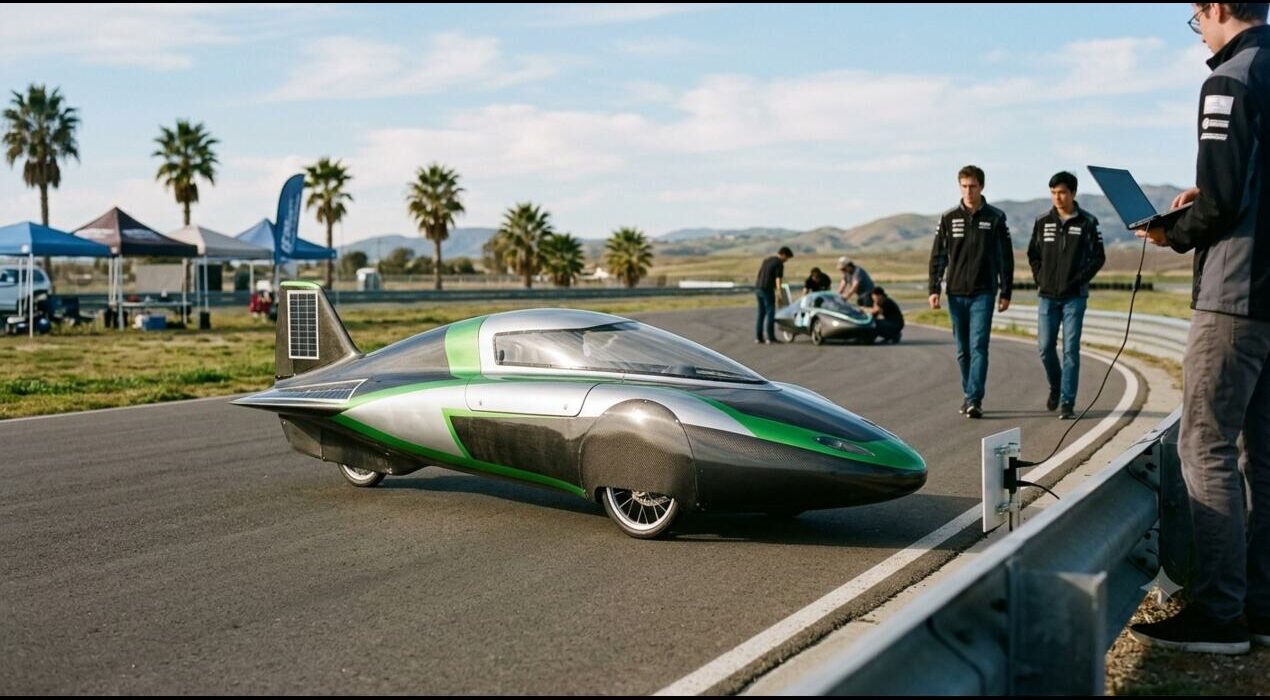
A group of engineering students in Utah has created the Supermileage Vehicle, an experimental car designed for exceptional fuel efficiency. The students developed the vehicle at Brigham Young University for the annual Shell Eco-Marathon competition. Therefore, the project focuses on traveling the greatest possible distance while using the least amount of fuel. The achievement has attracted attention from engineers and automotive enthusiasts worldwide. In addition, it highlights how innovation can push the limits of transportation technology. The vehicle can travel approximately 912 kilometers on just one liter of fuel, making it one of the most efficient experimental cars ever built.
Designed for Maximum Fuel Efficiency
The team built the Supermileage Vehicle with efficiency as its top priority. Engineers used a lightweight carbon-fiber body to reduce weight and improve performance. As a result, the car weighs only 49 kilograms. The vehicle also includes a tiny 30ml fuel tank and a single seat.
Students explained that the design sacrifices comfort and practicality to achieve extraordinary efficiency. According to their estimates, one gallon of fuel could theoretically power the vehicle from Utah to New York. Furthermore, every component serves a specific purpose aimed at reducing fuel consumption. The streamlined body helps minimize air resistance, while the lightweight structure lowers energy demand. These features allow the vehicle to achieve remarkable results during testing and competition.
Innovation Comes With Practical Limits
Despite its impressive efficiency, the Supermileage Vehicle is not suitable for everyday transportation. Its top speed reaches only about 37 kilometers per hour. Moreover, drivers must refuel the vehicle after roughly every 32 kilometers.
The car also has strict size limitations and offers very few comfort features. Consequently, manufacturers cannot easily adapt the design for commercial use. However, the project demonstrates how engineering creativity can solve efficiency challenges. While electric vehicles continue to gain popularity, experimental designs like this reveal new possibilities for reducing
fuel consumption. The achievement also provides valuable lessons for future vehicle development. As technology continues to advance, engineers may apply similar ideas to improve the efficiency of mainstream transportation systems around the world.