US Student Visa Rules: Trump Limits Stay for Students and Journalists
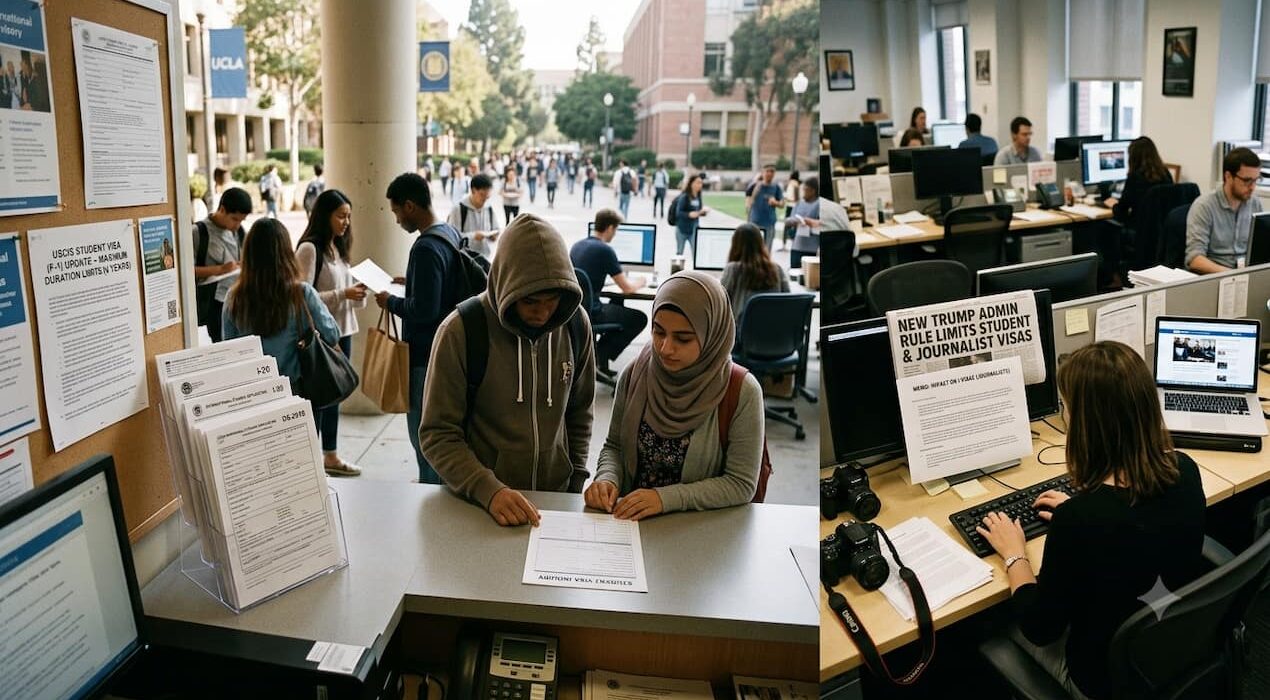
The US student visa rules will become stricter after the Trump administration finalized new immigration measures. The changes will limit how long foreign students and journalists can stay in the United States. Officials said the rules could take effect as early as September.
Under the new policy, students on academic visas can remain in the country for the length of their program, up to a maximum of four years. Foreign journalists will receive visas valid for 240 days, or about eight months. However, they may apply for extensions. Chinese journalists will receive only 90-day visas, with 90-day extension options.
New policy sparks criticism
The Department of Homeland Security (DHS) said the changes will strengthen oversight of visa holders. Officials argued that some foreign students had extended their studies for years to remain in the country. Therefore, the department replaced the long-standing open-ended admission system with fixed time limits.
The new rules drew strong criticism from media and education groups. Reporters Without Borders said the policy would make it difficult for international journalists to report from the United States. Likewise, the Committee to Protect Journalists described the decision as another setback for press freedom.
Universities fear impact on enrollment
Higher education organizations also opposed the policy. They warned that stricter visa rules could discourage talented students from choosing US universities. In addition, many institutions have already reported lower international enrollment after earlier immigration measures and funding cuts.
The United States hosted more than 1.1 million international students during the 2023–24 academic year. Those students contributed over $50 billion to the US economy in 2023. Meanwhile, the DHS rejected requests to ease restrictions for foreign journalists. The rule will now move to the Republican-led Congress for review. If approved, the policy will mark another major step in the administration’s broader immigration agenda.