France School Phone Ban Targets High School Students
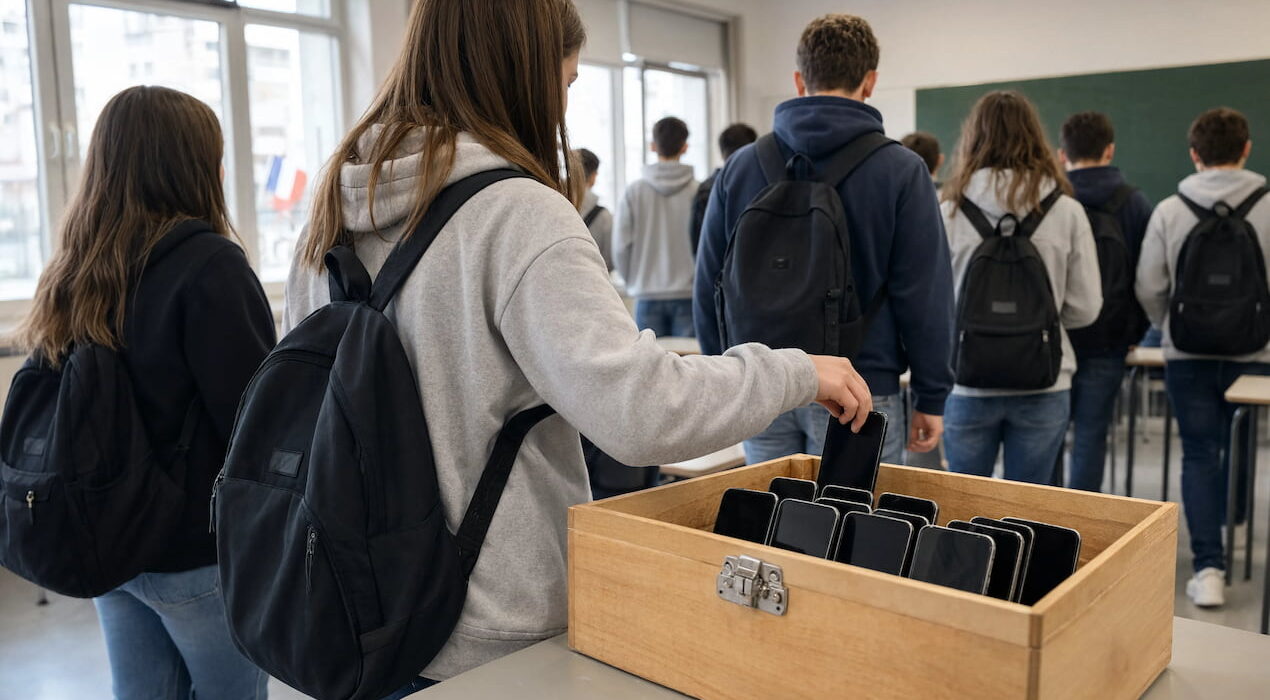
France’s school phone ban is expanding to high schools as President Emmanuel Macron pushes to reduce teenagers’ screen time. Schools across the country are preparing new rules for students aged 15 to 18. However, education unions warn that many schools may struggle to enforce the measure quickly.
Schools Face Challenges
France already restricts mobile phone use in primary and middle schools. The new policy will now target older teenagers in high schools, known as lycées.The government says excessive screen time can affect children’s development. Therefore, officials want schools to limit phone use during the school day.
However, schools must first change their internal rules. That process usually requires consultations and a formal vote.Education union SE-Unsa says schools need more time. Union officials also point to another challenge involving essential school services.
Many students use smartphones to check timetables, room changes, and homework. Some schools also rely on phone apps for canteen access and library services.In addition, some high schools host older students in higher education or apprenticeship programmes. Some of these students are around 20 years old and need phones for work.
Debate Over Enforcement
Schools must decide how widely they will enforce the restrictions. Some may ban phones throughout the campus, while others could allow limited use outdoors.Union representatives also warn about possible safety concerns. Students might leave school grounds to use their phones on nearby streets.
That situation could create security and road safety risks. Therefore, schools need clear rules that consider practical concerns.Education unions also want teenagers involved in the decision-making process. They argue that older students should have a voice because many are close to adulthood.
Meanwhile, Macron continues to support a separate social media restriction. His government wants to prevent children under 15 from accessing platforms such as TikTok and Snapchat.France’s Constitutional Council rejected the earlier proposal. It found concerns with the law’s broad definition of social media and its age-verification system.Legal experts now expect a difficult rewrite. The government hopes to balance child protection with privacy and freedom of expression.