Bangladesh Urged to Integrate Water-Landscape Education for a Sustainable
Bangladesh’s future depends on learning to live with water. Yet, the full integration of water-landscape education into schools and universities remains missing. Although textbooks mention rivers and floods, they often ignore children’s real experiences—like flooded playgrounds or drying ponds.
This gap reflects a serious policy weakness. There is no legal framework requiring education about how people can coexist with water. As environmental lawyer Bahreen Khan notes, without integration, environmental laws often fail in practice.
Strengths and Weaknesses
Bangladesh has a strong cultural base. Generations have learned to live with rivers and wetlands. Policies such as the National Water Policy (1999) and Biodiversity Act (2017) already support water conservation. Awareness is growing through the Greening Education Partnership and similar programs.
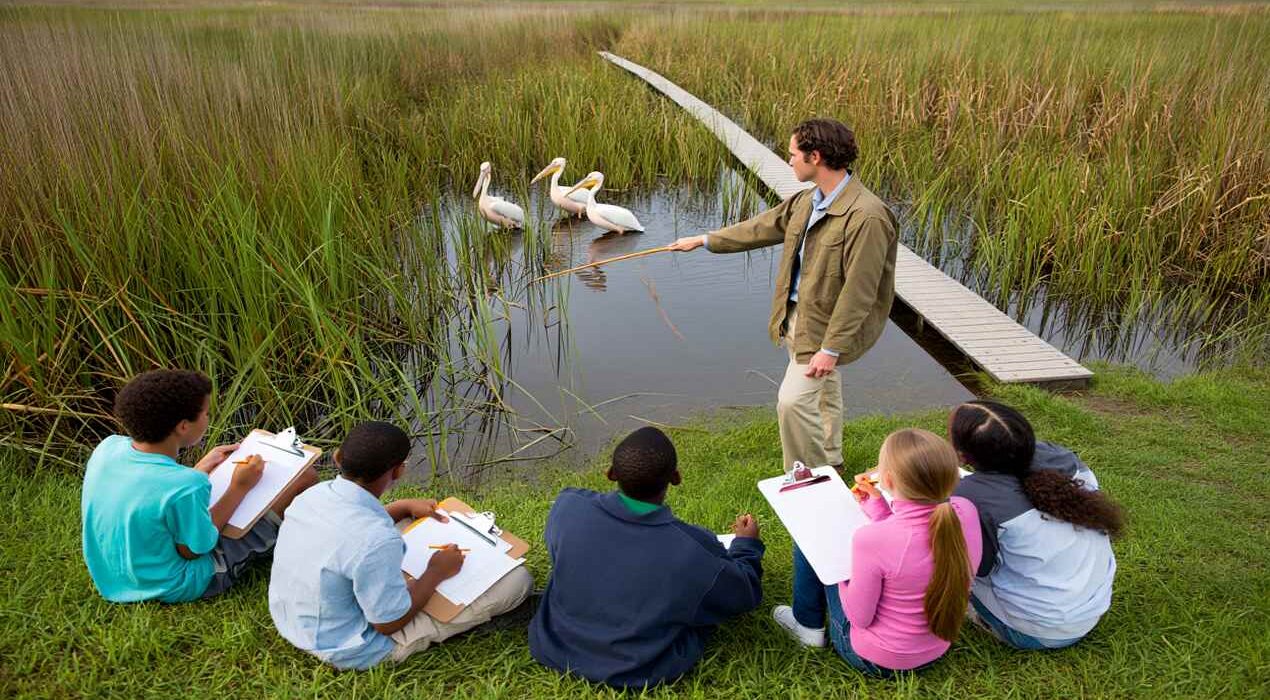
However, education remains overly theoretical. Students rarely experience hands-on learning like river walks or pond mapping. Teachers lack training and schools lack resources for field-based education.
Opportunities and Challenges
The Constitution and SDGs support water and climate education. Technology like GIS and drones can bring rivers and flood patterns into classrooms. Yet, progress is slowed by political inertia, limited resources, and disappearing natural habitats.
The Way Forward
Experts urge action. Bangladesh should legislate water-landscape education, train teachers, and link lessons to local environments. Instead of adding new subjects, these topics can be integrated into geography or science classes.
By teaching children to value their rivers and wetlands, Bangladesh can prepare a generation ready to thrive in a changing climate.